F1 2026 Regulations: The Radical New Era of Grand Prix Racing

If you think the current grid offers tight racing, just wait until 2026. Formula 1 prides itself on being the absolute pinnacle of automotive technology, but every few years, the sport needs to hit the reset button. We aren’t talking about a fresh coat of paint or a minor tweak to a front wing here. The 2026 regulations represent the most significant technical overhaul the sport has seen in over a decade.
For the teams, it’s a terrifying blank sheet of paper. For the fans, it promises a return to agile, aggressive machinery and a level of wheel-to-wheel combat we haven’t seen in the modern hybrid era. We are looking at a future with lighter cars, shape-shifting aerodynamics, and a power unit formula that has already lured giants like Audi and Ford to the party. Here is the deep dive on what this new generation of F1 is going to look like.
A Leaner, Meaner Breed of F1 Car
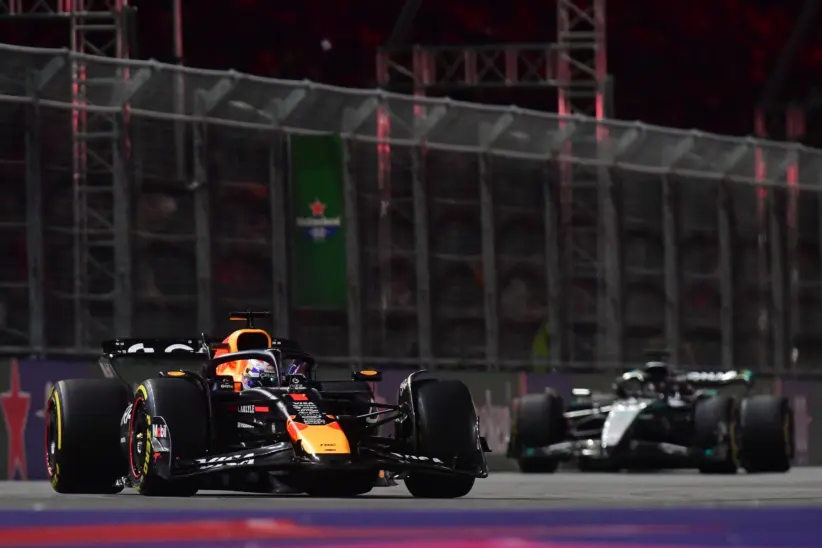
Let’s be honest: modern Grand Prix cars have become boats. They are heavy, long, and cumbersome in slow corners. The FIA and F1 have heard the complaints from drivers and fans alike, and the 2026 rules tackle this head-on. The new concept focuses on a “nimble” car. The wheelbase is being shortened, and the width is being trimmed down.
But the biggest headline is the weight. Engineers are engaging in a desperate war on grams to make these machines lighter. When you combine a smaller footprint with reduced mass, you get a car that changes direction faster and responds more instinctively to driver inputs. Visually, you will notice the removal of the wheel arches over the front tires. It cleans up the airflow, but more importantly, it helps reduce that overall weight
. Beneath the car, the complex ground-effect tunnels, a staple of the current regulations, are gone. They are being replaced by flatter floors and a more aggressive diffuser. This reduces downforce, meaning the cars will slide more. For the guys in the cockpit, managing rear grip will become a much bigger challenge.
The Death of DRS and the Birth of Active Aero
For years, the Drag Reduction System (DRS) has been a necessary evil to aid overtaking. In 2026, DRS as we know it is dead. In its place comes a futuristic concept known as Active Aerodynamics. This isn’t just a flap opening on the rear wing.
We are talking about the entire car adapting to the track map. The cars will feature movable wings on both the front and rear. In the corners, these elements stay in their default, high-downforce position to glue the car to the asphalt. But as soon as the driver hits a straight, they can activate a low-drag mode.
The wings flatten out, cutting through the air and significantly boosting top speed. This system is available to every driver on every lap, regardless of the gap to the car ahead. It turns the car into a shape-shifter, maximizing grip when you need it and shedding drag when you don’t.
Tactical Warfare: The New ‘Overtake Mode’
If everyone has active aero, how do you pass? Enter the new “Overtake Mode.”This is where the strategy gets intense. While the old DRS required you to be within one second of a rival to open a wing flap, the new system uses electrical power as the weapon. If a driver is within that crucial one-second window of the car ahead, they unlock an extra reservoir of battery power.
They can deploy this extra grunt either to attack the car ahead or to defend their position. It brings back a layer of tactical energy management to the cockpit. It’s not just about raw speed; it’s about knowing when to deplete your battery for a killer move and when to save it for the counter-attack.
The Power Unit: 50/50 Split and Pure Grunt
Under the engine cover, the 1.6-liter V6 turbo hybrid remains the heart of the beast, but its soul is changing. The complex and expensive MGU-H the system that recovered energy from exhaust heat is being scrapped. It was a marvelous piece of engineering, but irrelevant to road cars and a barrier to new manufacturers entering the sport.
To compensate, the electrical side of the powertrain is getting a massive steroid injection. The output of the electric motor is nearly tripling. The power split between the internal combustion engine and the electric battery is now roughly 50-50.
For the drivers, this means instantaneous torque. The cars will have roughly 1,000 horsepower, but the delivery will feel sharper. The Energy Recovery System (ERS) is also getting an upgrade, doubling the amount of energy it can recapture under braking. Drivers won’t just stop the car. They’ll aggressively feed the battery to prep for the next straight.
Fuelling the Future and Keeping Drivers Safe
Perhaps the most critical change for the sport’s longevity is the switch to 100% Advanced Sustainable Fuel. This isn’t pump gas. This is a lab-crated, high-performance fuel derived from sources like municipal waste, non-food biomass, and carbon capture. It proves that internal combustion can still have a place in a green future, a significant selling point that officially brought Honda back into the fold.
Of course, speed is nothing without safety. The chassis structures are being toughened up. The roll hoop requirements are increasing to withstand loads equivalent to nine family cars, and the side impact structures are being redesigned to better protect the driver in the event of a T-bone crash.
The Verdict
The 2026 regulations are a massive gamble, but a necessary one. By reducing downforce and increasing torque, F1 is putting the car control back in the hands of the drivers. Following another car should be easier without the turbulent wake of the current aero platform, and the new power units ensure the sport remains relevant to the automotive industry. Come 2026, the cars will look different, sound different, and race differently. And for a racing purist, that’s exactly what we want.