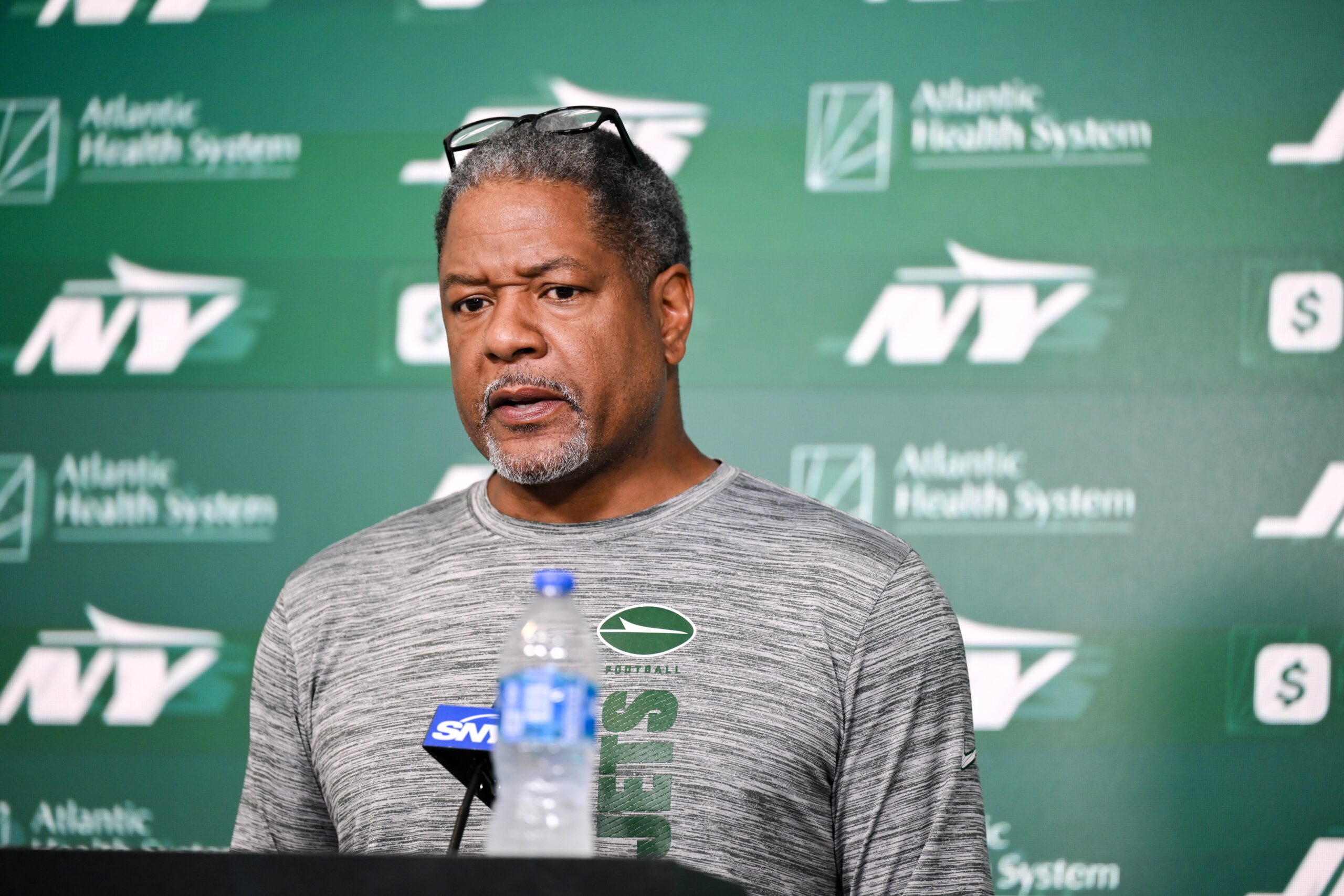
Jets Head Coach Aaron Glenn Fires Defensive Coordinator Steve Wilks Following Defensive Collapse

In a sharp reversal of his public stance just twenty-four hours prior, New York Jets head coach Aaron Glenn has fired defensive coordinator Steve Wilks. The move comes on the heels of a humiliating 48-20 loss to the Jacksonville Jaguars, a defeat that appears to have been the final straw for a defensive unit that has spiraled out of control.
According to NFL Network Insider Ian Rapoport, Wilks was relieved of his duties early Monday morning. Glenn officially announced the decision during his news conference later in the day, confirming that defensive backs coach Chris Harris will step in as the defensive coordinator on an interim basis for the remainder of the 2025 season.
A Rapid Change of Course
The decision marks a frantic pivot for the Jets organization. Only a day earlier, following the debacle in Jacksonville, Glenn had been adamant that he would not strip Wilks of play-calling duties. He told reporters at the time that he wanted Wilks to “run his system” and that continuity was the priority. However, the reality of the tape and the atmosphere within the facility seemingly forced Glenn’s hand.
While the franchise is clearly in a rebuilding phase, having traded away cornerstone defensive players like Sauce Gardner and Quinnen Williams at the deadline, the noncompetitive nature of Sunday’s loss was impossible to ignore. The Jaguars scored touchdowns on six of their first nine drives. Trevor Lawrence dissected the Jets’ secondary with ease, and the unit looked unprepared and, at times, disinterested.
The human element of this firing cannot be overstated. Glenn, a first-year head coach hired specifically for his defensive acumen, has watched his area of expertise become the team’s biggest liability. The frustration in his voice was palpable during the press conference as he acknowledged the difficulty of letting go of a veteran coach like Wilks, yet emphasized that the standard of performance had dipped below what is acceptable in the NFL, regardless of roster talent.
Locker Room Frustration Boils Over
The writing may have been on the wall immediately following the Jacksonville game. The atmosphere in the locker room was described as despondent and tense. Several key defensive starters refused to speak to the media, a sign that the coaching staff had potentially lost the ear of the room.
Linebacker Quincy Williams was one of the few who did speak, and his words were damning in their brevity. “I have nothing positive to say today so I’m not doing media,” Williams said.
When veteran leaders shut down, it usually signals a disconnect that goes deeper than just X’s and O’s. The lack of effort was visible on the broadcast, with key reps showing players looking slow to react or disengaged. For a coach like Glenn, who prides himself on culture and intensity, seeing a lack of hustle is often a fireable offense.
A Season of Defensive Struggles
Steve Wilks’ tenure in New York will be remembered as a turbulent, albeit short, chapter. The statistical profile of the defense has been abysmal. Heading into Week 15, the Jets ranked third-worst in the league in points allowed, giving up an average of 28.4 points per game. perhaps most damning is the fact that the unit has failed to record a single interception this late into the season.
The failure to generate turnovers or stops has put immense pressure on an offense that is also trying to find its footing. Rookie quarterback Brady Cook, who made his first start against Jacksonville due to injuries to Justin Fields and Tyrod Taylor, actually performed admirably under the circumstances. However, no quarterback can reasonably be expected to keep pace when the defense surrenders nearly 50 points.
The struggles date back to the season opener against Aaron Rodgers and continued through embarrassing outings against the Miami Dolphins and Dallas Cowboys. While the front office’s decision to gut the roster certainly left Wilks with a depleted cupboard, the inability to manufacture any resistance or scheme around the deficiencies ultimately cost him his job.
Chris Harris Steps Into the Interim Role
Chris Harris now faces the unenviable task of trying to salvage some dignity for this defense over the final stretch of the season. Harris is well-regarded within the building and around the league, but he is inheriting a unit that is statistically one of the worst in franchise history and mentally battered.
For Aaron Glenn, this move buys him some time and perhaps a chance to reset the culture before the offseason. It sends a message to the locker room that lack of effort has consequences. However, it also puts the spotlight firmly on Glenn. With the scapegoat gone, the defensive performance falls squarely on the head coach’s shoulders. The Jets are already looking toward 2026, but how they finish these final games under Harris will say a lot about who deserves to be part of that future.