In Wake of Wet Vegas Qualifying, Russell Pushes Rule Proposal to F1 and FIA

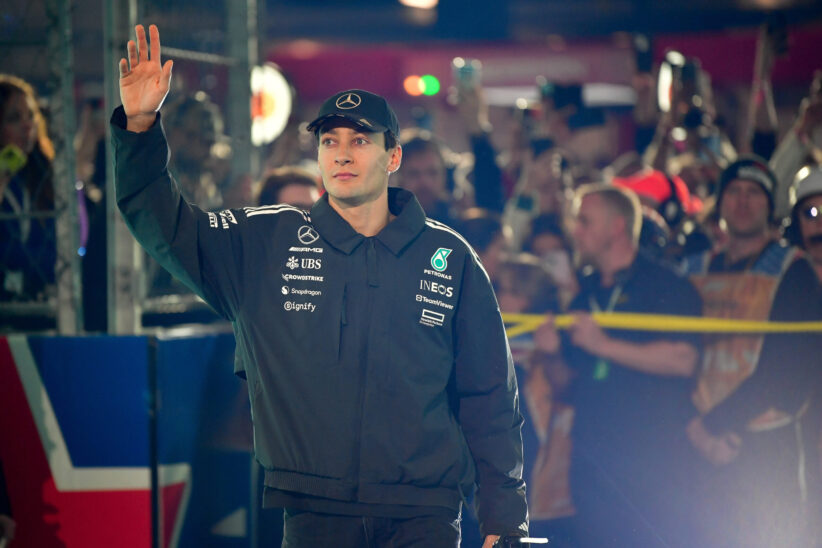
George Russell, usually calm under pressure, had a particularly rough time qualifying in Las Vegas. And honestly, who can blame him? The Mercedes driver wasn’t shy about voicing his frustrations after a session that saw the rare appearance of blue-walled extreme wet tires on the Strip.
Following a slide-filled session where everyone looked like they were driving on a skating rink, Russell has pitched an idea to the FIA and Formula 1 bosses: make the track surfaces consistent across every circuit on the calendar.
Why Russell Wants Consistency
It’s a bold proposal, but hear him out. Russell’s logic is that with so many variables already in play—altitude, fluctuating temperatures, downforce configurations, and tire compounds—adding unpredictable tarmac into the mix is just one headache too many.
He reckons that if the asphalt was the same everywhere from Monaco to Monza, it would give Pirelli a fighting chance to deliver tires that actually work consistently.
“I think the job for Pirelli would be a lot easier if all the tarmacs were consistent,” Russell explained after landing P4. “There’s already enough variables… So then having another variable of the tarmac—you see [what I mean] a little bit.”
It’s hard not to empathize with the drivers here. They’re strapping themselves into rockets, and when the surface beneath them changes drastically from week to week, it turns a skill-based sport into a bit of a lottery. While Lando Norris managed to dance his McLaren to pole position, and Max Verstappen did his usual rain-master thing to secure second, others were left scrambling for grip that just wasn’t there.
Russell described the session as “pretty horrendous” and “not fun at all,” though he admitted it was a nice challenge. You can tell he’s a racer at heart. He hated the lack of grip, but he still relished the battle.
Not His First Rodeo
Interestingly, when told that some drivers (including Verstappen) claimed they’d never driven an F1 car in such tough conditions, Russell wasn’t having it. He was quick to remind everyone of the chaotic Turkish Grand Prix in 2020.
“I think that’s probably the drivers who haven’t driven in Turkey in 2020,” he quipped. “Everybody knew it was going to be challenging, no tires are designed for this type of [wet] circuit.”
It’s a fair point. Istanbul Park that year was notoriously like an ice rink even when dry, thanks to fresh tarmac leaking oils. Throw rain into the mix, and it was chaos. Russell remembers it well, and comparatively, Vegas was just another tricky day at the office.
The Steering Issue that Cost Him
To make matters worse for the Brit, it wasn’t just the slippery surface fighting him. He revealed a bizarre technical gremlin that popped up right when it mattered most—in Q3.
After topping the timesheets in practice, Q1, and Q2, Russell looked like the man to beat. Then, disaster struck.
“I had a steering issue in Q3. I don’t know what it was, like a power steering issue,” he explained, sounding visibly disappointed. “On my second lap, I thought I had to stop the car on track because I couldn’t turn the steering properly.”
Imagine being on the absolute limit, hunting for pole, and suddenly your steering wheel decides to stop cooperating. It’s a driver’s nightmare.
“I feel fortunate to have qualified P4 considering,” he admitted. “But of course, it feels like a missed opportunity.”
It’s a classic “what could have been” moment. Russell clearly had the pace to challenge Norris for that top spot, but between the slick track and the mechanical gremlins, P4 was the best salvage job he could manage.
Proposal Outcome Remains to be Seen
Whether the FIA will listen to his plea for standardized tarmac remains to be seen—uniformity isn’t exactly F1’s strong suit—but after a weekend like this, you can bet he won’t be the only driver asking for a little more consistency under his wheels.