NASCAR Insider Jeff Gluck Pushes Back on F1 Drivers’ Safety Concerns After Verstappen’s Oval Comments

When you’ve got one of the best drivers in the world talking about your sport, you tend to listen. So, when Formula 1 superstar Max Verstappen recently shared his thoughts on oval racing, the NASCAR world took notice. But it wasn’t exactly the glowing endorsement some might have hoped for.
In fact, it sparked a fiery response from one of our own, veteran journalist Jeff Gluck.Verstappen, while admitting he enjoys watching NASCAR and IndyCar, drew a hard line when it came to actually getting behind the wheel on an oval. His reasoning? The risk is just too high.
“When you hit the fence, it’s not worth it,” he said on the Pelas Pistas podcast. He acknowledged that danger exists in F1, but the idea of hitting a wall at speeds approaching 230 mph (370 km/h) on an oval was a bridge too far for him.
These comments didn’t sit well with everyone, especially not with Jeff Gluck, a respected voice in the NASCAR community from The Athletic. Gluck took to social media with a blunt counterpoint that felt like it came straight from the heart of the garage. “The fear of ovals from F1 drivers always seems odd to me,” he wrote.
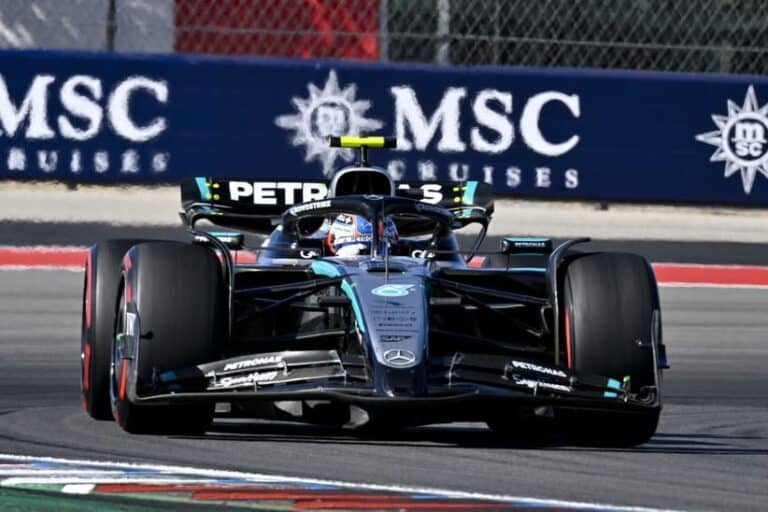
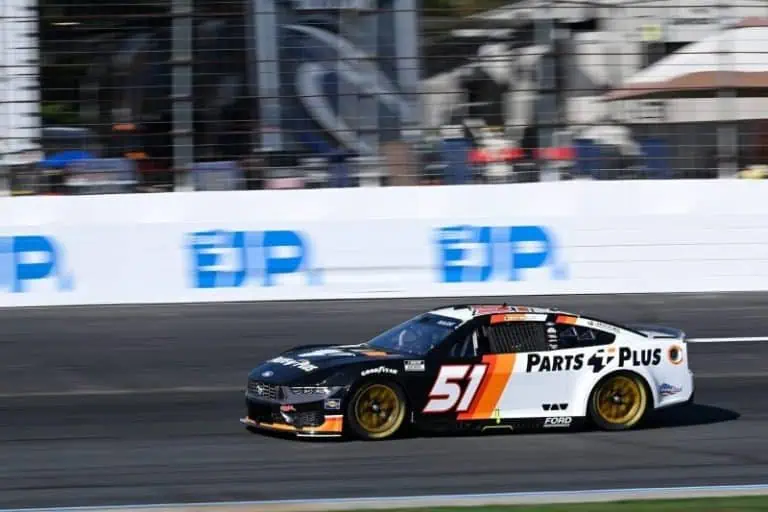
Gluck’s argument was simple and direct: NASCAR’s enclosed-cockpit stock cars are fundamentally safer than the open-cockpit design of an F1 car. He even pointed out that the IndyCar aeroscreen provides more protection than the F1 halo.
It’s a debate that touches the very soul of motorsport: tradition versus technology, perception versus reality. And honestly, Gluck has a point that many of us in the stock car world have been making for years.
Gluck Highlights a Long-Standing Debate in Motorsport
Jeff Gluck’s take cuts through the noise and gets to a fundamental truth. From the outside, oval racing can look like pure, unadulterated chaos a high-speed chess match where one wrong move sends cars spinning into concrete walls.
But what outsiders often miss is the incredible engineering and decades of safety innovation built into every single stock car.These aren’t just street cars with roll cages. They are purpose-built survival cells.
We’re talking about reinforced steel chassis, energy-absorbing structures, advanced seat-mount technology, and, of course, the HANS device, which was born from the tragic loss of Dale Earnhardt Sr. at Daytona in 2001.
That single, heartbreaking moment forced NASCAR into a safety revolution that has saved countless lives since. When you strap into a modern stock car, you are encased in a fortress designed to withstand incredible forces.
In contrast, open-wheel racing, for all its sophistication, leaves the driver far more exposed. While the halo and aeroscreen have been monumental additions, the driver’s head is still a vulnerable point.
The cars are lighter, more fragile, and when things go wrong, the consequences can be catastrophic in uniquely horrifying ways. We only need to look at the history books from Ayrton Senna’s death in 1994 to Jules Bianchi’s tragic crash in 2014 to understand the different but equally grave risks involved.
Is Verstappen Cautious or Just Curious?
It’s easy to paint Verstappen as dismissive, but his feelings seem more complex than that. His comments reflect a deep respect for the unique dangers of oval racing, even if his perception of the safety measures is a bit skewed. And despite his public caution, there’s a flicker of racer’s curiosity in him.
In a friendly exchange with NASCAR prospect Connor Zilisch at a Red Bull event, Verstappen was asked if he’d ever want to get in a stock car. His reply was a simple, “I mean I would like to do it.” It was a casual moment, but it speaks volumes.
Deep down, every true racer wants to test their mettle against every form of motorsport. The allure of taming a 3,400-pound beast on a high-banked oval is a powerful one.For now, Verstappen is focused on conquering the F1 world, and who can blame him?
Final Thoughts
The conversation started by Verstappen, and the passionate response from insiders like Jeff Gluck, reminds us that the debate over risk, courage, and safety is what makes this sport so compelling. Whether you’re in a stock car or an open-wheel machine, you’re putting it all on the line. And for those of us who live and breathe this sport, that’s something we’ll always respect.