Why the Championship 4 Format No Longer Works for NASCAR

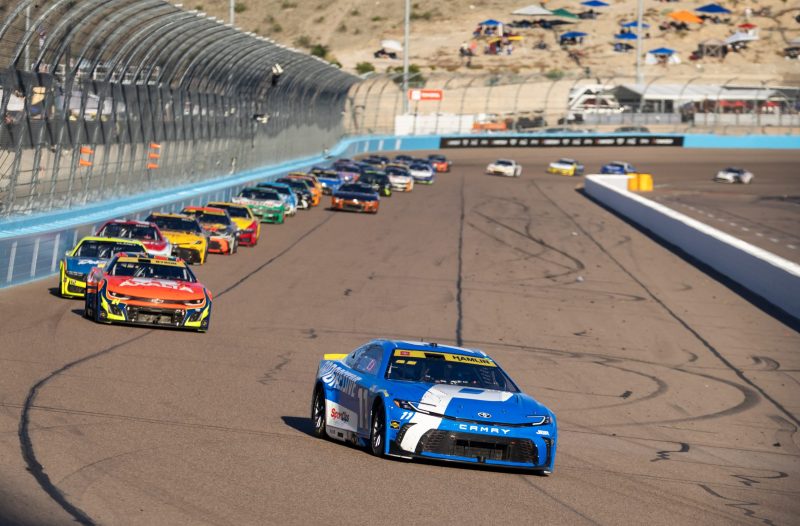
The checkered flag has fallen on what might be the last Championship 4 weekend we’ll ever see, and frankly, it couldn’t come soon enough. What happened at Phoenix Raceway on Sunday wasn’t just heartbreaking. It was a perfect example of everything wrong with NASCAR’s current playoff system.
Denny Hamlin had that championship in his hands. Three seconds ahead with five laps to go, driving the race of his life when it mattered most. Then William Byron’s tire went flat, the caution flew, and everything Hamlin had earned over 306 laps got wiped away in an instant. That’s not racing determining a champion, that’s chaos masquerading as competition.
The Heartbreak That Defines This Format
The raw emotion after Sunday’s race told the whole story. Kyle Larson, despite winning his second Cup Series title, looked shell-shocked as he told reporters that “a large part of me feels really bad and sad” about how he claimed the championship.
William Byron approached Hamlin on pit road, placing a hand on his shoulder to apologize for the flat tire that changed everything. Most telling of all was Hamlin’s devastated admission: “In this moment, I never want to race a car again.”
These aren’t the words you hear after a fair fight. This is what happens when a format prioritizes manufactured drama over genuine competition. Hamlin dominated that race in a way that should have locked up the title in any reasonable championship system.
Instead, he watched helplessly as a restart lottery decided his fate.The Championship 4 format was supposed to reward clutch performances in the biggest moments. Hamlin delivered exactly that until the format itself betrayed him.
How Ford’s Strategy Exposed the System’s Flaws
What made Sunday even more frustrating was watching Ford teams execute a perfectly legal but championship-altering strategy. With Toyota and General Motors staying out of the title fight between Hamlin and Larson, Ford teams saw their chance.
They flooded the field with cars on fresh tires or no tires at all, turning what should have been a straightforward duel into a chaotic restart mess. Ford had zero interest in who won the championship. They wanted to win the race.
So three Ford teams took different tire strategies, creating the traffic that allowed Larson to sail around the outside in turn one while Hamlin got boxed in behind struggling cars. This perfectly illustrates the fundamental problem with the Championship 4 format.
The championship isn’t decided by the four best drivers racing each other. It’s decided by how 36 different drivers and teams choose to play their cards. Ford’s strategy was brilliant for their goals, but it had nothing to do with determining the most deserving champion.
The Broader Pattern of Undeserving Champions
Sunday’s chaos wasn’t an isolated incident. It’s become the norm under this format. Just look at the recent championship winners who’ve been crowned despite mediocre seasons. Joey Logano won his third title last year with the worst average finish of any Cup Series champion in history. That’s no mistake. That’s a feature of a system that rewards getting hot for four races instead of sustained excellence.
The Championship 4 format consistently produces these hollow victories. Drivers can sleepwalk through the regular season, catch lightning in a bottle for the playoffs, and suddenly they’re champions. Meanwhile, drivers like Hamlin, who show consistent excellence, have their hopes dashed by random cautions and restart chaos.
This isn’t about taking anything away from drivers like Larson, who would be a deserving champion in almost any other format. It’s about a system that creates awkward moments in which winners feel guilty about their championships and runners-up question whether they want to keep racing.
Beyond the Cup Series: Chaos Everywhere
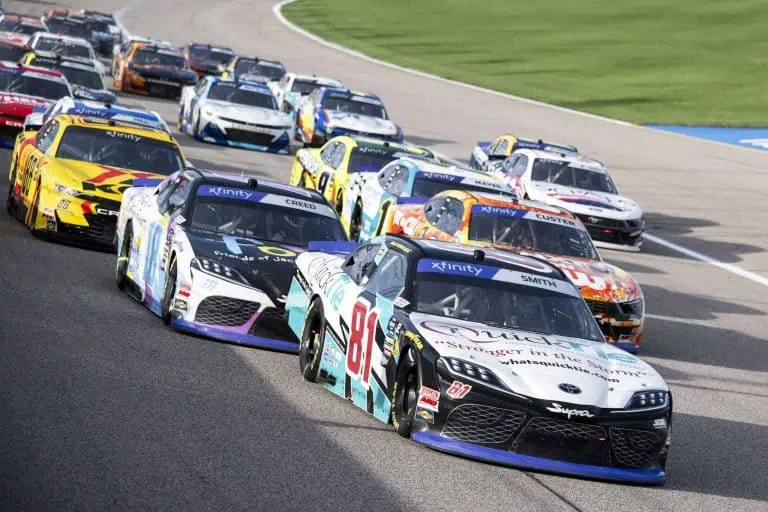
The problem wasn’t limited to Sunday’s Cup race either. The Truck Series and Xfinity Series Championship 4 races showed the same flaws in action. Connor Zilisch collected 10 trophies during the regular season but lost the championship to Jesse Love, who had one great final run. Corey Heim turned a historic Truck Series season into a title thanks to restart magic.
These drivers all deserved recognition for their seasons, but the format warped their stories into something unrecognizable. Love should be celebrated as a rising star with momentum heading into next year. Instead, he’s a champion based on one clutch performance, which somehow feels like both too much and not enough.
Light at the End of the Tunnel
The one silver lining in all this chaos? NASCAR finally seems ready to acknowledge the problem. After Logano’s particularly hollow 2024 championship, the sanctioning body formed a committee to explore changes to the playoff format. Reports suggest alterations are coming before the 2026 season begins.
The next format won’t be perfect, nothing ever is in NASCAR. But anything that moves away from the Championship 4’s winner-take-all chaos will be an improvement. If NASCAR can find a way to reward season-long excellence while still creating compelling championship battles, they’ll have something worth celebrating.
Racing Deserves Better Than This
The emotions on Sunday perfectly captured why this format has to go. Hamlin’s devastation, Larson’s guilt, and Byron’s apology. None of this should have happened after a championship race. The best driver on the track that day should have won the title, period.
NASCAR has always been about competition, but the Championship 4 format has turned the sport’s biggest race into a lottery. Drivers’ seasons shouldn’t be decided by random cautions, restart chaos, or strategic games played by teams with nothing to lose.
Final Thoughts
The checkered flag has fallen on this era of NASCAR championships. When the new format arrives, hopefully, it will restore some dignity to the process of crowning a champion. After what we witnessed at Phoenix, anything would be better than this.