Green Bay Packers Matt LaFleur Makes Stunning Admission About Early 4th Down Decision

In the world of the NFL, every coaching decision is placed under a microscope, especially in a high-stakes game that ends in a frustrating tie. For Green Bay Packers Head Coach Matt LaFleur, a single decision early in the Sunday night showdown against the Dallas Cowboys has become a focal point for debate and criticism. His choice to punt on a 4th-and-2 from the Cowboys’ 49-yard line has drawn the ire of fans and analysts who favor a more aggressive approach.
This article will break down the Matt LaFleur 4th-and-2 decision Cowboys game situation, exploring the coach’s reasoning, the criticism he has faced for his conservative play-call, and the often-overlooked reality of the “no-win” situation that coaches frequently find themselves in.
Green Bay Packers 4th Down
The Green Bay Packers came out of the gate on fire against the Dallas Cowboys. They marched down the field on their opening possession for a quick 7-0 lead. After the defense forced a swift three-and-out, the offense was on the move again. A 16-yard screen pass on 3rd-and-18 set up a crucial 4th-and-2 from Dallas’s 49-yard line.
With the offense humming and the Cowboys’ defense on its heels, many expected LaFleur to keep his offense on the field and go for it. A conversion would sustain the drive, continue to build momentum, and put the Packers in a prime position to take a commanding 14-0 lead. Instead, LaFleur sent his offense to the sideline, took a delay-of-game penalty to give his punter more room, and punted the ball away.
The decision was met with immediate groans from a fanbase and media landscape that increasingly favors analytical aggression. In a league where coaches like Detroit’s Dan Campbell are lauded for their “all gas, no brake” mentality, LaFleur’s choice felt decidedly old-school and, to many, overly cautious.
Matt LaFleur’s Explanation: Context is Key
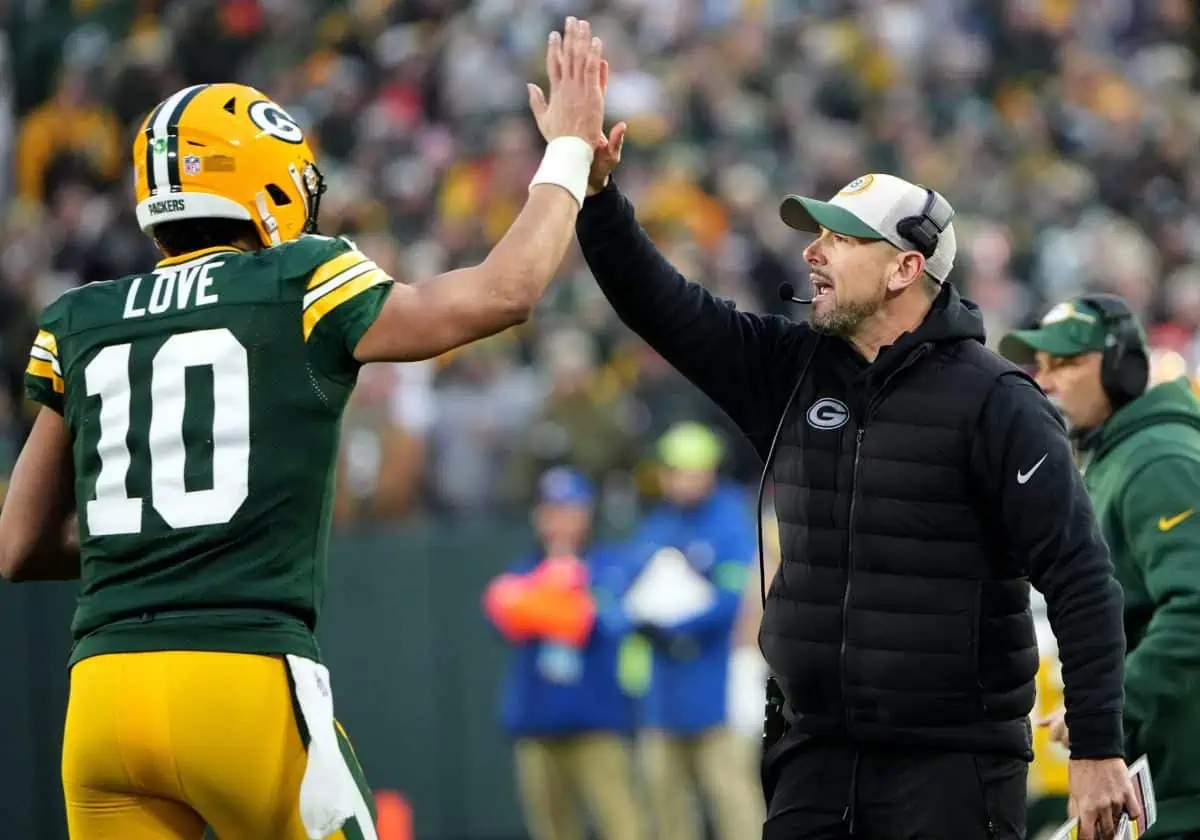
Following the game, which ended in a 40-40 tie, LaFleur was asked to explain his thought process behind the pivotal fourth-down decision. His response was a lesson in situational football, revealing that his choice was based on game flow, defensive trust, and the time on the clock.
Surprisingly, LaFleur admitted that he “never thought of going for it right there,” despite some of his own players wanting to stay on the field. He explained that his thought process would have been different had the situation occurred later in the game.
“Here’s the deal,” LaFleur said. “If that happened in the second half, based on the complexion of the game, I probably would’ve had a different decision. In the first half, the way our defense has been playing up until this point and with the kicker they have, (Brandon) Aubrey, you’re already in field-goal range for him.”
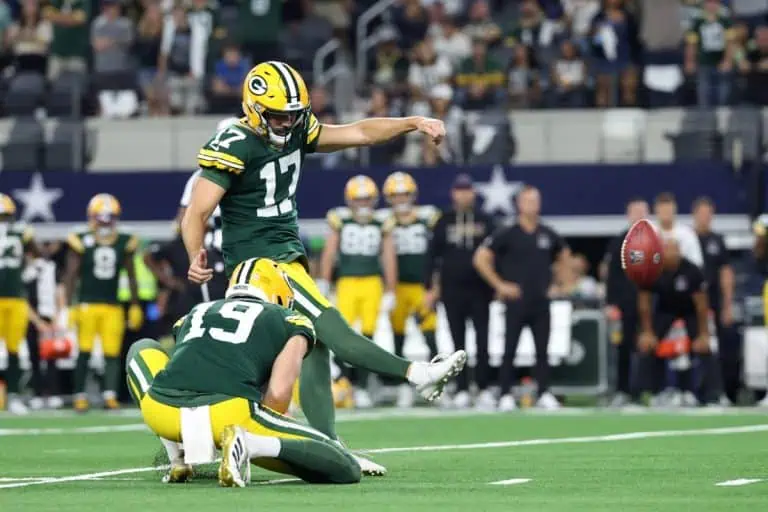
This is the core of his reasoning. Early in the game, he chose to trust his defense, which had been dominant through the first three weeks and had just forced a punt. Punting the ball deep and relying on his defense to get another stop felt like the higher-percentage play, especially given that a failed attempt would give the Cowboys excellent field position, already within range for their powerful kicker.
“Hindsight’s 20/20,” LaFleur added. “Had I known the game was going to go the way it was going to go, would’ve gone for it. But, unfortunately, you don’t have that foresight all the time of how the game’s going to go.”
In the immediate aftermath, LaFleur’s decision worked out. Punter Daniel Whelan pinned the Cowboys at their own 11-yard line. The defense forced another punt, and the Packers took over and drove for another score to go up 13-0. This short-term success, however, did not quell the long-term criticism.
The Damned-If-You-Do Dilemma
While the modern, analytics-driven approach to football heavily favors going for it in situations like 4th-and-2 from midfield, it’s crucial to acknowledge the immense pressure coaches face. The criticism LaFleur is receiving for being too conservative is loud and direct, but it is just one side of a double-edged sword. Had he chosen the aggressive route and failed, he would have faced an equal, if not greater, level of condemnation.
Imagine the alternate scenario: LaFleur keeps the offense on the field, they attempt to convert the 4th-and-2, and the Cowboys’ defense gets a stop. The narrative would have immediately flipped. Instead of being “too conservative,” LaFleur would have been labeled “reckless” and “irresponsible.”
The criticism would have sounded something like this:
- “Why would you be so aggressive in the first quarter when your defense is playing lights out?”
- “It was completely unnecessary. He should have trusted his defense and played the field position game.”
- “He handed a potent Dallas offense a short field and gave them momentum. A terrible coaching decision.”
This is the harsh reality of coaching in the NFL. Every decision is judged solely by its outcome. When an aggressive call works, the coach is a genius. When it fails, he’s a fool who doesn’t understand situational football. The same is true for conservative decisions. In this case, because the game ended in a tie after the Packers’ defense faltered in the second half, LaFleur’s early caution is viewed as a missed opportunity to put the game away. But if the defense had held up and the Packers had won, that same punt would have been praised as a smart, disciplined coaching move.
A Trend of Conservatism?
This single decision is part of a larger conversation about Matt LaFleur’s coaching philosophy. Data from recent seasons has shown him to be one of the more conservative coaches in the league when it comes to fourth-down decisions. During the LaFleur era, the Green Bay Packers rank 17th in the league in fourth-down attempts, a middle-of-the-pack number that stands in stark contrast to the league’s most aggressive teams.
This philosophy of trusting his defense and playing a more traditional field position game has served him well for much of his tenure. However, as the Packers’ defense showed vulnerabilities against the Cowboys, that philosophy is now being called into question. If the defense cannot be relied upon to be elite, does the offense need to take more risks to compensate?
It’s a question Matt LaFleur will have to grapple with as the season progresses. As he himself noted, every game is different, and his decisions will continue to be based on the flow of the game and the matchups on the field.
Conclusion: The Burden of Hindsight
The debate over the Matt LaFleur 4th-and-2 decision Cowboys game will likely linger, fueled by the frustrating nature of the tie. Those who champion analytics will continue to argue that going for it was the mathematically correct choice. Those who favor a more traditional approach might see the logic in LaFleur’s first-quarter strategy.
Ultimately, Matt LaFleur’s comments reveal a coach who is thoughtful and deliberate in his process, even if that process leads to a decision that is unpopular in the modern NFL. While the criticism for his conservative call is valid, it’s equally important to recognize the no-win situation he was in. He made a calculated decision based on the information he had at the time—a dominant defense and a first-quarter game script. Hindsight may be 20/20, but on the sideline, in the heat of the moment, there are no guarantees. There is only the decision, the outcome, and the inevitable wave of criticism that follows, no matter which path is chosen.