Joe Mazzulla and His Revolutionary Approach in 2025: Why Winners Run in Boston

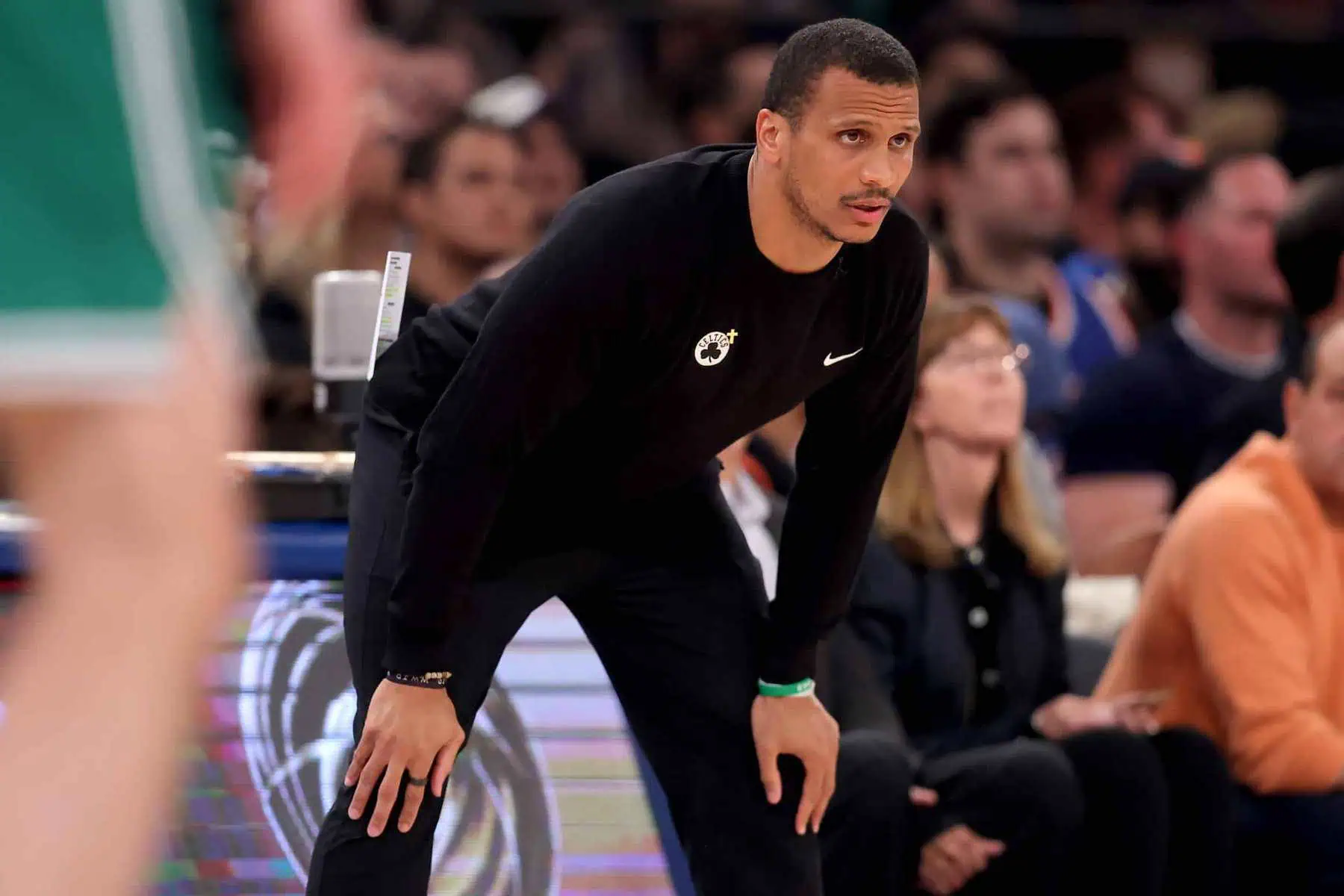
The sweat drips differently in Boston these days, and Joe Mazzulla is the mastermind behind it all. Inside the Celtics’ practice facility, something extraordinary is happening—something that would make most coaches scratch their heads in bewilderment. But Joe Mazzulla isn’t most coaches. He’s a man who sees the game through a lens that’s both brilliant and slightly mad, and his latest revelation proves just how deep his psychological warfare runs.
The Mind Games Behind Joe Mazzulla and His Madness
When Derrick White stepped into that podcast booth and shared the story on “White Noise,” you could almost hear the collective gasp from basketball traditionalists everywhere. The scene he painted was surreal: winners sprinting while losers watched from the sidelines. In any other universe, this would seem backwards—punishment masquerading as reward. But in Joe Mazzulla’s world, it’s pure genius.
“He’d do this thing, where, if you win a drill… Usually, the loser runs. We did this thing, where the winners run. Like, you’re getting rewarded by running,” White explained, his voice carrying that mix of admiration and disbelief that only comes from witnessing greatness in its rawest form.
The emotion in White’s voice was palpable. Here was a veteran player, someone who’s seen it all in this league, still marveling at the psychological warfare his coach employed. It wasn’t just about running—it was about rewiring the very DNA of competitive thinking.
Breaking Down Traditional Basketball Psychology
For decades, basketball has operated on a simple principle: winners rest, losers suffer. It’s Pavlovian conditioning at its most basic level. Win the drill, catch your breath. Lose the drill, run until your lungs scream. Joe Mazzulla looked at this system and decided to blow it up entirely.

The genius lies in the subtlety. By making winners run, Joe Mazzulla wasn’t just changing a drill structure—he was fundamentally altering how his players viewed success itself. Victory wasn’t a destination where you could coast; it was a launching pad for more intensity, more effort, more hunger.
White’s reaction tells the whole story: “I think it was a cool message. Like, if you win, you can’t relax.” There’s genuine respect in those words, the kind that comes from a player recognizing that his coach is operating on a different intellectual plane.
The Emotional Intelligence of Championship Coaching
What makes this story so compelling isn’t just the tactical innovation—it’s the emotional intelligence behind it. Joe Mazzulla understood something profound about human nature: we become what we repeatedly do, and more importantly, how we feel about what we do shapes who we become.
Think about the psychological shift happening in those practice sessions. Players who won weren’t being punished with running; they were being honored with the opportunity to push themselves further. The mindset transformation is staggering. Suddenly, conditioning isn’t a chore—it’s a privilege earned through excellence.
The ripple effects of this approach extend far beyond basketball. These players were learning that success demands more success, that winning is just the beginning of the next challenge. It’s the kind of lesson that creates champions not just in sports, but in life.
How Mazzulla’s Philosophy Translates to Championship Success
When you watch the Celtics play, you can see traces of this philosophy in every possession. There’s no coasting when they take the lead. No relief when they make a great play. Instead, there’s this relentless hunger, this understanding that every moment of success must be followed by another moment of intensity.
Joe Mazzulla has created a culture where winning feeds on itself, where success becomes addictive not because of the accolades, but because of the work it enables. His players don’t just want to win—they want to earn the right to work harder.
White’s final observation cuts to the heart of what makes this approach so revolutionary: the players actually grew to love it. They didn’t just tolerate the running as a reward—they embraced it. That’s the mark of truly transformational leadership.
The Broader Impact on Modern Coaching
This isn’t just a cute anecdote about an unconventional coach. Joe Mazzulla’s approach represents a fundamental shift in how we think about motivation, reward systems, and the psychology of peak performance. He’s proving that the most powerful rewards aren’t always the most obvious ones.
Other coaches around the league are undoubtedly taking notes. How do you create a culture where your best players crave more work, not less? How do you make the pursuit of excellence feel like a gift rather than a burden? Mazzulla has found the answer, and it’s both simple and revolutionary.
The beauty of this system lies in its authenticity. This isn’t some corporate team-building exercise or motivational gimmick. It’s genuine psychological reconditioning, the kind that happens when a brilliant mind understands exactly what his team needs to reach the next level.
Looking at the Celtics’ recent success, it’s impossible to separate their championship mentality from these kinds of innovative approaches. Joe Mazzulla isn’t just coaching basketball—he’s rewiring the fundamental assumptions about what it means to be a winner.