The Bristol Crash That Had Everyone Talking: Nemechek, Elliott, and Racing’s Blame Game

Saturday night at Bristol turned into a classic case of “he said, he said” when John Hunter Nemechek sent Chase Elliott spinning into the wall, and the finger-pointing started before the caution lights even stopped flashing. Just past the halfway mark, what had been a solid run for Elliott and his Hendrick Motorsports team went up in smoke, leaving everyone asking the same question. Who was really to blame? It was lap 315 at Thunder Valley, and the intensity was already cranked to eleven.
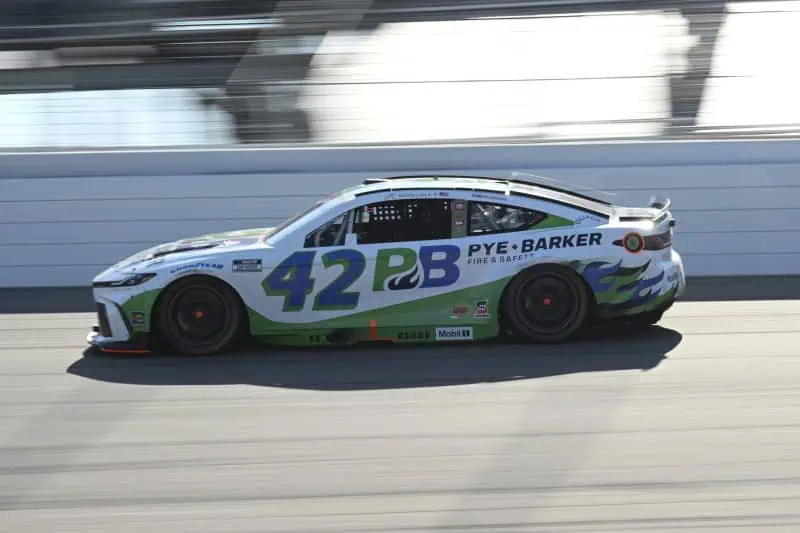
Elliott’s No. 9 Chevrolet was sent for a hard ride into the outside wall after contact from Nemechek’s No. 42 car. The immediate radio chatter told two very different stories. Elliott was fuming, laying the blame squarely on Nemechek. But over on the 42’s channel, Nemechek was telling his crew he got shoved from behind by Denny Hamlin, leaving him with nowhere to go. It was a mess of tangled metal and conflicting stories, the kind of drama only Bristol can serve up.
What Really Happened on Lap 315?
As soon as the wreck happened, the blame game was on. Elliott’s radio crackled with frustration, telling his team the 42 car turned him. But Nemechek was just as quick to defend himself, pleading his case over the radio. “Tell the 9 I’m sorry, I got run over [by Hamlin],” he said, a message that quickly made its way through the garage and onto social media, thanks to Jeff Gluck of The Athletic.
Nemechek’s claim that Hamlin was the instigator set the stage for a classic post-race debate, with drivers, crew chiefs, and fans all trying to piece together the truth from the replay. It didn’t take long for the broadcast team to jump in. On the TV replay, analysts Steve Letarte and Jeff Burton broke down the footage frame by frame. Their verdict was pretty clear: it looked like Nemechek got into the back of Elliott before Hamlin was ever a factor.
Multiple angles seemed to show Nemechek’s front bumper making contact with Elliott’s rear, which sent the No. 9 spinning. Only after that initial hit did Hamlin’s car make contact with Nemechek, complicating an already bad situation. The replay suggested Elliott was trying to tuck in line behind Austin Cindric, but the hole he was aiming for closed in a hurry. In the tight confines of Bristol, that split-second decision ended in disaster.
Drivers Weigh In After the Carnage
When he finally got out of the car, a disappointed Chase Elliott tried to make sense of it all. He admitted things happened so fast it was hard to know for sure what went down. He was just trying to manage his tires and get back to the bottom lane, which was the preferred line at that point in the race.
“It was just a game of how quickly could you get to the bottom for a few laps and to preserve your tires,” Elliott explained, the frustration evident in his voice. He felt a hard shot from behind, but couldn’t be certain if Nemechek had been pushed or if he had closed the gap too quickly. “I don’t know if [Nemechek] had gotten hit or if I just stacked the lane up that much. Nonetheless, it happened and it’s done.”
That’s the brutal reality of racing at Bristol. Sometimes, there’s no one person to blame; it’s just a consequence of 40 cars fighting for the same piece of real estate. Despite a gut-wrenching 38th-place finish, Elliott’s playoff hopes aren’t dead. He’s moving on to the Round of 12, but the incident is a painful reminder of how quickly a good night can go wrong.
Later, Elliott seemed resigned to the outcome. There’s an unwritten rule in the garage: what happens on the track, stays on the track. You can be mad, you can be frustrated, but at the end of the day, you have to move on. “It is what it is, it sucks, and I’m sure that’ll be it,” he said, already looking ahead.
The Fallout from Bristol
The crash has kicked off a firestorm of debate about racing etiquette, especially with the playoff pressure cooker turned all the way up. For a team like Hendrick Motorsports, it’s a moment to regroup and make sure one bad night doesn’t derail a championship run. For drivers like Nemechek, it’s a tough lesson in how every move is scrutinized when racing alongside superstars like Elliott and Hamlin.
As the series moves on, the replays will be watched a thousand more times. Fans and analysts will argue over who was right and who was wrong. But for the drivers, the focus has to shift. Elliott can’t afford to dwell on it, and Nemechek has to put it in his rearview mirror. Because in the NASCAR playoffs, the next race is always the most important one, and there’s no time to look back.