The Biggest problem with the Next-Gen No One Talks About

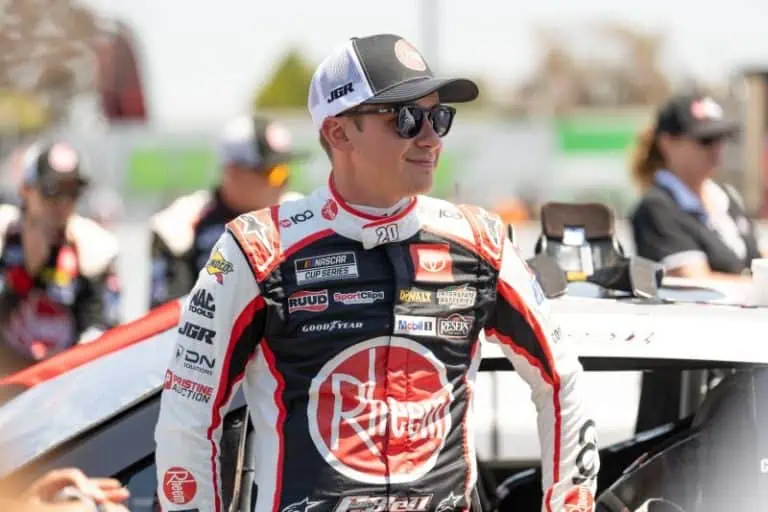
This season has highlighted Ty Gibbs’ struggle with the Next-Gen. The man who won 12 Xfinity races, including his debut at 18 years old, won the Xfinity championship at an incredible 19 years old. Now, recently, he broke the record for most starts without a win at JGR, breaking the record set by JJ Yeley.
Ty Gibbs is far from an Outlier in the Next-Gen Era
The likes of Ty Gibbs, Harrison Burton, Gragson, Custer, van Gisbergen, and Cindric all struggle after dominating or performing well in the Xfinity Series. Harrison Burton is even out of the Cup Series, returning to the Xfinity Series, and is doing great! Currently inside the playoffs, 11th in the standings with a car that finished 32nd in the owners’ standings last year. After only having 6 top tens in 3 years in a car that currently has half of that this year alone with new driver Josh Berry, and had 9 top tens the year before he got in the ride with Dibby behind the wheel.
So, what’s Going on With the Next-Gen?
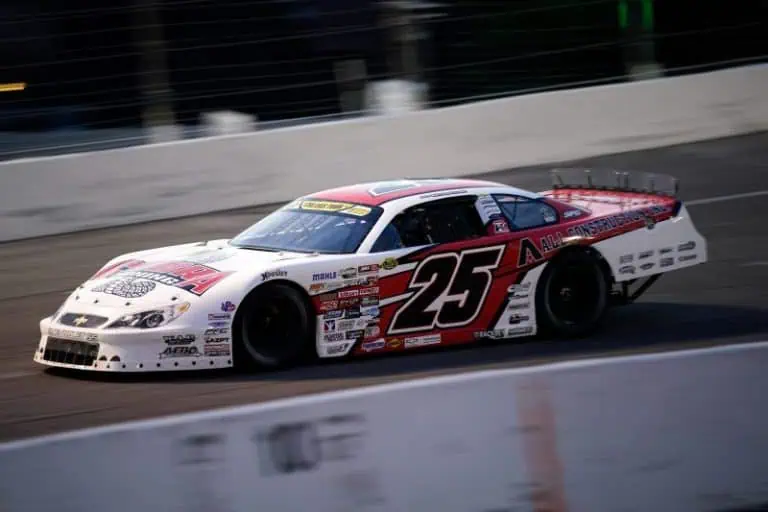
Never before have so many young drivers from the 2nd series struggled in such a consistent and rapid manner. The reason why is actually very simple: it’s how different the cars in the Xfinity Series are compared to the Next Gen. This has even been a popular point of contention among fans, with many believing the Xfinity Series short track package is superior to the Next Gen’s short track package.
Biggest Issue with Next-Gen Mechanics for Xfinity Drivers
Which is how useless Xfinity has become as a development series. Before NASCAR’s 2nd tier series was the premier place for NASCAR drivers to go, with champions like Stenhouse, Truex Jr., Harvick, Bobby Labonte, Brad Keselowski, Chase Elliott, Chase Briscoe, and even those who didn’t win a title but showed talent, like Denny Hamlin, Aric Almirola, Kyle Larson, Bubba Wallace, or Ross Chastain, who showed potential in the series and turned that into long, winning Cup Series careers.
What Sets the Next Gen Cup Cars Apart
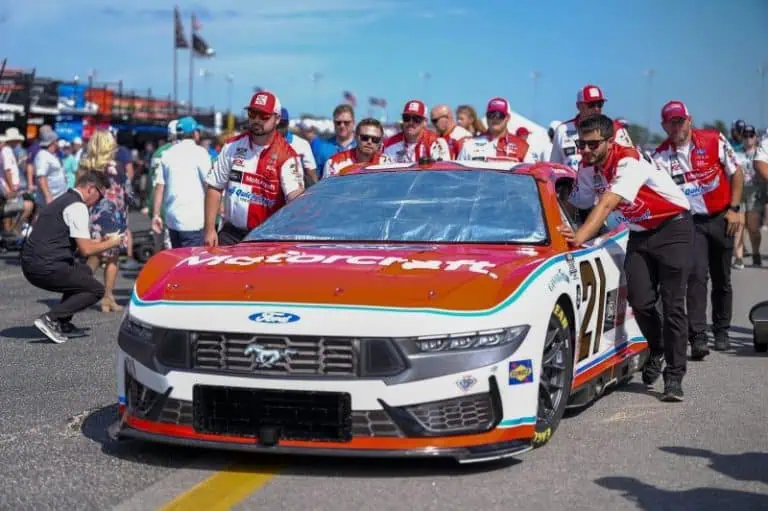
Now, the Cup cars’ additional 5 inches in their wheelbase might not seem like a massive difference, but to the drivers, it is. By extending it from the Xfinity Series’ length of 105 inches to 110 inches, the ripple effect results in a car that feels totally different. From the aerodynamic packages to the safety modifications, piling on challenges for young drivers trying to adapt.
The difference doesn’t stop there in the Xfinity Series; cars are approximately 11 inches longer, one inch taller, and four inches narrower than Cup Series competition vehicles. With its larger overall size, the Cup Series Next-Gen car weighs in, with a driver, at 3,500 pounds compared to the vehicle used in the Xfinity Series, which is 100 pounds less!
Are Lighter Cars the Answer?
Drivers are becoming accustomed to much lighter cars, which require a different driving style entirely to maximize their performance. With such different characteristics, it makes it especially hard for very inexperienced drivers to adjust their driving style to all these challenges they’re facing for the first time.
Many of these drivers, like those mentioned earlier, have struggled immensely. Let’s delve into more detail about how much these dominant Xfinity drivers struggle in the Next Gen! Cindric was the 2020 Xfinity Series champion, winning 13 races in three years in the series. In the Cup Series over 4 seasons, Cindric has achieved only three wins (including a Daytona 500, to be fair), with his best season being his rookie year.
Still having the highest average finish of his career at 16.3 with the highest amount of top 5s and 10s, with 5 top fives and 9 top tens. He’s been in the playoffs 3 out of the 4 seasons in the Cup Series, but has never had more than 10 top tens in a season. Having 25 top tens in 125 starts compared to 89 top tens in 133 starts in the Xfinity Series.
Chase Elliott: The 2014 Xfinity Series Champion
In his first four seasons with the Gen 6 car, he had 6 wins and 74 top tens in 144 starts. And that was after only 2 full-time Xfinity Series seasons compared to Cindric’s 4 full-time Xfinity Series seasons, giving him double the time to get ready for Cup. To further drive in the point, let’s compare Noah Gragson to Cole Custer.
Noah Gragson’s Successful Xfinity Run
In 4 full-time Xfinity Series seasons, Gragson had 13 wins and 94 top tens in 132 starts. Custer’s time in the 2nd-tier series was very comparable, with three full-time Xfinity Series championship seasons, including nine wins and 69 top tens in 99 starts. However, I’d argue that Gragson’s time in the series has been slightly better. Gragson’s struggles in the Cup Series with the Next-Gen. In his time with NASCAR’s newest car, he has had 11 top tens and 3 top fives in 89 starts, currently ranking 31st in the standings despite being on a resurgent Front Row Motorsports team.
Cole Custer’s First Seasons in Cup Were a Struggle too, but Less So
In 2018, Custer got his 1st career win, with more top tens (12) and a pole. With Custer’s rookie season having a better average finish than Gragson’s best season under the Next Gen, 19.2 vs. 19.6. Despite most of Custer’s time in Cup being on a dying Stewart-Haas Racing in the only Gene Haas-owned car. Custer has had his struggles in the Next-Gen as well, returning to the Cup Series this season, now 34th in the standings with no top tens in 14 races after winning the 2023 Xfinity Series championship.
Development Series and Next-Gen?
The truck series has a lot more in common with the Next Gen cars, and this is evident in the exceptional driving skills of drivers straight from the truck series. Hocevar replaced Gragson during his rookie season after his stupid firing, and from the start, outperformed him. Having an average finish of 24.6 vs. Gragson’s 28.2, then going out to have Spire Motorsports’ best-ever season with an 18.3 average finish plus 6 top tens, even almost winning on pace last week at Nashville, finishing 2nd.
Craftsman Truck Series Evolution
Todd Gilliland only had three truck series wins, but has done much better than Custer or Harrison Burton, who had more wins in the second tier. Having 2 seasons (2024 and 2025) with an average finish of 20 or above, 20.9 in 2024 and 19.0 currently in 2025, outperforming dominant Xfinity Series teammate Gragson.
His 22nd-place finish in the standings in 2024 is higher than either Gragson’s or Josh Berry’s best points finishes so far. Despite this, so far, not many drivers have been called up directly from the truck series. With only the likes of Zane Smith or Derek Kraus even then after a PT stint in Xfinity being promoted to Cup in the Next-Gen era.
Development Drivers and Xfinity
With the likes of Connor Zilisch, who is tipped by many to be NASCAR’s next superstar after winning in his debut race at 18 years old (like Ty Gibbs). Who has currently done two races with the next-gen car on a top team in Trackhouse and currently has an average finish of 30? Or Sam Mayer, who once won a truck series at 17 years old and has been 1 of the top Xfinity Series drivers this year, currently 3rd in the standings after 4 years waiting for a chance in the series.
Jesse Love was promoted directly from ARCA to Xfinity and has already achieved two career wins and seven poles at the age of 20. Such stark differences between the cars cause unneeded and hard-to-overcome challenges and get in the way of their future Cup Series stardom. With many more, someone may even do what Chandler Smith did this season. Going from a top ride in the 2nd-tier series to a top ride in the 3rd-tier series, the truck series. To get better prepped for Cup. Thanks a bunch for reading!