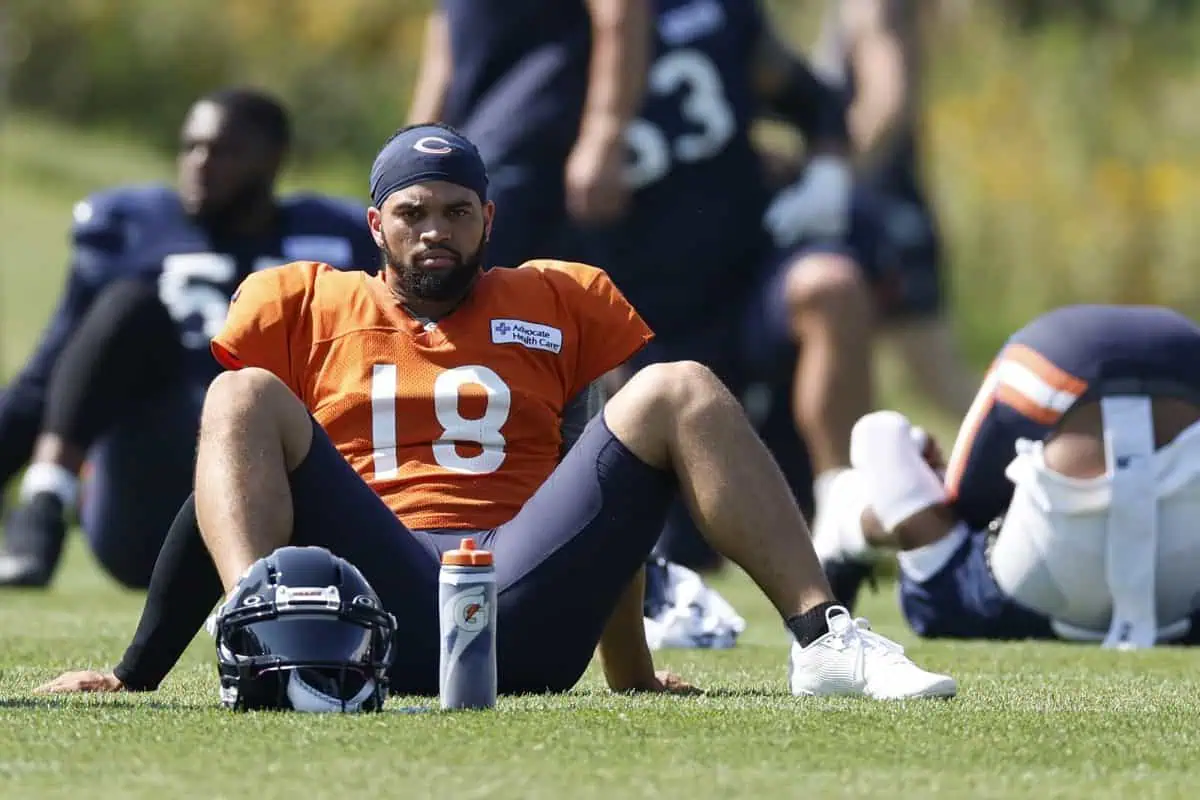
Chicago Bears: Weird Caleb Williams Interaction Raises Eyebrows With Fans

The Chicago Bears took Caleb Williams to be their franchise quarterback. When franchise quarterbacks are hit—especially in joint practices—it’s almost an unspoken rule that their teammates spring into action. Protecting the signal-caller who holds the fate of the franchise is not just a matter of etiquette; it’s a red flag for what might be bubbling under the surface if such support is absent. During a joint practice session between the Chicago Bears and Buffalo Bills, Caleb Williams, the 2024 first overall pick and the centerpiece of the Bears’ rebuilding efforts, took a late chest-high shove from pass rusher Joey Bosa.
What followed, or rather didn’t, says a lot about the current climate in Chicago. Instead of an immediate pushback from his offensive line or fellow teammates, there was nothing more than silence. No shoving match. No retaliation. They simply moved on to the next play, leaving Williams to brush himself off.
For a team built around the supposed promise of Williams and an offensive-minded leader like head coach Ben Johnson, this moment raises questions about chemistry, leadership, and team culture as the 2025 NFL season looms large.
Chicago Bears Caleb Williams: What Happened During the Incident
The late hit occurred roughly 90 minutes into practice during a two-minute drill, a typical high-pressure scenario designed to simulate game conditions. Joey Bosa, the Bills’ edge rusher, delivered a shove to Williams’ chest as he wrapped up his rush. By NFL standards, this was the kind of contact that often sparks heated confrontations in training camps. Offensive linemen, skill players, and sometimes even defensive teammates typically rush in to back their quarterback, setting a tone for the rest of the team.
But for the Chicago Bears, no such response materialized. Sports Illustrated’s Matt Verderame, who reported on the incident, summarized the scene succinctly, noting, “It resulted in a collective shrug from teammates as the Bears moved to their next play in the two-minute drill.”
Collective shrugs don’t win football games, and they certainly don’t inspire confidence in a team’s ability to rally around its leader.
What Could This Incident Signal About Team Chemistry?
On the surface, this lack of reaction could be chalked up to the monotony of training camp or the natural urge to keep tempers in check during joint practices. But when you peel back the layers, it may hint at deeper issues within the Bears’ roster.
Team chemistry is often about more than X’s and O’s or individual player ability; it’s about relationships, trust, and shared accountability. The quarterback is the de facto leader of any team—both literally and symbolically. If Williams isn’t commanding the loyalty and defensive instincts of his teammates, it may point to a disconnect between him and the rest of the locker room.
Head Coach Ben Johnson‘s arrival was supposed to signal a new era of collaboration and offensive innovation in Chicago. Yet, moments like these cast doubt on whether Johnson’s culture has truly taken hold or whether players are still figuring out how to operate under his leadership.
The Lack of Response Raises Leadership Questions
Moments like these are also leadership crucibles, both for Williams and his teammates. Part of being a franchise quarterback is inspiring others to stand beside you when tensions rise. It’s the Tom Bradys and the Peyton Mannings of the world, the players who elevate not just their play but their teammates’ actions, who set the standard for how teams respond to adversity—even if it’s in a relatively low-stakes practice scenario.
Williams’ leadership ability is one of the traits that made him such a coveted draft pick coming out of USC. But those traits need to be honed at the NFL level, and until he earns the respect and galvanizes the loyalty of teammates, late hits that go unchallenged could become symbolic of larger leadership gaps.
Likewise, players like offensive linemen and veteran leaders on the roster need to set the tone for the rest of the squad. If defensive players like T.J. Edwards—or offensive standouts like Darnell Wright—aren’t stepping in to challenge a late hit on their quarterback, it leaves a puzzling, perhaps even concerning, void in leadership.
Turning a Moment into Growth
Isolated incidents don’t have to define teams. If Johnson and Williams can use this moment as a teaching opportunity, it could mark a turning point for a Chicago Bears roster still searching for its voice and identity. Johnson might stress accountability, teaching players that sticking up for one another isn’t just encouraged but expected. Williams, meanwhile, can take steps to assert himself in practice huddles and in the locker room, fostering stronger bonds with his teammates.
The Bears may have shrugged off this hit in practice, but how they respond in the weeks ahead—and on Sundays this season—will reveal whether these cracks in their chemistry deepen or close.
Final Thoughts
Caleb Williams is a generational talent, but even the most skilled quarterbacks need the full backing of their teammates to truly succeed in the NFL. The late hit during the joint practice might seem insignificant in the grand scheme, but moments like these often serve as barometers for team culture and leadership.
For the Chicago Bears, this is less about the hit itself and more about the reaction—or lack thereof. Ben Johnson and his squad still have time to forge the kind of unity that makes championship teams, but the onus is on them to address the underlying issues before the season’s challenges amplify them further.