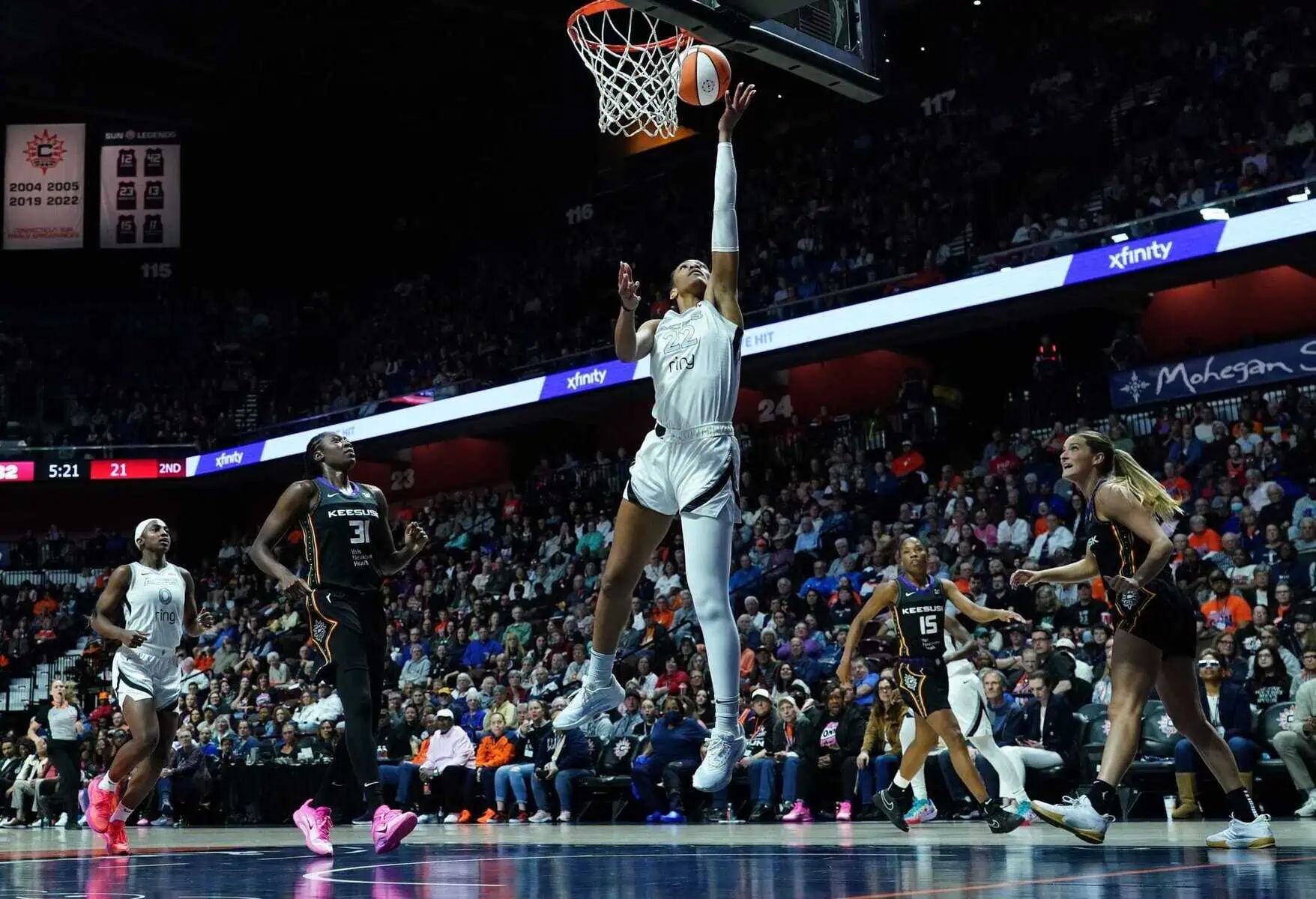
Las Vegas Aces: More Than Just a Team, an Arsenal in Game 1 of the Finals

LAS VEGAS — Becky Hammon, leaning back, almost let a smirk slip. “There’s a lot of options, right? And I only can play five at a time.”
You wouldn’t have heard that kind of talk from the coach of the Las Vegas Aces in years past. The championship squads of 2022 and 2023 were juggernauts, no doubt, but “deep” wasn’t the first word that came to mind. They were top-heavy, a beautiful machine built around a core of superstars. And it worked. They overpowered teams with sheer, unrelenting force. But the game, as it always does, evolved. The WNBA shifted, and to stay on top, Hammon knew the Las Vegas Aces had to change with it. They needed more than just a plan A; they needed an entire alphabet of options.
That strategic evolution was on full, glorious display in Game 1 of the WNBA Finals. The nail-biting Las Vegas Aces 89-86 victory over the Phoenix Mercury wasn’t just a win; it was a thesis on the power of versatility. It was a chaotic, beautiful mess. Not every play was perfect, not every shot fell. But the Las Vegas Aces had something new in their back pocket: the freedom to fail, adjust, and try something completely different.
A Symphony of Strategy
Think about it. Two of their top three scorers exploded off the bench. They threw their trusted man-to-man defense out the window in the second half, switching to a zone that left the Mercury searching for answers. And for the final, heart-stopping defensive possession? Hammon rolled the dice, inserting a player who hadn’t seen a single second of action all night. They morphed from big to small, from a methodical grind to a lightning-fast attack. They kept pushing buttons until they found the right combination to unlock a victory.
“We have weapons,” Hammon declared, the confidence evident in her voice. “We want to use them all. We’re harder to guard that way.”
No one embodies this new philosophy more than Dana Evans. The reserve guard has spent five years on three different teams, a journeyman carving out a career from the sidelines. But she’s turned that into her superpower. For Evans, every minute on the bench is a masterclass in observation. “You have to be a student of the game,” she explained earlier this week. “You have to know what’s not working, what is working, and when you go out there, you don’t want to make the same mistakes.” The Aces brought her to Vegas this winter for exactly this reason—to be their secret weapon, their problem-solver.

And solve problems she did. Evans was a force of nature in Game 1, dropping 21 points and hitting a staggering 5-of-6 from beyond the arc. She added four steals and three assists with zero turnovers for good measure. At 5′ 6″, she spent much of the game hounded by the 6′ 4″ DeWanna Bonner of Phoenix. On paper, it was a mismatch. On the court, it was a lesson in physics: speed kills. Evans was the spark plug, injecting a pace that was both blistering and controlled.
Adjust or Go Home: The Aces’ Mid-Game Metamorphosis
Even with Evans and fellow bench warrior Jewell Loyd (who chipped in a crucial 18 points) firing on all cylinders, the Las Vegas Aces found themselves playing from behind. Phoenix guard Kahleah Copper had been a flamethrower in the first half, torching them from deep. So Hammon made a call that could have backfired spectacularly. She switched to a zone defense. This isn’t a team known for its zone. But they had practiced it just enough. They trusted it, and more importantly, they trusted each other.
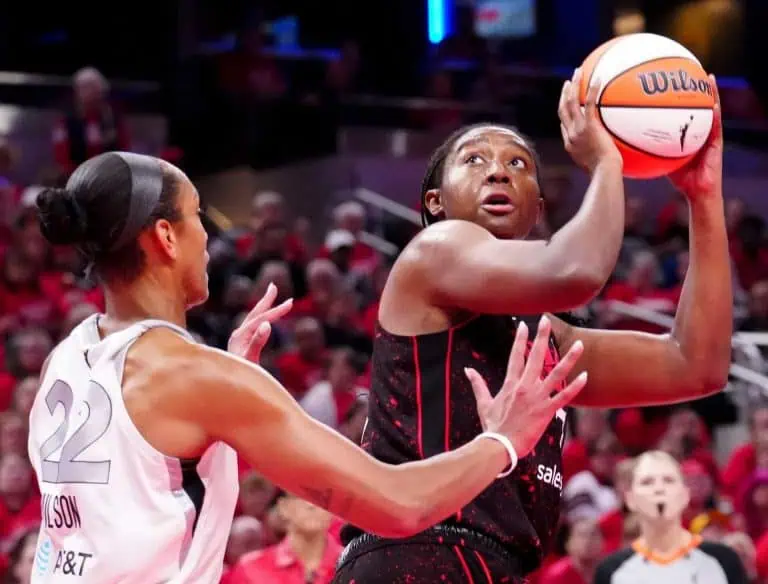
“Even though we don’t practice it, we still understand our rules when it comes to the zone,” said the reigning MVP, A’ja Wilson. “I think we played it enough throughout the season to trust one another that we’re going to be there.”
And they were. Copper, who seemed unstoppable in the first half, was suddenly neutralized. She took half as many shots and didn’t make another three for the rest of the game. “Give them credit for mixing up their defense,” a resigned Phoenix coach, Nate Tibbetts, admitted post-game. “That was a good adjustment. We didn’t handle it well.”
But the Mercury is too good, too resilient to just roll over. They clawed back. With less than a minute to play, they were down by one, and Alyssa Thomas was at the line with two free throws to take the lead. The arena held its breath. Clank. Clank. The crowd erupted, not just for the misses but for the promise of free pizza from the team’s “Miss Twice, Get a Slice” promotion. Even in the thick of a Finals battle, a little absurdity can cut the tension.
Still, it wasn’t over. Phoenix had the ball, down three with 13.5 seconds to go. One last chance to tie it.
And Hammon had one last trick up her sleeve. She subbed in Kiah Stokes, the defensive veteran who had been glued to the bench all night. A cold player for the most critical possession of the game. It was a gamble. And it paid off in spades. Stokes was a defensive whirlwind, switching onto every member of the Mercury’s Big 3, a blur of controlled chaos. Phoenix couldn’t find an inch of space. Their final shot was a prayer, a desperate heave that had no chance. Game over.
It was the final, definitive statement. The Las Vegas Aces aren’t just one style, one look. They are a collection of styles, a Swiss Army knife of basketball talent. They can beat you with their stars, or they can beat you with their bench. They can outrun you, or they can grind you down.
As Tibbetts said, “We’re going to play our style, they’re going to play their style, and the best team is going to win.” What he might not have fully grasped is that for these Las Vegas Aces, “their style” is whatever it needs to be. And in the heat of the Finals, that chameleon-like ability might just be the most valuable weapon of all.