
‘Lies’ and Overload: Stefanos Tsitsipas Torches ATP Over Prize Money and Grueling Schedule

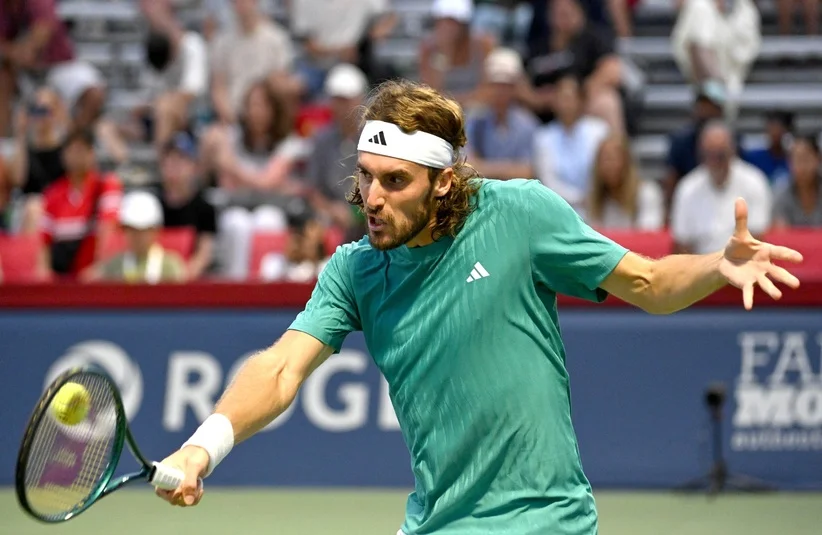
Stefanos Tsitsipas has never been one to shy away from a long battle on the court, but his latest fight is taking place entirely outside the baseline. The Greek superstar has thrown a massive wrench into the machinery of men’s professional tennis, publicly accusing the ATP of misleading players regarding prize money increases and failing to protect athletes from the physical toll of an increasingly brutal calendar.
This isn’t just a standard complaint about a bad line call. This is a direct criticism of the sport’s governance. During a candid appearance on the What’s the Call podcast, the World No. 3 didn’t mince words, essentially labeling the tour’s promises of financial growth as a bluff that hasn’t paid off for the talent actually swinging the rackets.
Tsitsipas Calls Out the “One Vision” Strategy
At the heart of the controversy is the ATP’s strategic shift known as “One Vision.” The plan was sold to players as a way to modernize the game, largely by expanding the prestigious Masters 1000 tournaments from one-week sprints into nearly two-week marathons. The logic from the suits was simple: longer tournaments equal unparalleled drama, more TV time, and ultimately, more money for everyone involved.
However, Tsitsipas is calling foul. He argues that while the workload has undeniably increased, the compensation hasn’t scaled to match the effort.
For a player like Tsitsipas, who relies on prize money as a primary income source, unlike team sport athletes with guaranteed contracts, the math simply isn’t adding up. He contends that the tour sold them a dream of riches that has turned into a reality of stagnation. The paycheck might look slightly bigger on paper, but when adjusted for the extra week of work and expenses, the profit margin for the players is shrinking.
The Physical Toll Of the Extended Calendar
It’s not just about the numbers in the bank account; it’s about the miles on the body. Tennis already boasts one of the most punishing schedules in professional sports, an 11-month grind that spans the globe. By stretching out the Masters 1000 events, the windows for rest and recovery have all but vanished.
Tsitsipas highlighted this issue as a critical failure of player welfare. The modern game is more physical than ever, and the current format is a recipe for burnout and injury. We are seeing players breaking down earlier in the season, and the Greek star is pointing the finger directly at a system that demands peak performance year-round without offering the requisite downtime.
When you extend a tournament to 12 days, you aren’t just asking a player to play tennis; you’re asking them to maintain peak mental and physical conditioning without a break, only to immediately fly to the next city and do it again.
A Locker Room On the Verge Of Revolt?
While Tsitsipas is currently holding the megaphone, he is hardly on an island. His comments are the latest in a growing chorus of dissent from the locker room.
Novak Djokovic has spent years trying to organize players into a more cohesive union-style entity to demand better revenue sharing. Alexander Zverev has publicly blasted the tour for scheduling matches that end at 3:00 AM. The frustration is palpable. The “One Vision” plan was supposed to unify the tour, but ironically, it seems to be unifying the players against the administration.
The ATP has defended its stance, naturally. They argue that the expanded format is necessary to compete with other global entertainment products and that commercial growth takes time. But patience is wearing thin among the rank and file who feel they are being squeezed to maximize profits for tournaments while they take all the physical risk.
FAQ SECTION
Q: What happened in the Stefanos Tsitsipas ATP prize money controversy?
A: Tsitsipas accused the ATP of misleading players about prize money increases and overloading them with extended tournament formats.
Q: Who is involved?
A: Stefanos Tsitsipas, ATP leadership, and other professional tennis players affected by the schedule.
Q: Why is this news important?
A: It highlights concerns about player welfare, financial fairness, and the sustainability of professional tennis.
Q: What are the next steps?
A: Potential negotiations between players and ATP, with pressure to increase prize money and adjust scheduling.
What This Means For the Future Of the Tour
So, where does tennis go from here? Tsitsipas has effectively drawn a line in the sand. By using terms like “lying,” he has escalated the situation from a negotiation to a confrontation.
This could be the catalyst for a more aggressive push for collective bargaining. In major US leagues like the NBA or NFL, players receive a guaranteed split of revenue. In tennis, that percentage is significantly lower. If top draws like Tsitsipas continue to speak out, the ATP may be forced to open the books and restructure how the pie is sliced.
The immediate impact will likely be a tense few months on tour. Every press conference will now be an opportunity for players to echo or refute the claims. But the long-term implications are heavier. If the tour cannot prove to its stars that the extended schedule is worth their time and health, we might see players skipping major events to preserve their bodies. It is a move that would hurt the product, the fans, and yes, the ATP’s bottom line.
Tsitsipas has served the ball into the ATP’s court. Now, the world is waiting to see how they return it.
