
Why Aryna Sabalenka Refuses to Ditch Her Country Despite the Flag Ban

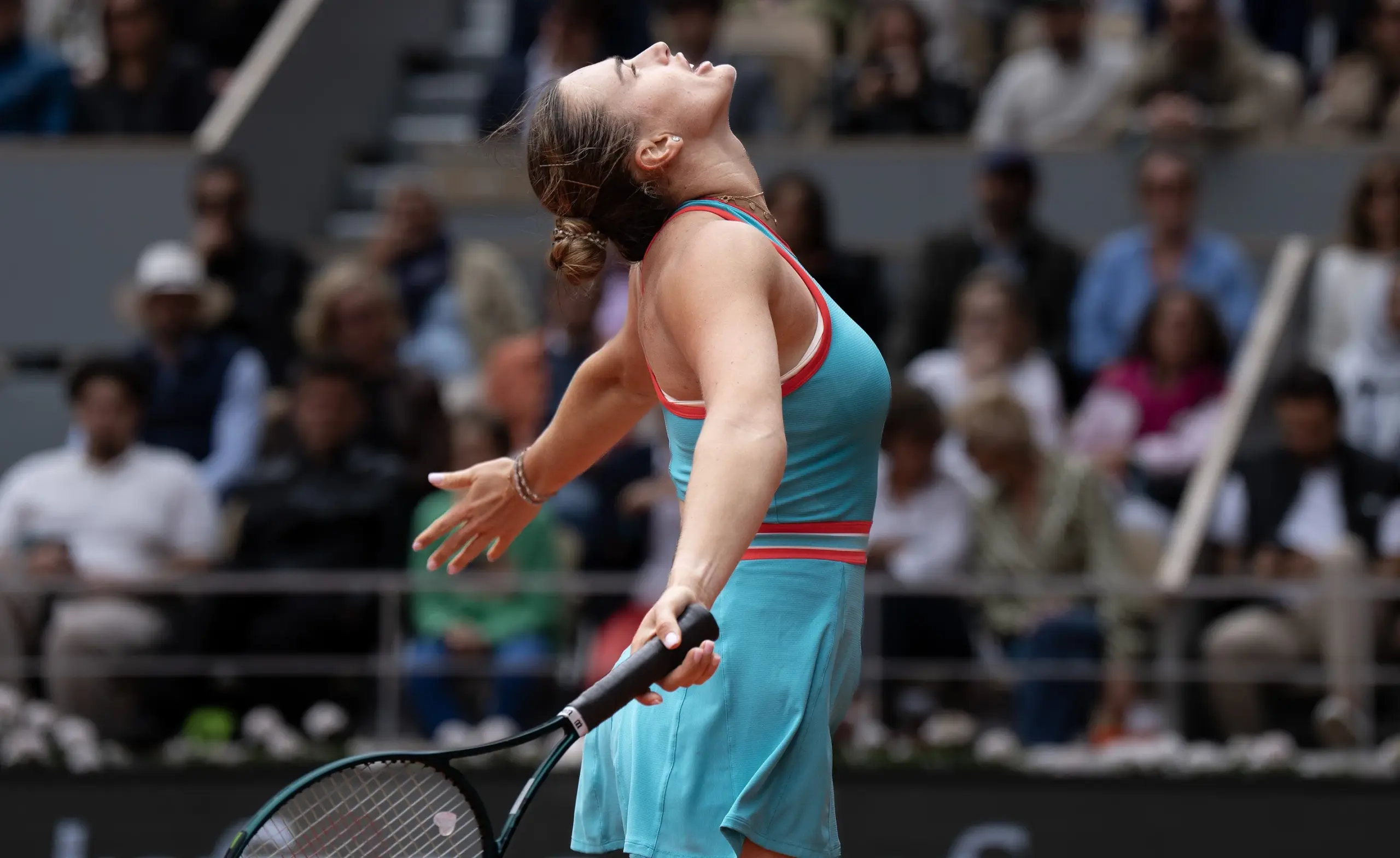
If you’ve watched a Grand Slam in the last couple of years, you might have noticed something missing next to Aryna Sabalenka’s name on the scoreboard. No, it’s not a glitch in the matrix, and no, the broadcast team didn’t just forget to upload a JPEG. It’s a blank space where a flag should be. Since 2022, Sabalenka—along with every other tennis player from Russia and Belarus—has been competing as a “neutral athlete.”
It’s an awkward, politically charged situation that feels less like sports and more like a bizarre episode of The Twilight Zone. But while other players are jumping ship and swapping nationalities faster than I swap loadouts in Call of Duty, Sabalenka is digging her heels in. She’s sticking with Belarus, flag or no flag. And honestly? You have to respect the grit, even if the situation is an absolute mess.
The “Neutral Athlete” Limbo
Let’s rewind a bit. Following the invasion of Ukraine in 2022, the governing bodies of tennis (ITF, WTA, ATP) decided that while they wouldn’t ban Russian and Belarusian players outright, they wouldn’t let them represent their countries either. No anthems. No colors. No flags. Just… individuals playing tennis.
Wimbledon even went full hard-mode in 2022 and banned them entirely, which went over about as well as a lead balloon (and resulted in the tour stripping the tournament of ranking points). They walked that back in 2023, but the “neutral” rules stuck.
For Sabalenka, this has to be exhausting. Imagine winning the Australian Open—twice!—and having that crowning moment of glory stripped of national identity. It’s just you, a trophy, and a weirdly empty graphic on the TV screen.
Why Not Just Pull a Nationality Switch?
Here’s where it gets interesting. We are seeing a wave of players looking for an exit strategy. It’s not exactly a new mechanic in the sports world; if the server you’re playing on is laggy or banned, you find a new server. Russian players like Varvara Gracheva (now French) and Alexander Shevchenko (now Kazakhstani) have packed their bags and swapped flags. It solves the travel visa headaches, the PR nightmares, and the awkward press conference questions.
So, when Piers Morgan—of all people—cornered Sabalenka recently and asked the “uncensored” question about why she hasn’t defected to a country that would let her fly a flag, the tennis world held its collective breath. Is she going to fold? Is she going to take the easy route?
Nope. She parried that question like a 120mph serve.
Sabalenka made it clear: she’s not abandoning ship. “I have always been really proud to represent such a small country,” she said. And then she dropped the emotional hammer: “I don’t want to betray all those kids.”
It’s About the Next Generation, Not the Politics
This is the part that actually hits you in the feels. It’s easy to look at millionaire athletes and assume they’re just corporate entities with rackets. But Sabalenka’s reasoning isn’t political; it’s personal. She views herself as proof that you can come from a small, controversial place and still dominate on the world stage.
“I would like to represent Belarus just for the kids from that country to see me competing on a high level and get inspired by me,” she explained.
That’s a heavy burden to carry. She knows that if she swaps her nationality to, say, American or UAE or whatever, she’s essentially telling every kid back in Minsk that the only way to succeed is to leave. By staying, she’s trying to be a beacon of hope in a pretty dark timeline.
Walking the Tightrope
Look, it hasn’t been smooth sailing. Sabalenka has had her foot in her mouth more than a few times regarding the war. She initially tried the “I’m just an athlete, no politics please” defense, which rarely works when your country is actively involved in a conflict. She’s had awkward handshakes (or lack thereof) with Ukrainian players like Marta Kostyuk. She’s had press conferences that felt more like interrogations.
But she eventually stated, plainly, that she doesn’t support the war and, by extension, doesn’t support the current actions of her government leader, Lukashenko. It took a while to get there, but she got there.
And yet, despite the PR disasters and the constant scrutiny, she’s crushing it on the court. She finished the recent season as World No. 1. She’s raking in titles. She’s playing with a ferocity that suggests she’s channeling all that off-court frustration into every forehand.
What Happens in 2026?
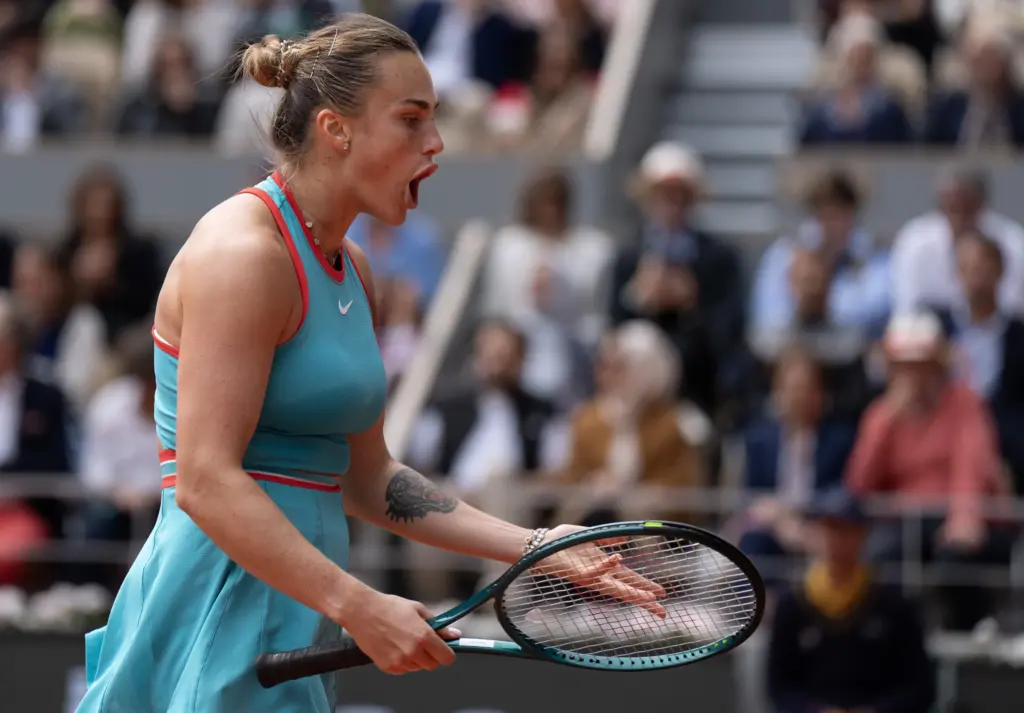
So, what’s the endgame here? The 2026 season kicks off in Brisbane, and Sabalenka will be there, likely still flagless. The Australian Open follows, where she’s the defending champ. The restrictions don’t seem to be lifting anytime soon.
Most people in her shoes would have taken the “easy mode” option by now. Get a new passport, get a flag, get the press off your back. But Sabalenka is playing on Hard Mode, seemingly out of a sense of loyalty to the kids back home who have her poster on their walls.
You can criticize the politics, and you can criticize the initial silence, but you can’t really criticize the loyalty to her roots. Whether she ever gets that flag back on the scoreboard remains to be seen, but for now, she’s letting her racket do the talking. And right now, it’s screaming pretty loud.
