
Elena Rybakina Takes On the Line-Calling Machines in Madrid

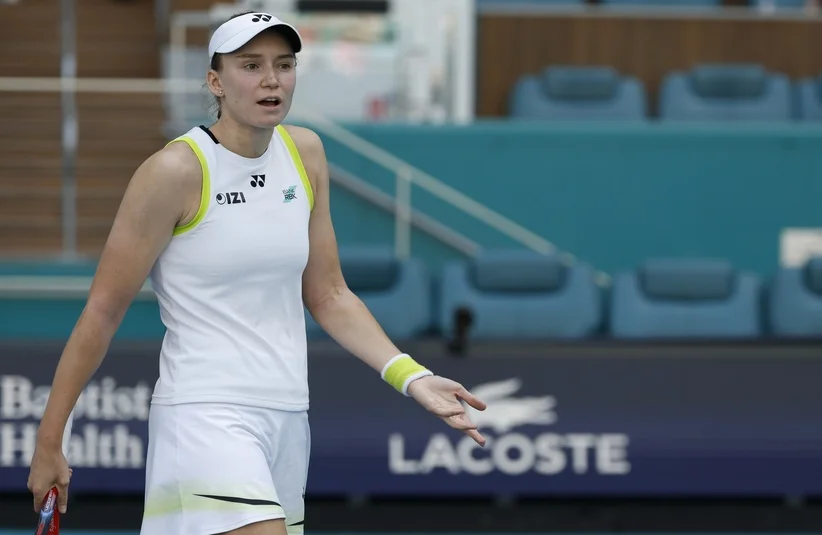
Tennis on a clay court is supposed to be romantic. It’s sliding, it’s grinding, and it’s about reading the literal writing in the dirt. But when you throw a computer into the mix, that romance quickly turns into a dystopian sports nightmare.
Welcome to the Madrid Open, where the machines are in charge, the players are losing their minds, and Elena Rybakina has officially become the poster child for the human resistance. If you missed the chaos, buckle up. We need to talk about the Madrid tennis controversy electronic line-calling system debacle, because it is exactly the kind of high-stakes, emotion-filled drama that makes professional tennis so incredibly entertaining.
The Incident That Sparked the Madrid Controversy
The stakes are high in Madrid. Elena Rybakina, the former Wimbledon champion and a player whose usual on-court demeanor makes an iceberg look emotionally volatile, is battling it out on the red dirt. Her opponent hits a ball that, to anyone with functioning eyeballs, lands out. It wasn’t even a whisper of a line clip. It was out.
But the electronic line-calling system cheerfully ruled the ball “in.” Rybakina immediately protested, and frankly, who could blame her? She walked right up to the spot and pointed at the undeniable, physical ball mark sitting right there in the crushed brick.
In any other era of tennis, the chair umpire would hop down from their high chair, dramatically inspect the mark, nod solemnly, and reverse the call. But in Madrid, the human element has been sidelined. The computer’s word is gospel, even when the computer is clearly hallucinating.
Why Elena Rybakina Had Every Right To Be Furious
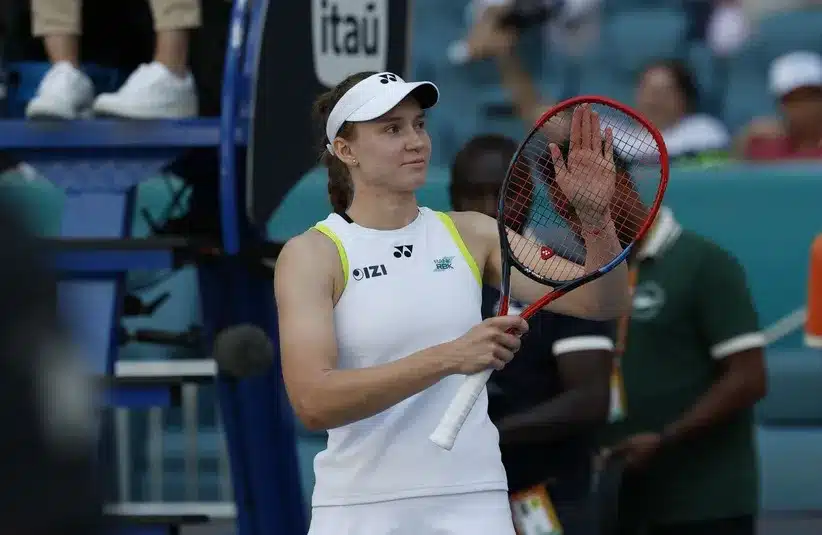
Seeing Rybakina get visibly frustrated is a rare event in sports. She is notoriously stoic. So when she started giving the umpire a piece of her mind, pointing at the undeniable proof on the court, you felt the raw human emotion of the moment. It is infuriating to be told that what you are seeing with your own two eyes isn’t real just because a software algorithm says otherwise.
Following the match, Rybakina didn’t hold back. In her interviews, she rightfully pointed out that these glaring mistakes completely undermine the players’ trust in the technology. When the margins between winning and losing a massive WTA Tour event come down to millimeters, relying on a system that ignores physical evidence feels less like progress and more like a cruel joke.
The Dirt On Clay Courts and Computer Calls
Here is the thing about electronic line-calling: we actually love it on hard courts and grass. The ATP and WTA Tours leaned heavily into Hawk-Eye Live and similar tech during the pandemic to reduce the number of people on the court. On a hard court, where a tennis ball travels at 130 mph and leaves absolutely no trace, we need the robots. But clay is a different beast entirely.
Clay leaves receipts. Every single bounce displaces the dirt, leaving a perfect, undeniable physical record of exactly where the ball landed. The traditional method of checking the mark isn’t just a quirky tradition; it is a foolproof backup system.
By completely removing human judges from the equation in Madrid, organizers essentially told players to ignore reality in favor of a digital estimation. Rybakina’s frustration highlighted the utter absurdity of this policy. You can’t ask elite athletes to put their careers in the hands of a computer when the physical evidence proves the computer is having an off day.
FAQ SECTION
Q: What happened in Madrid?
A: Elena Rybakina disputed an electronic line call that ruled a visibly out ball as “in.”
Q: Who is involved?
A: Rybakina, tournament officials, and the electronic Hawk‑Eye system.
Q: Why is this news important?
A: It raises questions about the reliability of technology in tennis, especially on clay courts.
Q: What are the next steps?
A: Governing bodies may review policies ahead of Roland Garros, considering hybrid systems or adjustments.
What This Means For the Rest Of the Clay Court Season
So, where do we go from here? Rybakina’s very public grievance has blown the lid off a conversation the tennis world has been whispering about for months. The immediate impact is obvious: players are going to step onto the court trusting the electronic system a whole lot less. You can bet your bottom dollar that every time a close call goes against a player, they’re going to be staring daggers at the camera lenses tracking the court.
Looking ahead, the governing bodies of tennis face a serious problem. With the French Open at Roland Garros looming, this controversy is going to force some uncomfortable boardroom meetings.
Will we see a hybrid system return? A world where the computer makes the initial call, but a human can still climb down from the chair to inspect a disputed mark? For the sake of the players’ sanity, and for the love of the game, let’s hope so. Until then, we stand with Rybakina. Sometimes, you just have to trust the dirt.
