
Holger Rune Caught in the Middle as Missile Fire Over Doha Turns a Tennis Trip Into a Nightmare

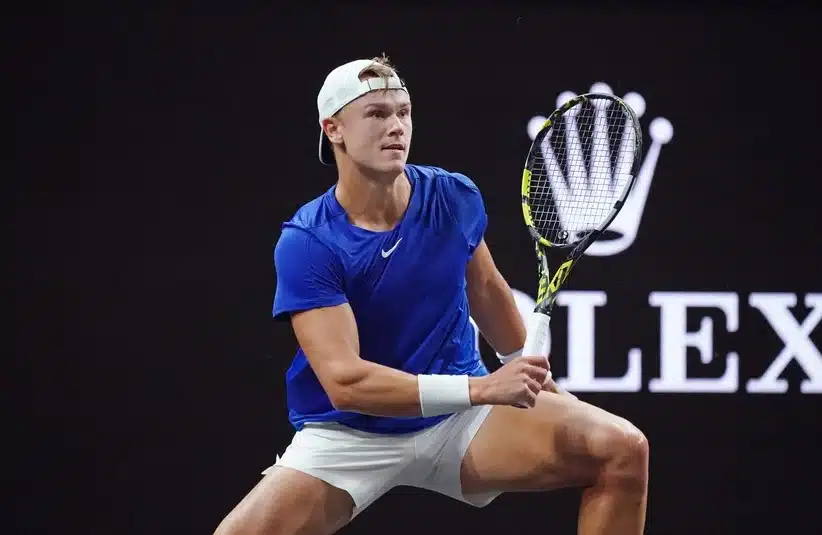
Holger Rune went to Doha to get healthy. He got a lot more than he bargained for. The Danish tennis prodigy, already four months deep into a grueling recovery from an Achilles tendon injury, was in Qatar to rehab at top-tier facilities and take in the Qatar Open.
What he witnessed instead were fireballs tearing across the night sky — Iranian missiles intercepted by air defense systems directly above the city where he was sleeping. This wasn’t a drill. This wasn’t a news alert you scroll past at breakfast. This was real, and Rune and his team were right in the middle of it.
Rune Breaks His Silence: “We Are All Safe”
Credit where it’s due, Rune didn’t hide. He went straight to social media, posting videos of the chaos overhead and reassuring his global fanbase with a calm, measured message: “We are all safe.”
It was the kind of composure you’d expect from a top-10 tennis player who has spent years learning to handle pressure. But this wasn’t a tiebreak on Centre Court. This was Doha in late February 2026, with explosions lighting up the sky and the city on edge.
His mother, Aneke Rune, was less reserved. She described the nights as “brutal”, and honestly, who could blame her? Watching fireballs streak across the sky outside your hotel window while your son is in the middle of an injury comeback is not exactly the experience you book a flight to Qatar for.
The Scene on the Ground
The missile activity was no isolated incident. Iranian forces had launched strikes targeting U.S. military installations in the region, and Qatar was right in the crosshairs of regional fallout. Air defense systems intercepted the missiles overhead. The interceptions themselves were visible to the naked eye. People in Doha watched it happen in real time.
For Rune and his team, the immediate aftermath was logistical chaos. Flights were grounded. Airspace was closed. His planned departure to Los Angeles was put on hold indefinitely. You can prepare for a lot of things in professional tennis. Missile interceptions over your hotel are not on the standard pre-tournament checklist.
How Rune Ended Up in Doha in the First Place
To understand the full picture, you have to go back to October 2025. Rune suffered an Achilles tendon injury at the Stockholm Open that knocked him completely off the tour. Four months on the sidelines for a player of his caliber, still climbing toward the very top of the game, is a serious blow.
Doha offered quality rehabilitation infrastructure and the added benefit of the Qatar Open being in town. Even if Rune wasn’t competing, being around the tournament environment is part of how elite athletes maintain their mental edge during long injury layoffs. Nobody could have predicted that his rehab stint would coincide with one of the most dramatic escalations of Middle East tensions in recent memory.
Other Players Caught in the Storm
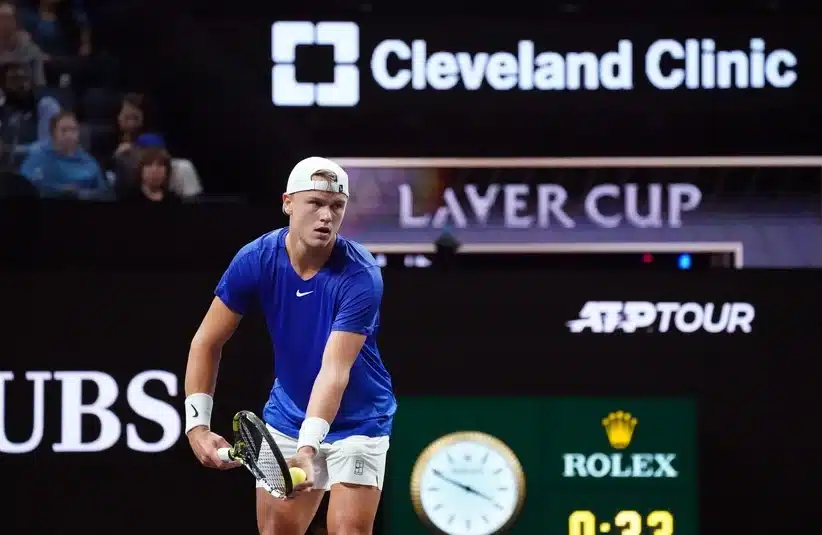
Rune wasn’t alone in dealing with the fallout. Alexander Bublik, the Kazakhstani showman and one of the more colorful personalities on tour, narrowly avoided the worst of it, leaving Dubai just before the strikes began. His luck held. Others weren’t as fortunate with their timing.
Tournament organizers in both Doha and Dubai are now scrambling to assess safety protocols and determine what comes next for scheduled events. There are no easy answers here. The Gulf region has become a significant hub for professional tennis, offering world-class facilities, high prize money, and growing audiences. But the events of late February 2026 have forced a hard conversation about player safety in volatile regions.
FAQ SECTION
Q: What happened in Doha involving Holger Rune?
A: Missile interceptions occurred over the city, prompting Rune to reassure fans of his safety.
Q: Who is involved?
A: Holger Rune, his mother Aneke Rune, Qatari authorities, and U.S. military forces stationed in the region.
Q: Why is this news important?
A: It highlights how geopolitical conflicts directly affect athletes and international sporting events.
Q: What are the next steps?
A: Rune awaits safe travel out of Doha, while tournament organizers reassess safety measures.
What This Means for Tennis and for Rune
The bigger picture here goes well beyond one player’s travel disruption. Professional sports have increasingly expanded into regions where geopolitical risk is a real factor, and for the most part, the industry has operated as though that risk is abstract and something that happens elsewhere, to other people.
Rune’s situation makes it concrete. A 22-year-old athlete, already fighting to get back from injury, is stranded in a city under missile attack with his mother describing sleepless nights filled with explosions. That’s not abstract. That’s a person caught in the middle of something enormous.
The ATP, tournament directors, and governing bodies will face growing pressure to establish clearer safety frameworks for events held in politically unstable regions. What level of risk is acceptable? Who makes that call? These are questions the sport can no longer afford to leave unanswered. As for Rune, his focus remains on his recovery. His return to the tour is still the goal. But first, he needs to get out of Doha.
