
Holger Rune Death Threats: Tennis Star Exposes “Vile” Side of Social Media

Being a high-profile athlete must be great. You get to play a sport for a living, travel the world, and make millions. But what about the dark side? In our hyper-connected world where any keyboard warrior can send a message directly to a star, things can get ugly.
Just ask Danish tennis sensation Holger Rune, who recently pulled back the curtain on the “vile” death threats he and his family have been forced to endure. It’s a stark reminder that for every fan cheering you on, there’s someone in their basement wishing you ill for missing a forehand.
Rune exploded onto the scene in 2022, capturing his first ATP 1000 title in Paris and looking like the next big thing on the men’s tour. While the meteoric rise of Carlos Alcaraz and Jannik Sinner has somewhat overshadowed his progress, the spotlight on Rune hasn’t dimmed one bit, especially back home in Denmark. Unfortunately, that spotlight also illuminates some pretty disgusting corners of the internet.
The Reality of Fame for Rune
In a candid interview with SpilXperten, Rune didn’t mince words about the cesspool of online hate he navigates. “I try not to read that kind of stuff because it’s just pretty vile, but there are a lot of death threats both to me and my family,” he stated. Let that sink in.
We’re not talking about a few mean tweets; we’re talking about threats on his life and the lives of his loved ones, likely from someone who lost a $10 bet on his match. Rune added, “I just think it’s wild that there are people who can even think of writing something like that.” Wild is one word for it. Pathetic and unhinged also come to mind.
This isn’t just a Rune problem; it’s a plague on professional sports. Athletes are expected to have skin as thick as a rhino, but there’s a line. “It’s a huge problem for the sport,” Rune acknowledged. His coping mechanism? Ignoring the trolls.
“You shouldn’t listen to them, because you should never take that kind of thing or advice from your ‘haters’ or people who aren’t doing better than you, and they clearly aren’t.” It’s a solid philosophy. If someone’s biggest accomplishment is crafting a death threat, their life advice probably isn’t worth much.
Is There a Solution for the Hate?
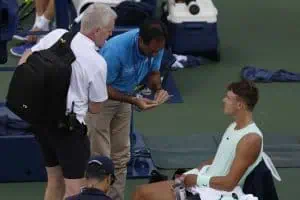
While Rune tries to brush it off, some threats are too serious to ignore. “I think we’ve reported it to the police once or twice when it’s gone too far, but otherwise, you just move on,” he said. But can the tournaments themselves do more? Rune seems uncertain.
“I don’t know if the tournaments can do anything about it. I think the French Open at one point had a system where you could report it, but I’m really not sure what the solution is.” It’s a frustrating situation where the burden falls on the player to either ignore the abuse or take on the emotional labor of reporting it, with little certainty of any real consequence for the perpetrators.
Rune also touched on the unique pressure he faces as Denmark’s top male athlete. In a smaller country, the focus is intense. “Unfortunately, we are in a country like Denmark, where we don’t have that many athletes, and then they like to go after the best athlete and everything he does,” he lamented. It’s a double-edged sword; he’s a national hero, but also a national target.
This intense scrutiny has painted him as the “bad boy” of tennis, a label he rejects. “If being willing to win and having an edge makes me a ‘bad boy’, then sure. I just don’t see it that way.” For Rune, it’s about passion, not petulance. “I see myself as a player who really wants to win. I’m willing to do what it takes, and I’d rather let out some frustration than not win the match.”
Honestly, who wants to watch a robot? “I don’t think anyone likes to watch a blank piece of paper. I certainly don’t,” he added. He’s right. The emotion is what makes sports compelling. It’s a shame that the same passion that draws fans in also seems to invite such a toxic response from a vocal minority.