
When Tennis Gets Too Hot to Handle: Rinderknech’s Dramatic Collapse Shows Why the ATP Needs to Wake Up

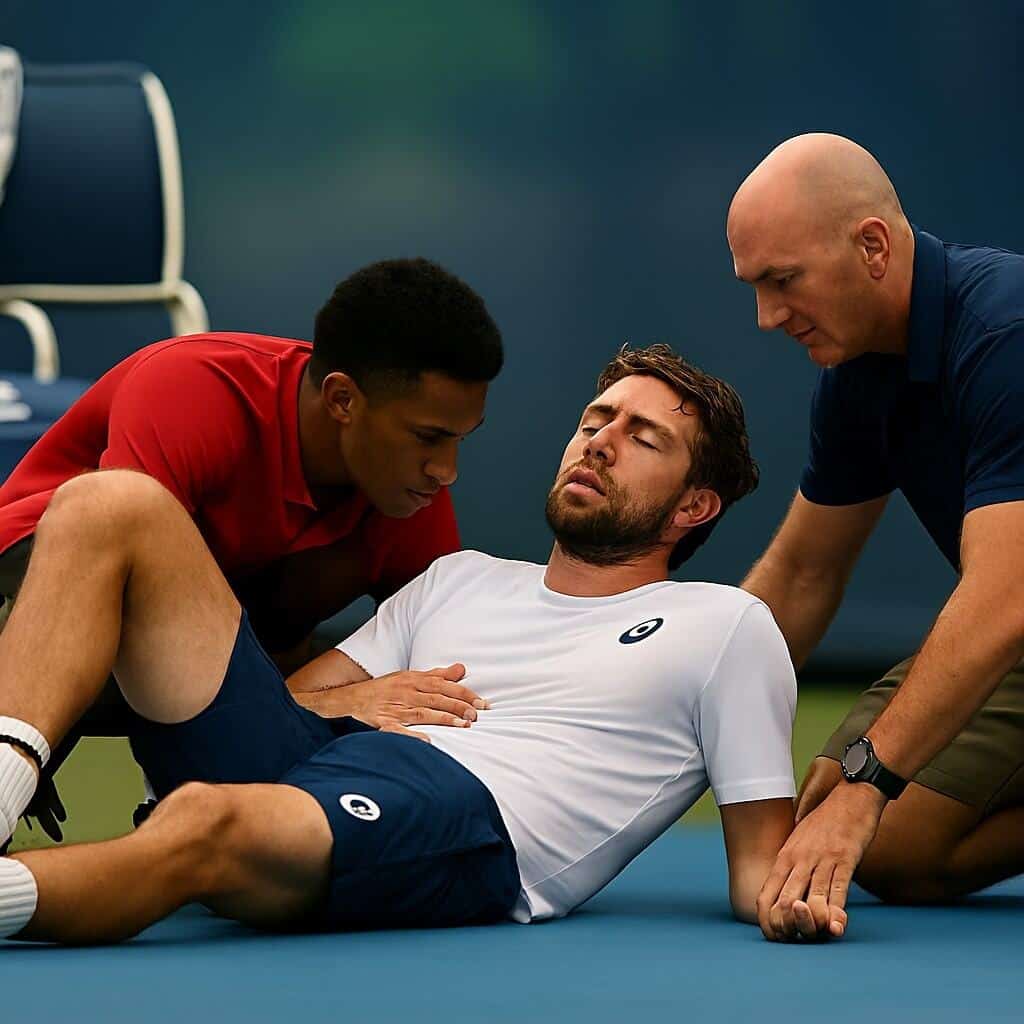
Let’s be honest here – watching Arthur Rinderknech collapse on a tennis court shouldn’t be the wake-up call we need about extreme heat in professional tennis, yet here we are. The French player’s dramatic fall during his Cincinnati Open match against Felix Auger-Aliassime on Monday wasn’t just another “tennis is tough” moment. It was a stark reminder that maybe, just maybe, forcing athletes to play in 90-degree heat with crushing humidity isn’t the brilliant idea tournament organizers think it is.
Rinderknech’s Collapse: A Reality Check Nobody Asked For
Picture this: You’re Arthur Rinderknech, battling it out on court for nearly two hours in conditions that would make a cactus sweat. The temperature? A toasty 32 degrees Celsius (that’s about 90°F for our American friends). The humidity? A soul-crushing 51 percent. You’ve just dropped the first set 7-6 to Canada’s Felix Auger-Aliassime, but hey, you’re fighting back in the second set.
Then boom – your body decides it’s had enough of this madness. One moment you’re reaching for a towel, the next you’re flat on your back on the court like a fish out of water. That’s exactly what happened to the 30-year-old Frenchman, and honestly, it’s miraculous this doesn’t happen more often.
The umpire’s concerned “Arthur, are you okay?” echoing through the stadium probably wasn’t what Auger-Aliassime expected to hear during his service preparation. Credit where credit’s due – the Canadian immediately rushed over to help his opponent, showing the kind of sportsmanship that makes you believe there’s still some humanity left in professional sports.
The Cincinnati Open’s Expensive Makeover Can’t Fix Everything
Here’s the thing that really gets under my skin: the Cincinnati Open just underwent a massive $130 million renovation, courtesy of billionaire Ben Navarro (yes, Emma Navarro’s dad). They’ve got 31 courts now, a fancy 16,000-square-foot fan pavilion, and a state-of-the-art clubhouse that probably has better air conditioning than most people’s homes. But apparently, nobody thought to invest in some common sense about when it’s too damn hot to play tennis.
The tournament site now spans over 40 acres – double what it was in 2024 – and features all sorts of bells and whistles designed to make players and fans more comfortable. Yet somehow, we’re still watching players literally collapse from heat exhaustion. It’s like buying a Ferrari and forgetting to put gas in it.
Rinderknech Isn’t the Only One Suffering
Before we start thinking this was just an isolated incident involving one unlucky French player, let’s talk about the elephant in the room. Cameron Norrie, Britain’s number two, looked like he’d been through a washing machine during his second-round loss to Roberto Bautista Agut on Sunday. The guy was practically drowning in his own sweat, which isn’t exactly the peak athletic performance we’re paying to watch.
And let’s not forget that this heat nightmare isn’t exclusive to Cincinnati. Wimbledon – yes, Wimbledon, the tournament that’s supposedly all about tradition and proper British weather – experienced its hottest opening day ever in June, hitting 32.3°C. Even Carlos Alcaraz‘s marathon first-round match had to be paused when a spectator got sick from the heat. When the crowd is dropping like flies, maybe it’s time to reconsider the schedule.
The Australian Open Already Figured This Out

You know what’s really frustrating? The Australian Open – a tournament literally held during the Australian summer – has had their act together since 2019. They introduced something revolutionary called the Australian Open Heat Stress Scale to monitor conditions and protect player health. Imagine that – actually caring about whether your athletes can safely perform!
Meanwhile, tournaments in supposedly more temperate climates are treating extreme heat like it’s just another day at the office. The cognitive dissonance is staggering.
What This Means for Tennis Moving Forward
Rinderknech’s collapse should serve as a massive red flag for tennis authorities. We’re not talking about pushing through a little discomfort here – we’re talking about professional athletes collapsing mid-match because the conditions are literally unplayable. The fact that he tried to continue after being given ice packs and lasted just two more games before retiring tells you everything you need to know about how serious this situation was.
Sky Sports host Gigi Salmon captured the moment perfectly, describing how difficult it was to watch Rinderknech “barely able to move” with ice towels draped around his neck and legs. When experienced sports commentators are visibly uncomfortable watching the action, that’s probably a sign that something needs to change.
The reality is that tennis players are incredibly tough athletes who will push through almost anything to compete. That’s admirable, but it also means they can’t be relied upon to make the call about when conditions are too dangerous. That responsibility falls on tournament organizers, and frankly, they’re failing miserably.
Arthur Rinderknech’s frightening collapse at the Cincinnati Open wasn’t just bad luck – it was predictable. Until tennis authorities start taking extreme heat seriously and implementing proper protocols, we’re going to keep seeing scenes like this. And next time, we might not be so lucky that a player walks away relatively unharmed.
Maybe it’s time for the tennis world to realize that sometimes the most courageous thing you can do is admit when conditions aren’t safe and postpone play. Revolutionary concept, right?
