
The Full Jelena Ostapenko Experience: Comebacks, Controversy, and Chaos in Doha

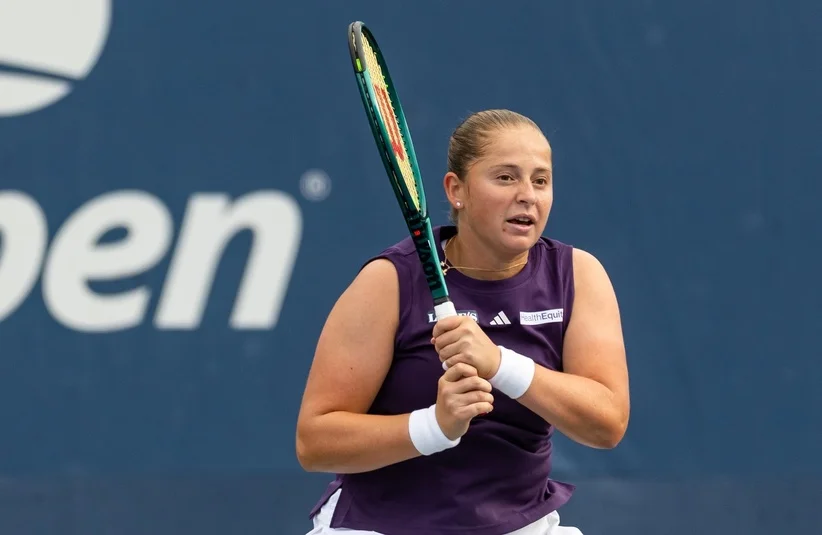
If there is one absolute truth in professional tennis right now, it’s this: a Jelena Ostapenko match is never boring. You don’t buy a ticket to watch her play just for the forehands; you buy a ticket for the rollercoaster. And in Doha this week, the former French Open champion delivered the full experience—a match that swung from disaster to dominance, punctuated by one of the most bizarre officiating moments we’ve seen in recent memory.
Facing off against Anastasia Zakharova, Ostapenko found herself in a hole that would have buried most players. But in typical fashion, she clawed her way out, survived a controversial call that left the commentators stunned, and reminded everyone why she remains one of the most compelling figures on the WTA Tour.
Digging out of a deep hole
Let’s look at the tennis first, because amidst all the noise, it’s easy to forget that Ostapenko is an incredible ball striker. Things looked grim early on. Zakharova, a rising Russian talent, came out swinging and looked completely in control. She took the first set and broke early in the second, putting Ostapenko’s back firmly against the wall.
For a player who relies on high-risk, high-reward shots, being down a set and a break is usually a death sentence. When the timing is off, the errors pile up, and the match slips away. But this time, the Latvian flipped the switch. She stopped missing and started crushing. The winners started finding the lines, and the momentum shifted violently. It was a masterclass in resilience, proving that you can never truly count her out until the final point is played.
The Foot Fault Call That Confused Everyone
Just as the match was turning into a classic, things got weird. During a critical juncture in the match, a line official called a foot fault on Ostapenko. Now, foot faults happen. They are annoying, but they are part of the game. What made this one strange was the timing. It was a delayed call.
Usually, if a player crosses the line while serving, the call is immediate. It stops the point right there. In this instance, the delay was palpable. It created a moment of total confusion on the court. Ostapenko, never one to hide her feelings, was visibly baffled. It’s the kind of disruption that ruins a player’s rhythm and concentration, especially when they are in the middle of mounting a comeback.
Commentators were quick to point out the anomaly. It’s rare to see a call lag like that, and analysts suggested it could have unfairly impacted her mental state. For a few minutes, it looked like the match might descend into an argument rather than a competition.
Why Ostapenko Is the WTA’s Lightning Rod
This incident didn’t happen in a vacuum. It happened to Jelena Ostapenko, and that context matters. She has built a reputation as one of the tour’s fiercest, most combustible personalities.
Her history in Doha specifically is already colorful. In the past, she hasn’t hesitated to criticize crowds she felt were being disrespectful. She has had icy handshakes with rivals and heated exchanges with chair umpires. When something controversial happens involving her, the volume is automatically turned up.
The reaction on social media was an immediate split. Her detractors saw the animated protests against the foot fault as another example of her volatile demeanor. Her defenders, however, saw a player rightfully questioning a bizarre officiating decision while fighting for her tournament life.
A Question Of Officiating Consistency
Beyond the personality clashes, the match highlighted a legitimate issue in the sport: consistency. The “delayed” nature of the call against Ostapenko brings up questions about how technology and human officials interact.
If calls aren’t made instantly, they compromise the integrity of the point. While Ostapenko managed to regain her composure and close out the match, a less experienced player might have crumbled under that specific type of distraction. It fuels the ongoing conversation about whether tennis needs to rely more heavily on automated systems to remove these “human error” variables that seem to crop up at the worst possible times.
FAQ SECTION
Q: What happened in Ostapenko’s match in Doha?
A: She came back from a set and break down to defeat Anastasia Zakharova, despite a delayed foot fault controversy.
Q: Who is involved?
A: Jelena Ostapenko, Anastasia Zakharova, and match officials.
Q: Why is this news important?
A: It highlights both Ostapenko’s resilience and ongoing debates about officiating consistency in tennis.
Q: What are the next steps?
A: Ostapenko advances in the tournament, with her future matches likely to draw heightened scrutiny.
What Comes Next In Doha?
Ultimately, Ostapenko emerged victorious. She survived the deficit, the weird call, and her own emotions. This victory keeps her campaign alive, but all eyes will be on her next round. Will we get the laser-focused Grand Slam champion, or will the “Ostapenko show” spiral into more drama? With her, you simply never know.
