
Ukrainian Star Oleksandra Oliynykova Rejects Handshake With Another Russian Star After Aryna Sabalenka Snub

Sports have always been about more than just the score at the end of the match. Sometimes, the most powerful moments happen between the points, or in this case, before the match even begins.
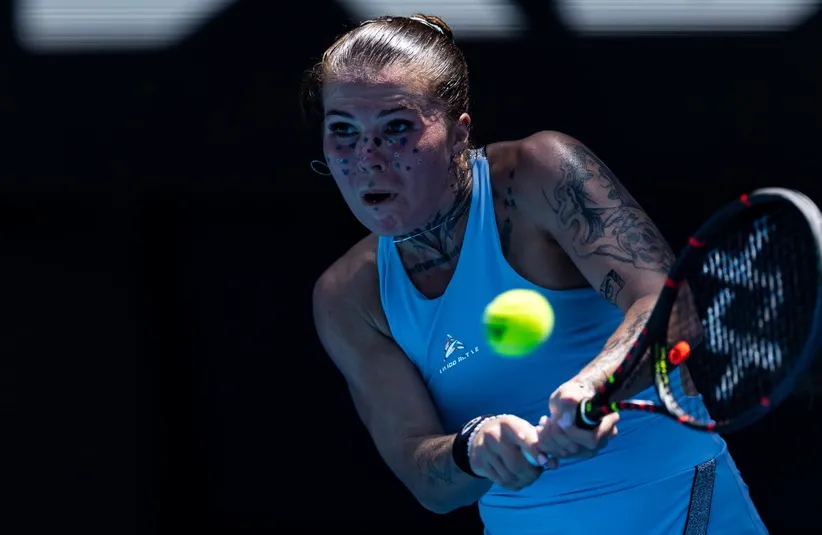
The tennis world is buzzing again, but not just because of a killer serve or an upset victory. All eyes are on Ukrainian player Oleksandra Oliynykova after she advanced to the second round of the Cluj Open. While her win against Mayar Sherif was impressive, the headlines are focused on what she’s planning to do next—or rather, what she’s refusing to do.
Oliynykova has publicly announced she won’t be shaking hands with her next opponent, Hungary’s Anna Bondar. If you haven’t been following the backstory, this might seem like bad sportsmanship. But dig a little deeper, and you’ll find a complex web of war, ethics, and a refusal to normalize conflict.
Here is everything you need to know about the situation, the history behind it, and why this handshake refusal hits differently than the others we’ve seen on tour.
The Context Behind the Controversy
To understand Oliynykova’s decision, we have to look back at the heartbreaking reality of the last two years. Since Russia invaded Ukraine in Feb. 2022, Ukrainian athletes have found themselves in an impossible position. How do you play a game when your home is under attack?
For many Ukrainian tennis players, the answer has been a silent protest: refusing to shake hands with Russian and Belarusian opponents. It’s a gesture that says, “This isn’t business as usual.” But the situation with Anna Bondar is unique. Bondar isn’t Russian or Belarusian; she’s Hungarian. So, why the cold shoulder?
The issue stems from Dec. 2022. While the war was raging, Bondar participated in a tennis exhibition in St. Petersburg, Russia. The event was sponsored by Gazprom, the massive energy giant that is majority-owned by the Russian state. For Oliynykova, this isn’t just about where Bondar played, but who paid her.
Why Oliynykova Is Taking a Stand
Oliynykova did not mince words about her reasoning. In her view, accepting money from a state-sponsored entity like Gazprom is morally equivalent to supporting the war effort itself.
She made a searing historical comparison that highlights just how deep this wound goes. Oliynykova compared Bondar’s participation in the St. Petersburg event to an athlete competing in Nazi Germany in 1941 and accepting prize money funded by the regime’s victims. It is a heavy, intense analogy, but it underscores the sheer desperation and anger Ukrainian athletes are feeling right now.
“It’s about humanity, human dignity, and fundamental human values,” Oliynykova said regarding her decision. “I cannot ignore it.”
She has made it clear that she will not participate in the traditional pre-match photo at the net, nor will she offer a handshake at the end of the match. For her, these rituals signify mutual respect and friendship.
The Ripple Effect On the WTA Tour
This incident puts the Women’s Tennis Association (WTA) in yet another tight spot. The tour has tried to thread the needle between condemning the war and allowing individual athletes to compete based on merit, regardless of nationality.
However, the “handshake snubs” are becoming a defining feature of this era of women’s tennis. We’ve seen it with stars like Aryna Sabalenka and Elina Svitolina. But as the war drags on, the lines of protest are expanding beyond just nationality and moving toward personal choices and affiliations.
For the fans watching, it transforms the tennis court from a place of escapism into a stage for real-world political theatre. It forces everyone—commentators, spectators, and officials—to confront the reality that sports do not exist in a vacuum.
Is There a Way Back?
Is this bridge burned forever? Not necessarily. Oliynykova has offered an olive branch, albeit a conditional one. She stated that she would reconsider her stance if Bondar were to issue a public apology for her participation in the Gazprom event and openly condemn Russia’s aggression against Ukraine. It puts the ball firmly in Bondar’s court. Will she remain silent to avoid political backlash, or will she speak out to bridge the gap with her colleague? Until then, the protest stands.
FAQ SECTION
Q: Why did Oliynykova refuse the handshake?
A: Because Bondar played in a Gazprom‑funded exhibition in Russia in 2022, which Oliynykova sees as supporting Russia’s war effort.
Q: Who is affected by this decision?
A: Both players, the WTA, and fans, as the protest shifts focus from sport to politics.
Q: What are the next steps?
A: Bondar could issue a public apology and condemn Russia’s aggression, which might change Oliynykova’s stance.
What This Means for the Future of Tennis
As Oliynykova steps onto the court in Cluj, the atmosphere will be heavy. The match itself might be excellent, but the narrative surrounding it serves as a stark reminder of the pain Ukrainian players carry with them to every tournament.
This isn’t just about a handshake. It’s about using the only platform you have to scream that things are not okay. Whether you agree with the tactic or not, it forces the conversation to continue. And in a world where the news cycle moves incredibly fast, keeping the spotlight on the human cost of the war is exactly what Oliynykova intends to do.
