
Rafael Nadal Fires Back: The “Wrong” Take That Sparked a Tennis Firestorm

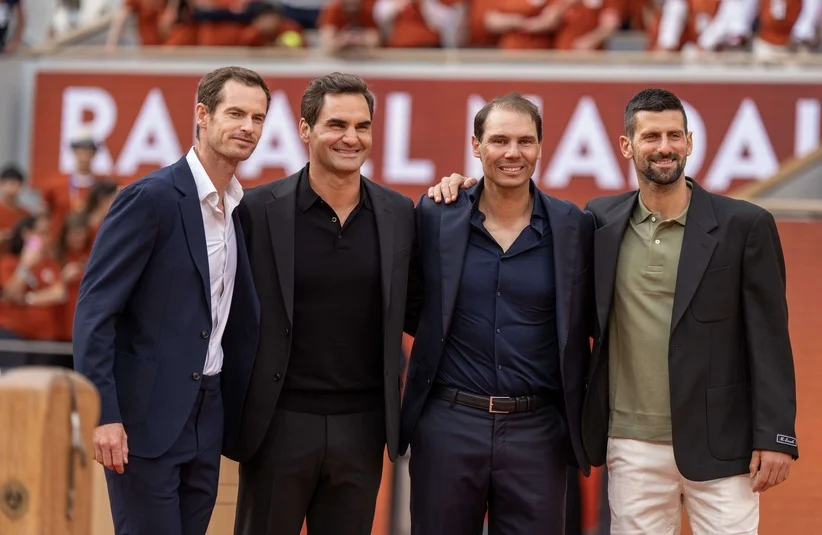
If there’s one thing we’ve learned over the last two decades, it’s that the bond between the “Big Three” is thicker than the baseline paint on Rod Laver Arena. Just when we thought the generational torch had been fully passed, a social media spat has dragged us right back into the golden age debate.
At the center of it? Rafael Nadal. The Spanish legend, currently enjoying retirement, didn’t take kindly to some recent comments made by super-coach Patrick Mouratoglou regarding Novak Djokovic’s latest triumph.
It all started after the 2026 Australian Open. Djokovic, defying “Father Time” yet again, pulled off a gritty five-set victory over Italian sensation Jannik Sinner. For most, it was proof that the old guard still has plenty of bite. But for Mouratoglou—never one to shy away from a controversial take—it wasn’t enough to prove superiority.
Here is how a single match turned into a referendum on greatness, and why Nadal felt compelled to step out of the shadows and defend his greatest rival.
Nadal Breaks Character on Social Media
We rarely see Nadal get involved in Twitter (or X) drama. He’s usually the diplomat of the tour—humble, focused, and respectful. But something about Mouratoglou’s analysis struck a nerve.
After Mouratoglou posted that Djokovic’s narrow win didn’t necessarily prove the “Big Three” were still playing at a “higher level” than the likes of Carlos Alcaraz or Sinner, Nadal responded. And he didn’t write a PR-friendly statement. He simply dropped a series of laughing emojis.
It was petty. It was hilarious. It was deleted shortly after. But the internet never forgets. The deletion only added fuel to the fire, prompting fans to wonder: Was Nadal mocking the audacity of the statement, or was he laughing at the logic? He eventually cleared the air, but he didn’t walk back his sentiment.
Why Nadal Called the Analysis “Wrong”
In a follow-up clarification, the 22-time Grand Slam champion doubled down. He wasn’t trying to start a war, but he needed to set the record straight regarding the respect due to Djokovic. “I don’t see the controversy,” Nadal said later. “I don’t want to generate controversy, but the point is that the analysis from Patrick is wrong.”
Nadal’s argument hits on a fundamental issue in sports media today: recency bias. He compared the situation to judging Lionel Messi or Cristiano Ronaldo based on a single Tuesday night match rather than their decades of dominance.
Nadal emphasized that one cannot judge the gap between the “Big Three” and the rising stars based on a single tight match in Melbourne. You judge it on the resume, the consistency, and the ability to win when your back is against the wall—something Djokovic did perfectly against Sinner.
The “Big Three” Brotherhood
This incident highlights a fascinating dynamic in tennis history. For years, fans were entrenched in the Roger vs. Rafa vs. Novak wars. But as Federer and Nadal settle into retirement, a protective brotherhood has formed around the legacy they built together.
By defending Djokovic, Nadal is effectively defending the era. He’s protecting the sanctity of what they achieved. When Mouratoglou suggests that Sinner or Alcaraz are “on the same level” because they pushed Djokovic to five sets, Nadal sees it as a slight to the mountain they had to climb to stay at the top for 20 years.
It’s a reminder that while they were fierce rivals on Sunday afternoons, they are united historians of the game. They know what it takes to win 20+ Slams. The new kids, as talented as they are, aren’t there yet.
The “New Gen” Reality Check
Let’s be fair to Mouratoglou for a second—he isn’t entirely shouting into the void. Alcaraz and Sinner are exceptional. They aren’t just “next up”; they are here. The gap is closing. In 2026, physically, the younger legs have the advantage.
However, tennis isn’t just about forehand speed and court coverage. It’s about mental fortitude. Djokovic proved he still possesses that intangible “clutch” gene that the younger generation is still developing. Nadal knows this better than anyone. He knows that “almost winning” against a member of the “Big Three” is not the same as winning.
FAQ SECTION
Q: What happened in the Nadal–Mouratoglou controversy?
A: Mouratoglou claimed Djokovic’s win over Sinner didn’t prove “Big Three” superiority. Nadal disagreed, calling the analysis wrong.
Q: Who is involved?
A: Rafael Nadal, Patrick Mouratoglou, Novak Djokovic, Jannik Sinner, and Carlos Alcaraz.
Q: Why is this news important?
A: It highlights the ongoing debate about whether the younger generation has surpassed the Big Three in tennis.
Q: What are the next steps?
A: Future matches in 2026 will shape whether Nadal’s defense of the “Big Three” holds or Mouratoglou’s view gains credibility.
What This Means For the 2026 Season
So, where do we go from here? The comments from Nadal have successfully shifted the narrative of the 2026 season. Every time Alcaraz or Sinner steps on the court against Djokovic, this debate will resurface.
If the young guns start sweeping the majors, Mouratoglou looks like a prophet. But if Djokovic keeps grinding out wins, or if Nadal manages one last magical run at Roland Garros, the “laughing emojis” will be vindicated.
For now, the scoreboard reads: “Big Three 1,” Critics 0. And as long as Nadal has a Wi-Fi connection, he’s going to make sure everyone remembers who the kings of the court really are.
