
Rest or Rust? Why Daniil Medvedev Thinks Novak Djokovic’s Free Pass Could Backfire

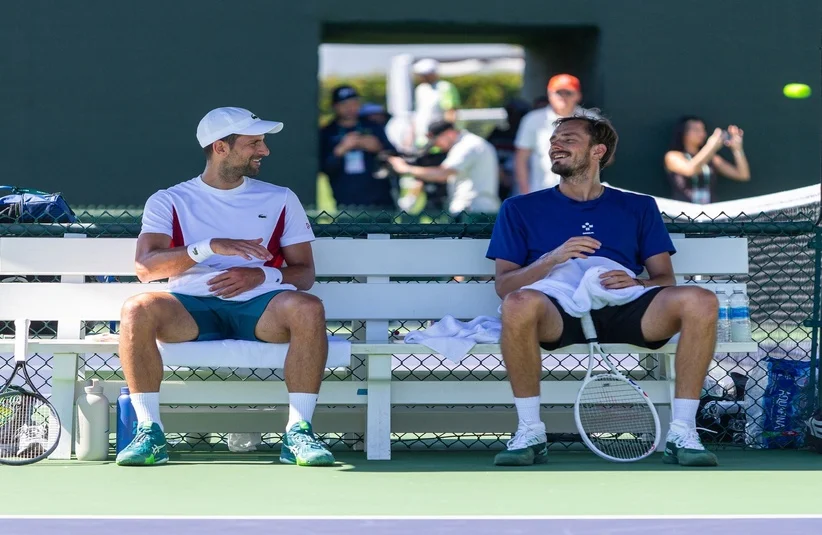
In the high-stakes world of Grand Slam tennis, the only thing harder than winning a match is not playing one at all. Novak Djokovic, the ten-time champion of the Australian Open, finds himself in a bizarre, though theoretically enviable, position. His fourth-round opponent didn’t show up.
A withdrawal handed the world No. 1 a free ticket straight into the quarterfinals without a single ball being hit in anger. On paper, this looks like the ultimate stroke of luck—a “get out of jail free” card that saves the legs and preserves energy for the business end of the tournament.
But tennis isn’t played on paper. It’s played on rhythm, adrenaline, and the specific, callous hardening that comes from grinding out wins. And that is exactly why fellow heavyweight Medvedev is raising an eyebrow at Djokovic’s “advantage.”
The Unexpected Twist at Melbourne Park
For those who haven’t been glued to the screens, here is the situation. Djokovic was looking in ominous form after his third-round victory. He was revving the engine. Then, his fourth-round opponent pulled out due to undisclosed reasons.
Suddenly, the timeline shifted. Instead of the usual rhythm—play, recover, practice, play—Djokovic was staring down the barrel of a three-day hiatus. In a two-week tournament designed to test endurance, three days off is an eternity. It’s a vacation. And in elite sports, vacations can be dangerous things.
What Does Medvedev Say About the break?
This is where the narrative gets interesting. Daniil Medvedev, a man who knows exactly what it takes to go deep in major tournaments, offered a fascinating perspective on his rival’s situation. While the casual fan might think, “Great, he’s rested,” Medvedev suggests the opposite might be true.
According to the Russian star, that disruption in competitive rhythm can be a silent killer. Medvedev noted that going three full days without a competitive match could leave Djokovic feeling a little “cold” when he finally steps back onto the court for the quarterfinals. When you are in the zone, you want to stay there. You want the routine. You want the feeling of the ball on the strings under pressure.
Medvedev implies that while the body rests, the competitive edge can dull. The sharpness required to return a 200km/h serve isn’t something you can just switch on and off like a lightbulb; it needs constant maintenance.
The Debate: Physical Preservation vs. Competitive Rust
The core of the issue, and the point Medvedev is driving at, is the age-old sports debate of rest versus rust.
There is no denying that Djokovic is in his mid-30s. Physically, skipping a grueling four-hour battle in the Australian heat is a gift. It saves the hamstrings, protects the joints, and keeps the fuel tank full. If this were a purely physical contest, Djokovic just won the lottery.
However, Grand Slams are mental marathons. The “match toughness” that players talk about is real. By skipping a round, Djokovic misses a critical step in the escalation of intensity. He goes from a third-round level straight into a quarterfinal dogfight against a likely top-tier opponent who has been sharpening their sword while Djokovic was sitting on the sidelines.
How Medvedev and Rivals View The Unfairness Of Luck
There is also the psychological toll on the rest of the field. While Medvedev and other contenders are sweating through five-set epics, battling fatigue, injuries, and the mental demons that come with late-night finishes, Djokovic is fresh.
It adds a layer of psychological warfare to the tournament. If you are Medvedev, looking at the draw, you have to be thinking about how much gas is left in your tank compared to the Serbian legend. But at the same time, Medvedev is seemingly banking on the hope that Djokovic will come out flat. It’s a hope that the “free pass” turns into a stumbling block.
Can Djokovic handle the disruption?
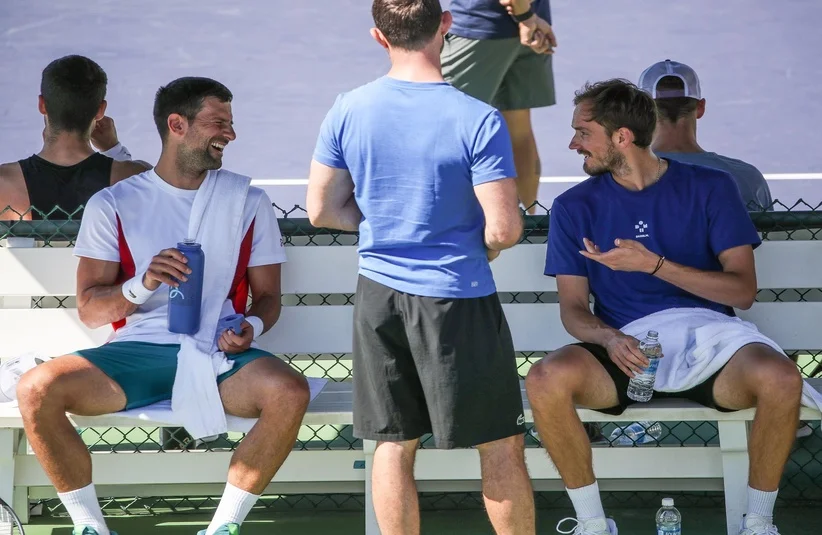
History tells us that betting against Novak Djokovic is usually a bad idea. He is the master of adaptation. He thrives on chaos and has made a career out of turning negatives into positives. If anyone can handle a three-day break and come out firing, it’s him.
But the seed of doubt has been planted. The quarterfinals will now be must-watch TV, not just for the tennis, but to answer the question posed by Medvedev: Is the rest a blessing, or is it a curse in disguise? The first few games of that quarterfinal match will tell us everything we need to know.
FAQ SECTION
Q: What happened in Djokovic’s fourth‑round match?
A: His opponent withdrew, giving Djokovic a walkover into the quarterfinals.
Q: Who is involved?
A: Novak Djokovic, his withdrawn opponent, and Daniil Medvedev, who commented on the situation.
Q: Why is this news important?
A: It raises questions about competitive rhythm, fairness, and Djokovic’s chances of winning another title.
Q: What are the next steps?
A: Djokovic will prepare for his quarterfinal match after three days of rest.
