
Nick Kyrgios Drops Brutally Honest ‘Money’ Confession After Brisbane Exit

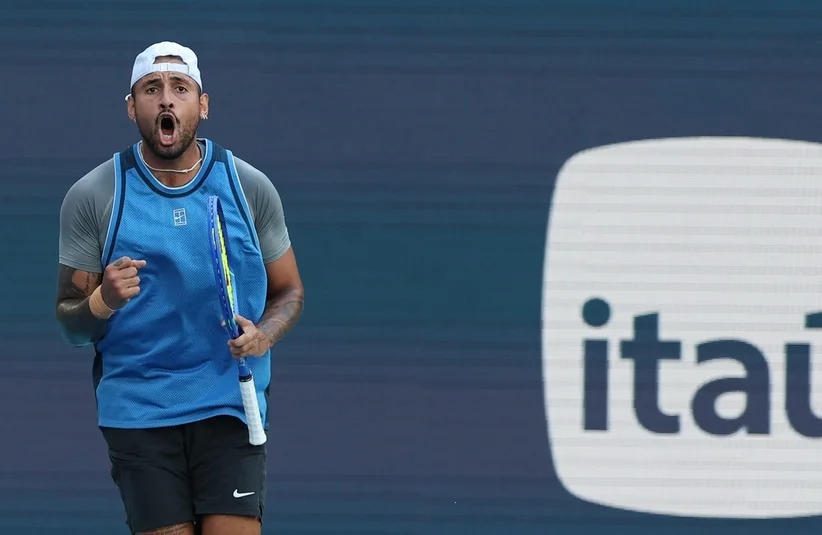
Let’s be real for a second: most professional athletes are media-trained robots. They stand in front of a microphone, sweaty and tired, and recite the same tired script about “passion,” “legacy,” and “doing it for the fans.” It’s boring. It’s predictable. And then, there’s Kyrgios.
The Australian tennis lightning rod has never been one to stick to the script, and his recent stint at the Brisbane International was no exception. Sure, he lost in the opening round to Aleksander Kovacevic—a result that probably didn’t shock anyone paying attention to his hiatus from the tour—but his performance in the press room was a Grand Slam winner.
In a world where athletes pretend they’d play for free, Kyrgios just admitted what the rest of us are thinking: he’s in it for the paycheck.
The Financial Reality Check for Kyrgios
Following his early exit in Brisbane, the 30-year-old dropped a truth bomb that felt less like a sports interview and more like a late-night chat with a buddy at a bar. When asked about his motivation to keep grinding despite the injuries and the losses, Kyrgios didn’t wax poetic about the spirit of competition.
He flat-out said, “My parents weren’t wealthy… if I continue playing, it’s to make money.” You have to respect the hustle. He acknowledged that while people like to pretend money isn’t a factor, for a guy who didn’t grow up with a silver spoon, securing the bag is the priority. He noted that he is at a stage in his career where “financial stability” outweighs trophies. It’s a level of transparency that is almost jarring in professional sports. He’s doing exactly what he wants, playing exhibition matches, doing commentary, and picking up appearance fees. He’s at peace with it, even if the tennis purists are clutching their pearls.
A Rust-Covered Return to the Court
While his bank account might be looking healthy, his game is looking a little rusty. The loss in Brisbane was his first ATP Tour match since the Miami Masters the previous year. That is a long time to be away from the high-octane pressure of tour-level tennis.
Despite looking physically fit, the match results haven’t been there. He got bounced in straight sets in singles and didn’t fare much better in doubles alongside Gael Monfils at the Citi Open. But here is the thing about Kyrgios: he doesn’t seem to care about the “grind” in the traditional sense anymore. He believes he has a better connection with the Australian public now than ever before, citing how kids are getting hooked on the sport by watching him.
He’s looking ahead to the Australian Open 2026, not necessarily to win it all (let’s be realistic), but to put on a show. And considering the prize money bump, showing up is worth its weight in gold.
The High Stakes of the Australian Open 2026
Speaking of cash, the Australian Open 2026 is shaping up to be the perfect playground for a motivation-by-money player like Kyrgios. The tournament has hiked its total prize pool to a staggering AUD $111.5 million—a 16% jump from the previous year.
Here is why that matters: you don’t have to be the last man standing to get paid. A first-round exit pockets you $150,000. Win one match? You’re looking at $225,000. For a guy who just admitted his main driver is financial security, these numbers are the only scoreboard that matters. If he can secure a wildcard (which, despite some critics like Mark Philippoussis questioning his dedication, he likely will because he sells tickets), he’s walking away with a six-figure check just for stepping onto the blue hard court.
That Bizarre ‘Battle of Sexes’ Nerves
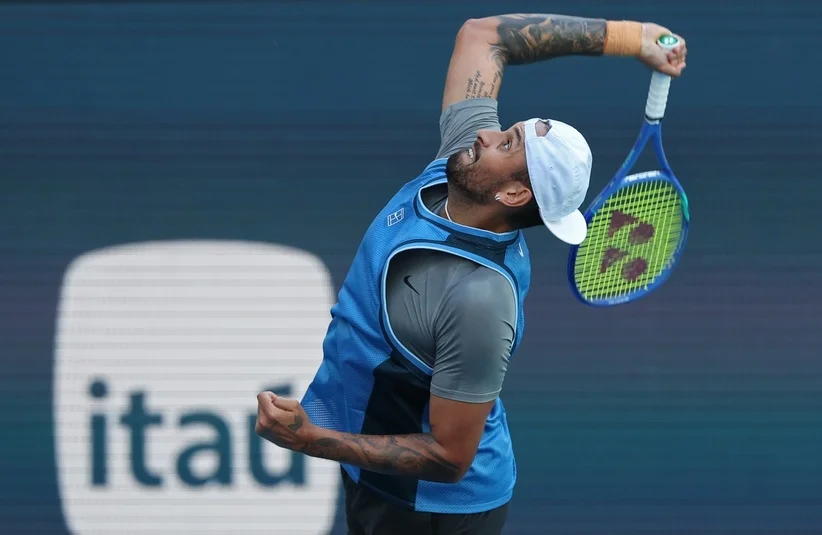
Before the Brisbane stumble, Kyrgios took part in that widely publicized “Battle of Sexes” exhibition against Aryna Sabalenka in Dubai. He won in straight sets, but the interesting part wasn’t the score—it was his admission of fear.
For a guy who usually projects supreme arrogance, he admitted he was genuinely nervous. And it makes sense. It was a no-win scenario for him PR-wise. If he loses? He’s the guy who lost to a WTA player. If he wins? Well, he’s supposed to. He admitted he was “under the pump” and that facing someone as great as Sabalenka while the whole world watched was emotional. It was a rare glimpse of vulnerability from the “Bad Boy” of tennis, proving that underneath the “I only care about money” exterior, the guy still feels the pressure of the spotlight.
So, what is next for Nick? Probably more exhibitions, a noisy run at the Australian Open, and a few more checks cashed. And honestly? We’ll be watching every second of it.
