Aryna Sabalenka’s Ruthless Repeat: World No. 1 Bulldozes Through US Open For Back-to-Back Titles

You know that feeling when your favorite team is up by three touchdowns in the fourth quarter? That comfortable, inevitable sense that the outcome was never really in doubt? That’s exactly what watching Aryna Sabalenka dismantle Amanda Anisimova felt like on Saturday night at Arthur Ashe Stadium.
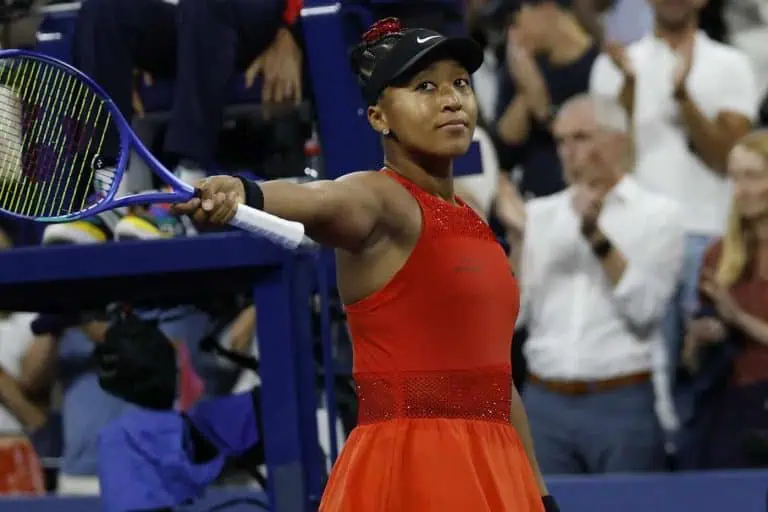
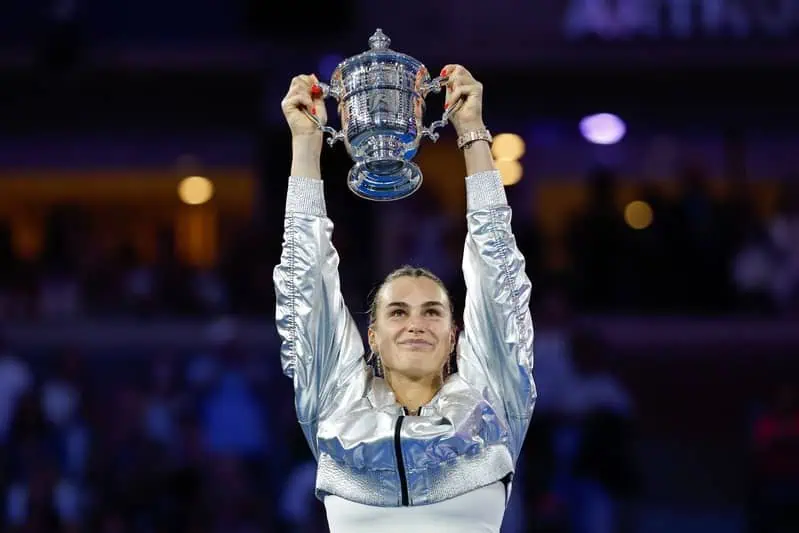
The Belarusian powerhouse didn’t just win her second consecutive US Open title—she made it look easier than assembling IKEA furniture with the instructions actually included. Her 6-3, 7-6(3) victory over the eighth-seeded American wasn’t just a tennis match; it was a masterclass in championship composure.
Sabalenka’s Dominance Reaches Historical Heights
Let’s put this achievement in perspective, shall we? Sabalenka became the first woman to successfully defend her US Open crown since Serena Williams pulled off the feat in 2013-14. That’s not just impressive—that’s enter-your-name-in-the-record-books territory.
But here’s where the numbers get downright silly: Of the 11 major tournaments Sabalenka has played over the past three years, she’s won four, reached three finals, three semifinals, and one quarterfinal. That’s a .794 winning percentage at Grand Slam events. For context, that is like a quarterback throwing touchdowns on nearly 80% of his red zone attempts.
The 27-year-old now owns four Grand Slam titles, two US Opens and two Australian Opens, all on hard courts where her aggressive baseline game turns opponents into sitting ducks. She’s basically become the tennis equivalent of a heat-seeking missile with a serve.
The Match That Wasn’t Really a Match
Don’t let that 7-6 second set fool you—this wasn’t nearly as competitive as the score line suggests. Anisimova came into this final with a 6-3 head-to-head advantage over Sabalenka, but past results mean about as much as last week’s lottery numbers when you’re facing a player operating at this level.
The American’s nerves showed early, and honestly, who could blame her? Standing across the net from the world’s best player in her second Grand Slam final (after that brutal 6-0, 6-0 loss to Iga Swiatek at Wimbledon) had to feel like stepping into the batter’s box against Nolan Ryan in his prime.
Sabalenka, displaying the tennis IQ that separates champions from also-rans, recognized Anisimova’s aggressive approach and made a tactical adjustment that would make any coach proud. Instead of matching fire with fire, she dialed back her own power just enough to force errors while maintaining control—like a boxer who realizes he doesn’t need to throw haymakers when his opponent is already wobbling.
Breaking Down the Numbers Game
The statistics tell the story of a chess match disguised as a slugfest. Anisimova finished with 29 unforced errors against just 22 winners—the kind of ratio that makes coaches reach for the antacids. Meanwhile, Sabalenka posted a much more conservative 13 winners and 15 unforced errors, proving that sometimes the best offense is not making mistakes.
But the real difference showed up on break point opportunities, where Sabalenka converted five of six chances. That’s clutch-gene stuff right there—the kind of efficiency that separates weekend warriors from world champions. Perhaps most telling was Anisimova’s struggle on second serve, where Sabalenka pounced like a linebacker reading a screen pass, winning 18 of 28 points. Seven double faults from the American didn’t help matters either.
The Tiebreak That Never Really Was
When Anisimova forced a second-set tiebreak after breaking Sabalenka while she served for the match at 5-4, you could almost hear the collective intake of breath from the crowd. Could the underdog pull off something special?
Not a chance. Sabalenka entered that tiebreak with a ridiculous 20-1 record in breakers this season. Those aren’t betting odds—that’s dominance bordering on the absurd. She jumped out to a 6-1 lead faster than you could say “championship point” and closed it out 7-3.
What This Means Moving Forward
With this victory, Sabalenka cements her status as the undisputed queen of hard-court tennis. She’s now won a Grand Slam in each of the past three years and will maintain her stranglehold on the No. 1 ranking heading into 2026.
For Anisimova, this loss stings but represents massive growth from her Wimbledon disaster. She showed fight, reaching a second Grand Slam final and proving she belongs on tennis’s biggest stages. Sometimes you need to lose to champions to learn how to become one yourself.
As for Sabalenka? She’s operating in that rarefied air where dominance becomes routine and excellence becomes expected. In a sport where mental fragility can derail the most talented players, she’s built herself into an absolute fortress of consistency and power. The scary part for the rest of the tour? At 27, she’s just entering her prime.