
Why Amanda Anisimova Refused to Play the Politics Game at the Australian Open

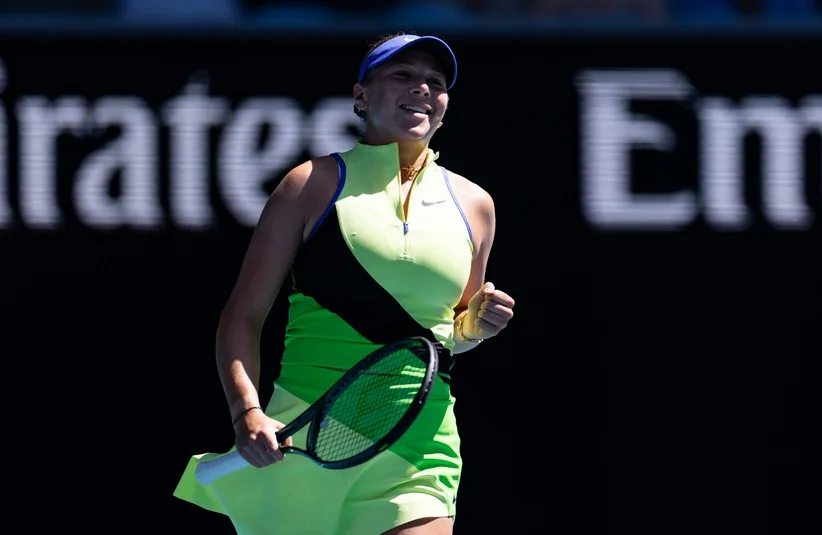
We’ve all seen the scenario play out before. An athlete steps off the court, adrenaline still pumping, sweat still drying, ready to dissect a serve or a strategy. Then, out of nowhere, a reporter lobs a question that has absolutely nothing to do with the sport.
That’s exactly the scene that unfolded at the Australian Open, where 22-year-old American tennis star Amanda Anisimova found herself fielding questions not about her forehand, but about the political climate in the United States, specifically regarding former President Donald Trump.
Her response? A firm, polite, but absolute shutdown. While the intersection of sports and society has been a hot topic for years, Anisimova’s refusal to engage has sparked a fresh conversation about boundaries, expectations, and what we actually want from our athletes.
The Moment Anisimova Drew the Line
It was supposed to be a standard post-match press conference. These sessions are usually predictable: talk about the win, talk about the preparation, talk about the next opponent. But the vibe shifted when a reporter decided to steer the conversation away from Melbourne Park and toward the chaotic world of American politics.
When asked for her thoughts on Donald Trump and the current state of U.S. affairs, Anisimova didn’t stumble. She didn’t offer a rehearsed PR answer, nor did she dive into a political debate. She simply stated that she was there to talk about tennis.
It was a boundary set in real-time. By redirecting the focus, Anisimova reminded the room—and the world watching—that despite being a public figure, her primary job is to play tennis. She wasn’t there as a political pundit; she was there as a competitor.
Athletes or Activists? The Pressure on Anisimova
To understand why this moment went viral, you have to look at the broader landscape of modern sports. Over the last decade, we’ve seen a massive shift. From Colin Kaepernick taking a knee to Naomi Osaka’s vocal advocacy for mental health and social justice, the line between “athlete” and “activist” has blurred significantly.
Because so many stars have used their platforms to speak out, there is now a lingering expectation that every athlete should have a hot take on current events. However, Anisimova represents a different, equally valid perspective: the right to opt-out.
There is a growing sentiment among younger athletes that while they are citizens with opinions, the press room isn’t always the venue to air them. For Anisimova, protecting her mental space during a Grand Slam tournament is likely a priority. Getting dragged into a polarizing political headline can be a massive distraction when you’re trying to win a major title.
Fans React: Did Anisimova Make the Right Call?
As with anything involving politics and sports, the reaction was swift and divided. On one side, you have the “stick to sports” crowd, who were thrilled. They argued that sports should be an escape from the 24-hour news cycle and that Anisimova was right to keep the sanctity of the game intact. For these fans, hearing a 22-year-old discuss election polls isn’t why they tune into the Australian Open.
On the other side, critics argue that silence is a privilege. They believe that public figures with massive platforms have a responsibility to engage with the world around them, especially when the issues are significant.
But even among those who support athlete activism, many defended Anisimova. There is a difference between an athlete choosing to speak out on their own terms (like on social media or in a dedicated interview) and being ambushed with a complex political question immediately after playing a grueling professional tennis match.
Redefining Boundaries in Sports Media
This incident serves as a bit of a reality check for sports journalism. While it is the job of the press to ask tough questions, context is everything. Asking Anisimova about U.S. politics in that specific setting felt, to many observers, like a reach—a way to manufacture a viral clip rather than gain insight into the athlete.
Sports analysts have noted that Anisimova’s approach reflects a professional maturity. By refusing to engage, she maintained control of the narrative. She ensured the headlines the next day would be about her boundary-setting, rather than a misconstrued quote about a polarizing political figure. It sends a signal to the media room: If you want to talk to Anisimova, keep it on the court.
Back to Business: What Lies Ahead for Anisimova
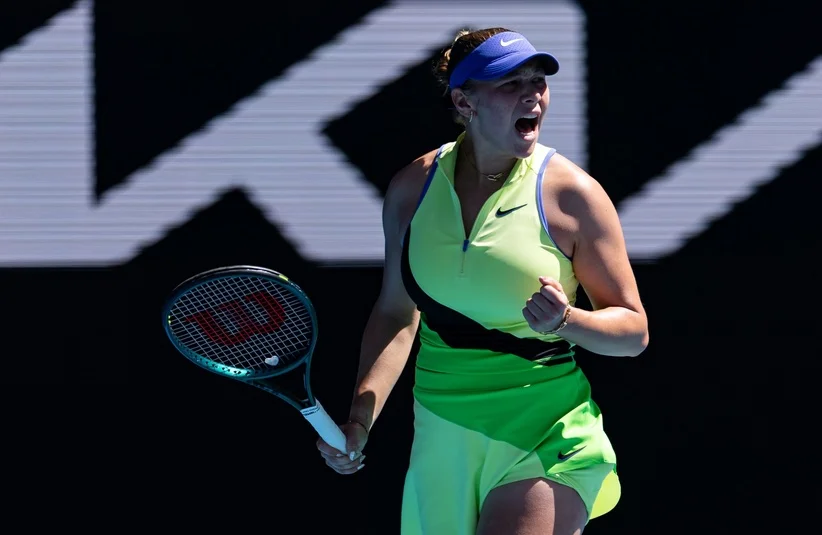
So, what happens now? For Amanda Anisimova, the goal remains the same: winning tennis matches. She successfully navigated a potential PR minefield and kept her focus where it belongs—on her campaign at the Australian Open.
But for the rest of the tour, this moment might have a ripple effect. We may see more players feeling empowered to shut down lines of questioning they aren’t comfortable with. Anisimova showed that you don’t have to be rude to be firm. You just have to know why you’re there.
As the tournament continues, reporters might tread a little more carefully. And as for Anisimova? She’ll be letting her racket do the talking.
FAQ SECTION
Q: What happened in Amanda Anisimova’s press conference?
A: She was asked about U.S. politics and Donald Trump, but shut down the question, saying she was there to talk about tennis.
Q: Who is involved?
A: Amanda Anisimova, the American tennis player, and the reporter who posed the political question.
Q: Why is this news important?
A: It highlights the ongoing debate about whether athletes should be expected to comment on political issues during sports events.
Q: What are the next steps?
A: Anisimova will continue competing in the Australian Open, with the focus likely returning to her performance on the court.
