
Carlos Alcaraz Drops the Mic (and the Racket): Why Skipping Rotterdam Is a Masterstroke

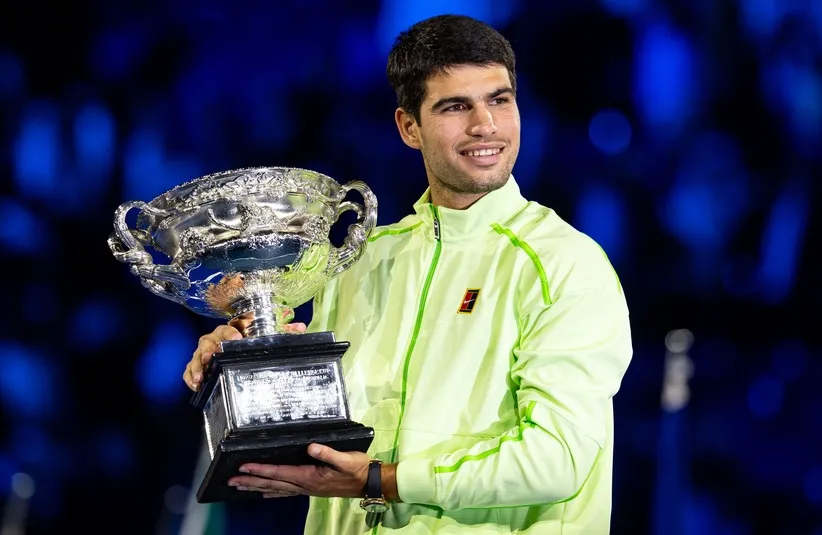
The confetti has barely settled on the blue courts of Melbourne, and the tennis world is already buzzing with a new headline. But this time, it isn’t about a forehand winner or a trophy lift. It’s about a strategic retreat.
Fresh off his massive victory at the 2026 Australian Open, Carlos Alcaraz has officially withdrawn from the Rotterdam Open. For casual viewers, this might look like a disappointment. But for those who have been watching the grueling evolution of modern tennis, Alcaraz making this call isn’t just understandable—it’s brilliant.
Here is the lowdown on why the world’s number one player is taking a breather, and why it matters for the rest of the season.
The High Cost Of Grand Slam Glory
Winning a Grand Slam isn’t just a “good week at the office.” It is a physical and mental marathon that shreds the body. On Jan. 31, 2026, Alcaraz lifted his third major trophy down under. It was a moment of triumph that solidified his dominance. But just days later, on Feb. 2, the announcement came down that he wouldn’t be packing his bags for the Netherlands.
His game is built on dynamic movement, sliding on hard courts, and generating massive power from extreme positions. That style of play is electric to watch, but it taxes the body significantly more than the efficient, low-impact style of some of his predecessors. After two weeks of intense, best-of-five set matches in the Australian heat, jumping immediately onto a plane to play an indoor tournament in Rotterdam is a recipe for disaster.
Why Alcaraz is Choosing Rest Over Rankings
The decision to skip the Rotterdam Open—an ATP 500 event—signals a maturity that goes beyond his years. In the past, young superstars often fell into the trap of chasing every single ranking point available, playing through pain until something snapped.
Alcaraz seems to be taking a page out of the playbooks of the “Big Three”—Nadal, Djokovic, and Federer. These legends learned early on that longevity is the real game. You don’t become a legend by winning Rotterdam in February if it costs you the French Open in June because you’re nursing a stress fracture.
By stepping back now, Alcaraz is prioritizing his long-term fitness. He is protecting his biggest asset: his body. The tennis calendar is notoriously brutal, offering almost no off-season. If players don’t carve out their own breaks, the schedule will break them.
The Reaction: Disappointment Meets Respect
Naturally, the organizers in Rotterdam are stinging a bit. When you have the World No. 1 and fresh Aussie Open champ on your poster, ticket sales fly. Losing a headline act is a blow to the tournament’s immediate buzz.
Fan reaction on social media has been a mixed bag of emotions. There is the inevitable disappointment. However, the overwhelming sentiment seems to be one of support. Tennis fans are becoming more educated on the toll the sport takes. We’ve seen too many promising careers derailed by injury. Seeing Alcaraz pump the brakes suggests he wants to be around for the next decade, not just the next weekend.
What This Means For the 2026 Season
So, what happens next? Alcaraz avoids the immediate physical strain of a quick turnaround. He gets to go home, recover, and let the micro-tears in his muscles heal. His team will likely reassess his calendar, but all signs point to him gearing up for the “Sunshine Double”—Indian Wells and Miami—before shifting his focus to his beloved clay courts.
The clay season is where Alcaraz is often at his most dangerous. By skipping the indoor hard courts of Rotterdam, he ensures his tank is full when the tour hits the dirt in Europe.
This withdrawal also reignites the conversation about player workload. If the 2026 Australian Open champion feels he can’t play an ATP 500 event immediately after, it says something about the intensity of the tour. But ultimately, this is Alcaraz taking control of his own destiny.
FAQ SECTION
Q: Why did Carlos Alcaraz withdraw from the Rotterdam Open?
A: He cited the need for recovery after winning the Australian Open.
Q: Who is affected by his withdrawal?
A: Tournament organizers, fans, and broadcasters lose a major draw, while Alcaraz benefits from rest.
Q: Why is this news important?
A: It underscores the importance of player workload management in modern tennis.
Q: What are the next steps?
A: Alcaraz is expected to return for upcoming ATP events, with Indian Wells and the clay season being key targets.
Final Thoughts
We might not see Alcaraz in Rotterdam this week, but that is fine. In fact, it’s good. We are watching a young champion learn how to manage an empire. It’s not just about winning the sprint; it’s about surviving the marathon. If skipping one week in the Netherlands means we get a fully healthy, 100% explosive Alcaraz at Indian Wells and Roland Garros, that is a trade every tennis fan should be willing to make.
