Xabi Alonso’s Real Madrid Revolution: Is Structure Killing Creativity Among The Stars?

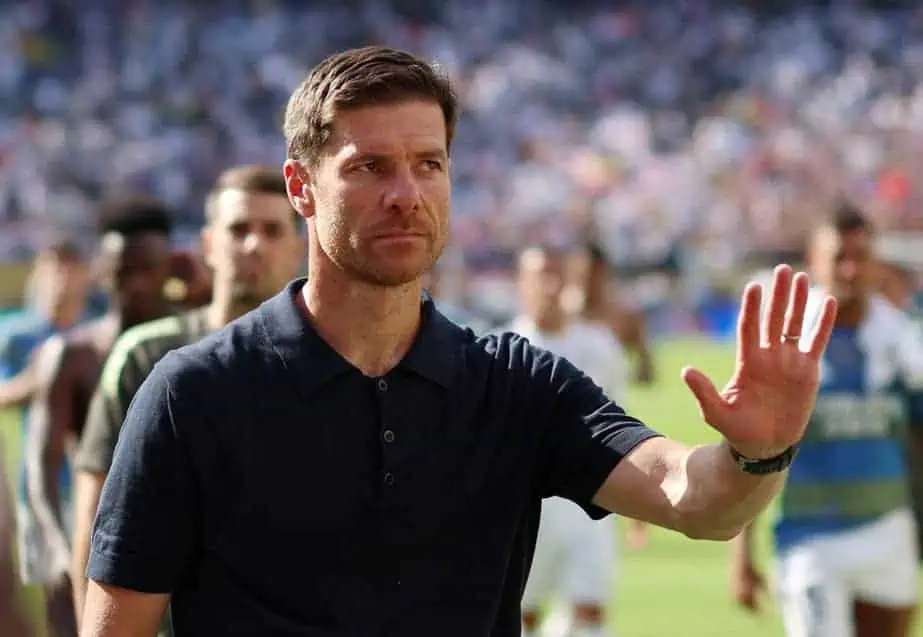
A report attributed to The Athletic claims that several Real Madrid players feel less free to “express their natural game” since Xabi Alonso took charge. The piece describes a more exacting and structured environment than in Carlo Ancelotti’s era, with some senior voices suggesting that ball improvisation has narrowed under stricter demands.
While the full article sits behind a paywall, multiple reputable outlets summarizing it echo the same points about frustration with rigidity and a cooler touchline manner from Alonso.
These rumblings matter because they collide with what the public sees on the pitch. Alonso was officially appointed head coach on May 25, 2025, on a three-year deal, returning as a club legend after his successful stint at Bayer Leverkusen. The club’s announcement and subsequent wire reports set the baseline for his project and timeline.
From Ancelotti’s Trust To Alonso’s Template
Carlo Ancelotti’s Madrid thrived on elastic game plans and player-led decision-making. Veterans often talk about how the Italian’s strength is empowering stars to solve problems in real time. Alonso’s Madrid has tilted toward codified pressing triggers, compact defensive spacing, and stricter team rules around preparation and privacy. That philosophical pivot is the crux of the reported unease.
Early season evidence shows a team built from control and field position. Independent analysis has highlighted Madrid’s elite defensive numbers under Alonso, including aggressive collective pressing and a notably low expected goals against through the opening league matches. That kind of structure typically limits chaotic shootouts and rewards rehearsed patterns rather than solo dribbling expeditions.
None of this means flair has vanished. It means flair is channeled. The best versions of Alonso’s Leverkusen struck that balance, and he has signaled the same ambition in Madrid. He spoke of an adaptable style when presented at Valdebebas and of maximizing star attackers through collective order.
Where The Stars Actually Fit Right Now
Because squad context matters, the attacking hierarchy deserves a clear look as of today. Kylian Mbappé is in Madrid and central to Alonso’s plan, with official club pages and competition rosters confirming his status. Jude Bellingham is a key connector driving carries and late box arrivals.
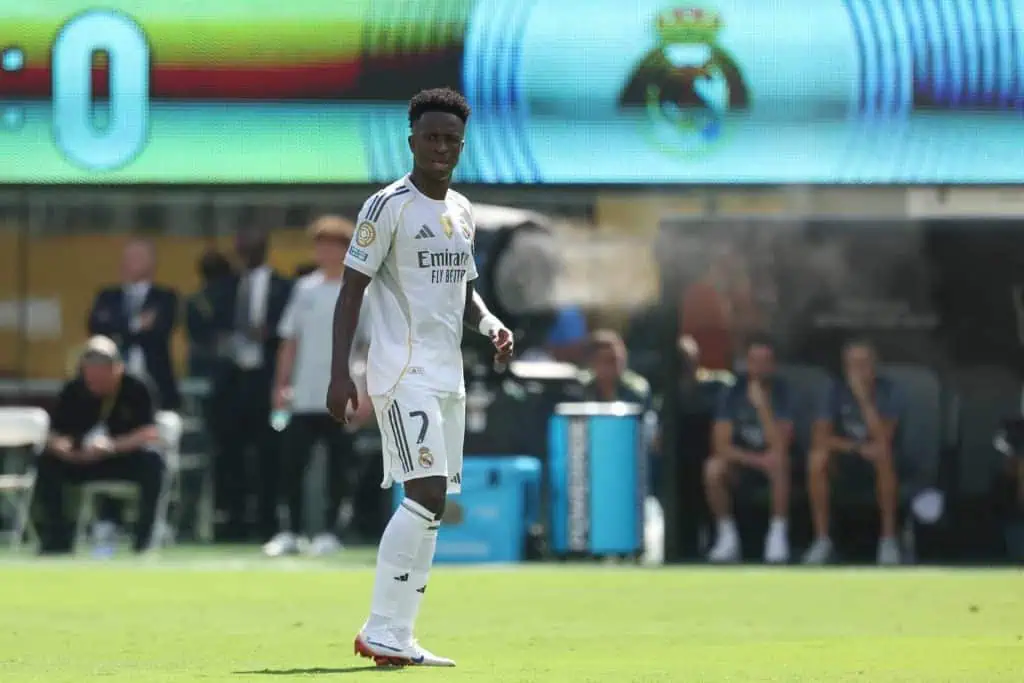
Vinícius Júnior remains in the squad and has delivered decisive actions, although recent reporting has focused on his minutes, reactions to substitutions, and the medium-term fit alongside Mbappé. Rodrygo is active as a flexible left and right-sided forward or as a central runner, depending on the in-possession shape. UEFA and ESPN squad lists corroborate the core forward group for 2025 26.
Recent fixtures support the idea that structure and star power are not mutually exclusive. In El Clásico on October 26, 2025, Mbappé and Bellingham scored in a 2 1 win over Barcelona, with Vinícius instrumental in the decisive sequence.
That game offered a live case study in Alonso’s compact press and quick vertical switch play, paired with individual quality in the final third.
If there is friction, it often surfaces at the edges of a packed attack. External reports have floated tension points around Vinícius’ role and contract posture, as well as dressing room barbs about Alonso being too Guardiola-like in his demands.
These are not club confirmations, and the team currently tops the table, yet they offer a credible window into a squad adjusting to a firmer framework.
What Restrictions Look Like And Whether They Are A Problem
When players say they feel restricted, it typically manifests in four areas. First, starting positions are more rigid in the first and second phase. Wingers may be asked to hold width or stay inside lanes to preserve rest defense more than in the past. That can feel like a creative tax to dribblers who prefer to roam.
Second, pressing is choreographed. Forwards trigger the press based on specific cues, often sacrificing solo chases for coordinated waves.
The trade-off is fewer open field touches, but higher value regains closer to the goal. Data-driven looks at Madrid’s early-season defensive work back this up.
Third, risk is managed through spacing. When fullbacks invert or sit, the nearest eight covers the half space, and the far winger tucks. These rehearsed rotations are anti-chaos by design, a contrast to Ancelotti’s let the game breathe rhythm.
Fourth, minutes and zones can be redistributed to fit a central superstar. With Mbappé now decisive across La Liga and Europe, the surrounding cast adjusts.
That does not erase Vinícius or Rodrygo. It reframes their touches and arrival points, which can feel like a squeeze for players used to a different gravity. The club’s official materials and competition lists confirm the current cast, while match reporting shows how roles have played out on big nights.
Is that a problem? The answer depends on results and buy in. The league table and marquee wins are powerful solvents. If the points flow and the stars keep their numbers, complaints usually fade.
If form dips or if a big name stagnates, whispers harden into noise. For now, Alonso owns the mandate and the metrics, and the squad is undeniably elite on paper and on recent evidence.
The Reasonable Outlook
Frustration inside a dressing room rarely vanishes overnight. It evolves. Expect Alonso to keep the collective rules while making micro concessions to his match winners. Expect individual meetings to address role clarity and substitution reactions.
Expect tactical tweaks like asymmetric fullback usage or a narrow right winger to free one of the left-sided stars without breaking the rest of the defense.
The team is winning signature games and posting strong defensive indicators under a more structured plan. The Athletic’s reporting of friction is plausible and not uncommon in transitions from a player-led to a coach-led ecosystem, but it sits alongside performances that validate the blueprint.
Nothing about Madrid’s identity says the artistry is gone. It says the artistry is being routed through a template. If Alonso calibrates that balance correctly, the team can preserve the thrill without losing the grip that wins in May.