
World Cup 2026 Draw Drops A Nuclear Puzzle: Here Are The Groups That Could Rewrite Football History


The final draw for the 2026 FIFA World Cup landed with the kind of chaos and promise you expect when three countries host the world at once. FIFA revealed the 12 groups in a Washington ceremony that mixed celebrity energy with real geopolitical football consequences.
The new 48-team format is no longer a theory. It is a map of where dreams will be made and careers will be defined next summer. This article breaks down what the draw actually means for the giants, the sleepers, the hosts, and the playoff placeholders who will arrive on the scene later.
What The Draw Means For The Favorites
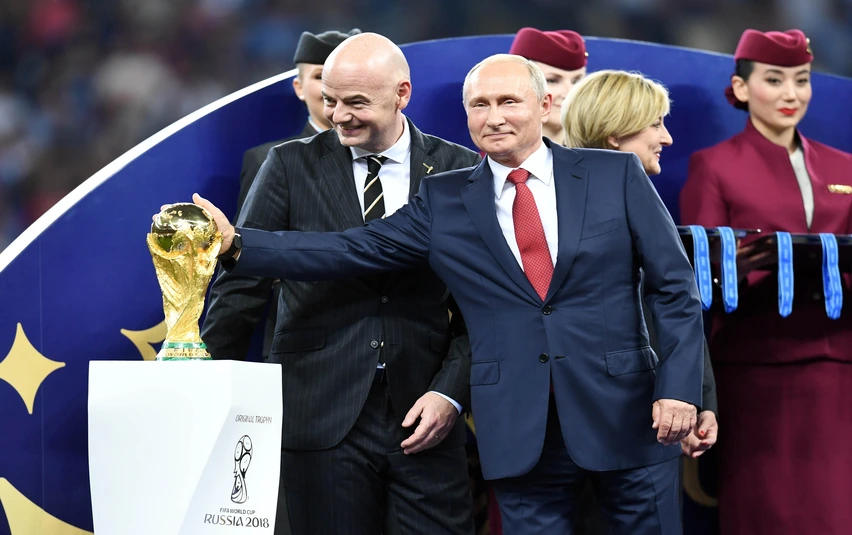
Top seeds mostly avoided early collision with one another by design. That is the point of FIFA’s seeding procedure, which placed the highest-ranked teams in separate groups to reduce clash risk before the knockout rounds.
Spain, France, Argentina, England, Portugal, Brazil, Netherlands, Belgium, Germany, Italy, and the host trio were distributed so that four of those big names cannot meet prior to the semi-final stage. That creates an interesting strategic wrinkle. Favorites are guaranteed a safer route to advance, but will still face tricky matchups against regional powerhouses and highly motivated underdogs.
Group compositions highlight immediate tests. Brazil landed in Group C with Morocco, Scotland, and Haiti, which mixes South American flair with North African grit and a rising Scottish side.
France drew into a brutal-looking Group I with Senegal, Norway, and a playoff winner, which many outlets are already calling a Group of Death. England will be in Group L alongside Croatia, Ghana, and Panama, which rekindles old World Cup memories while offering a potentially smooth group stage on paper. These placements matter because the new format sends more teams through, but also creates more scenarios where a traditionally safe top seed slips up and bails out the surprises.
Groups To Watch
Group C, Brazil, Morocco, Scotland, and Haiti, will be fascinating because it pairs South America’s attacking instinct with Africa’s tactical evolution and a Scotland side that has been on the rise.
Brazil remains deep in talent, and pressure will sit on them to perform in a very public arena in North America. Morocco comes with a recent pedigree after their deep run in the last World Cup, while Scotland arrives with momentum from a strong qualifying campaign.
Group I, featuring France, Senegal, and Norway, is another headline maker. France brings a squad that balances youth and experience under intense expectation. Norway carries Erling Haaland, who plays for Manchester City and whose goal-scoring form has been sensational in club and qualifying action this year.
Norway’s presence with Haaland guarantees a global spotlight on that group because his ability to change a single match is unmatched. Senegal provides an athletic counterpunch and an African style that historically causes tactical headaches for European teams.
The United States Group One USMNT Paraguay Australia Playoff will also be crucial, given the host advantage and the expansion of host city match allocations. The US will be defending home turf under massive domestic expectations, and the presence of Australia and Paraguay creates an interesting clash of styles that could test the host’s tactical flexibility. US home form and travel logistics across venues in the United States, Mexico, and Canada will be a real factor when match day arrives.
Dark Horses And Playoff Placeholders
Expanded World Cups create opportunities for nations that normally would not see this stage. Several slots remain placeholders for playoff winners and intercontinental qualifiers, which means groups still contain unknowns that could flip expectations.
Teams that secure a playoff berth are battle-hardened by the nature of their route and frequently arrive in top form. Those playoff winners will be dangerous and often overlooked. Keep an eye on nations that combine tactical discipline with one or two elite attackers. Those teams can navigate group stages with minimal real estate for error.
Norway is the perfect modern example because Erling Haaland plays for Manchester City, and he converts single chances into match-winning moments. Meanwhile, Argentina remains a benchmark in South America, and Lionel Messi currently plays for Inter Miami and brings experience that matters in knockout pressure. Any side that neutralizes a superstar while exploiting quick transitions will be the tournament dark horse.
How The Hosts Benefit And What Fans Should Expect
Hosting across the United States, Canada, and Mexico changes the tournament economics and the fan experience. There will be more marquee matches early and longer travel itineraries for teams and supporters.
Hosting nations get home advantage in crucial group fixtures, which is not trivial because fan energy massively influences match tempo and referee atmospheres. Mexico will open the tournament against South Africa, setting an immediate tone for a festival like the World Cup with packed stadiums and heavy media coverage. Ticketing and scheduling controversies are likely to follow as they do with every major tournament.
Several outlets reported early concerns around ticket prices and logistics during the draw ceremony, which featured high-profile guests and a theatrical presentation. Fans should plan early for travel and be prepared for premium pricing on high-demand matches. Broadcast windows across time zones will also influence when games kick off and how global audiences tune in.
Final Takeaway
The 2026 World Cup draw did what it had to do. It created storylines and heated debates while delivering a workable map for the biggest summer in football history. Groups stacked with historical heavyweights and emerging nations promise drama at every turn. Expect giant meets underdog narratives to dominate early headlines as teams battle not only opponents but travel and expectation.
The presence of superstar names who currently play at elite clubs like Real Madrid, Inter Miami, and Al Nassr ensures global audiences will follow with affection and criticism in equal measure. Remaining playoff matches will only add spice as unknown qualifiers complete the final picture. The stage is set. Next summer, the pitch will tell the rest.
