
Abby Wambach Walks: USWNT Icon Severs Ties With Agency Amid Epstein Fallout

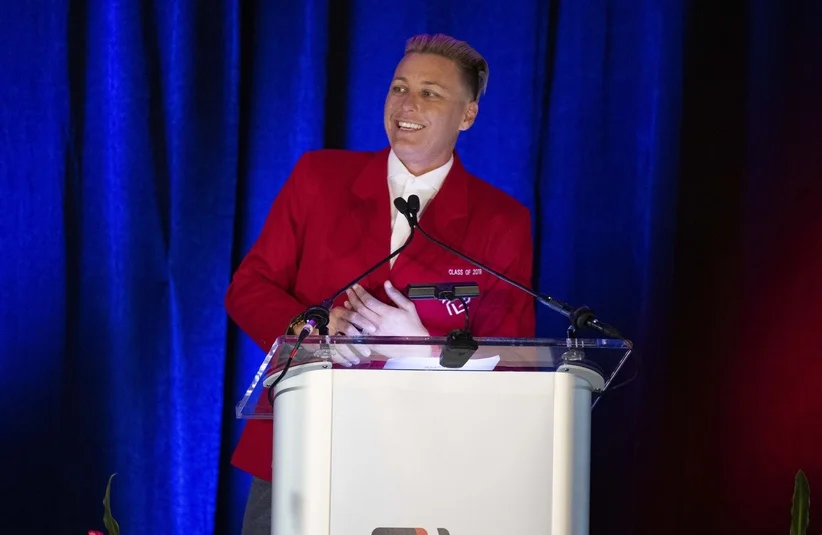
Abby Wambach has never been the type to stay quiet when the temperature rises. On the pitch, she was a battering ram of a forward, a leader who dragged the U.S. Women’s National Team to glory through sheer force of will. Now, years into her retirement, she is proving that her moral compass is just as rigid as her playing style was aggressive.
In a move that is sending shockwaves through the intersection of sports and entertainment, Wambach announced that she is officially parting ways with the Wasserman Agency. The decision comes in the wake of renewed scrutiny surrounding the agency’s CEO, Casey Wasserman, and his name appearing in the recently unsealed Epstein files. For Wambach, this wasn’t just a business calculation. It was a line in the sand.
Why Wambach Made the Hard Call
The timeline here is crucial. Early in February, the release of the Epstein files revealed correspondence involving Casey Wasserman. While no criminal charges have been filed, the mere association has become radioactive for public figures who built their brands on integrity.
Wambach took to Instagram to explain her exit, and she didn’t mince words. She cited the specific correspondences found in the files as the catalyst, stating simply that she had to “follow [her] gut and values.”
This wasn’t a decision made lightly. In her statement, Wambach made sure to highlight the human cost of this move. She expressed deep gratitude toward her direct agent, acknowledging a relationship built on nearly two decades of trust. Walking away from a 20-year partnership is rare in the cutthroat world of sports management. It highlights just how seriously Wambach views the ethical cloud hanging over the agency’s leadership.
The Entertainment Industry Led the Way
While Wambach is the first major domino to fall in the sports world, the tremors started in the music industry. Before the soccer legend made her announcement, a wave of high-profile artists had already headed for the exit door.
Musicians like Chappell Roan, Bethany Cosentino of Best Coast, and Orville Peck didn’t wait around. Cosentino publicly called for Wasserman’s resignation, while Roan emphasized that artists shouldn’t be forced to compromise their values for representation.
Wambach’s move bridges the gap. By joining the exodus, she has moved the controversy from the entertainment pages to the sports section, placing a massive spotlight on the Wasserman Agency’s roster of athletes. The question now buzzing in locker rooms and front offices is simple: Who is next?
What This Means For the LA 2028 Olympics
The stakes here go far beyond a single agency losing a client. Casey Wasserman isn’t just a powerful agent; he is the chairman of the LA 2028 Olympics organizing committee. He is the face of the Games returning to Los Angeles.
When a figure of Wambach’s stature—a World Cup champion, two-time Olympic gold medalist, and Hall of Famer—publicly distances herself from him, it creates a PR nightmare for the Olympic committee. The International Olympic Committee (IOC) historically loathes controversy, and having the chairman of an upcoming Summer Games embroiled in the Epstein fallout is the worst kind of distraction.
Wambach’s departure amplifies the calls for resignation that started with the musicians. It signals that this issue isn’t going away and that the pressure on Wasserman to step down from his Olympic leadership role is likely to reach a boiling point.
FAQ Section
Q: What happened with Abby Wambach?
A: She left Wasserman Agency after reading Casey Wasserman’s correspondence in the Epstein files.
Q: Who is involved?
A: Abby Wambach, Casey Wasserman, and several musicians, including Chappell Roan and Bethany Cosentino.
Q: Why is this news important?
A: It highlights growing demands for accountability in sports and entertainment, especially with Wasserman’s Olympic leadership role.
Q: What are the next steps?
A: Pressure is mounting for Wasserman to resign, and more athletes may follow Wambach’s lead.
A Legacy Of Accountability
We are witnessing a new era of athlete activism. Ten or fifteen years ago, an athlete might have stayed silent to protect their endorsement deals or agency relationships. Today, stars understand that their personal brand is their most valuable asset, and that brand is inextricably linked to their values.
Wambach has always been a vocal advocate for equality and accountability. By walking away from Wasserman, she is putting action behind her words. She is signaling to the next generation of athletes and her peers that who you align with matters just as much as what you achieve on the field.
Industry analysts suggest this could trigger a snowball effect. Agents across the board are likely fielding calls from concerned talent, and the Wasserman Agency is facing a potential crisis of confidence. If more Olympic athletes follow Wambach’s lead, the position of Casey Wasserman at the helm of LA 2028 may become untenable.
