
Manchester United Want Antoine Semenyo For A Wingback Role — Genius Move Or Tactical Gamble?

Manchester United fans have endured a rollercoaster of emotions this season. From flashes of brilliance to nagging inconsistency, Ruben Amorim’s men have yet to stamp an identity on the Premier League.
Rumours are now swirling that United may pursue Antoine Semenyo in the January transfer window. This counts as a response to mounting concerns over wingback Patrick Dorgu’s struggles.
With Semenyo’s £65m release clause about to become active, the time to act might be now. But should Manchester United truly make this move? Here’s a deep dive into the situation, the player involved, tactical fit, and what this would mean for United’s immediate and long-term ambitions.
Semenyo’s Current Form And Why Top Clubs Are Watching
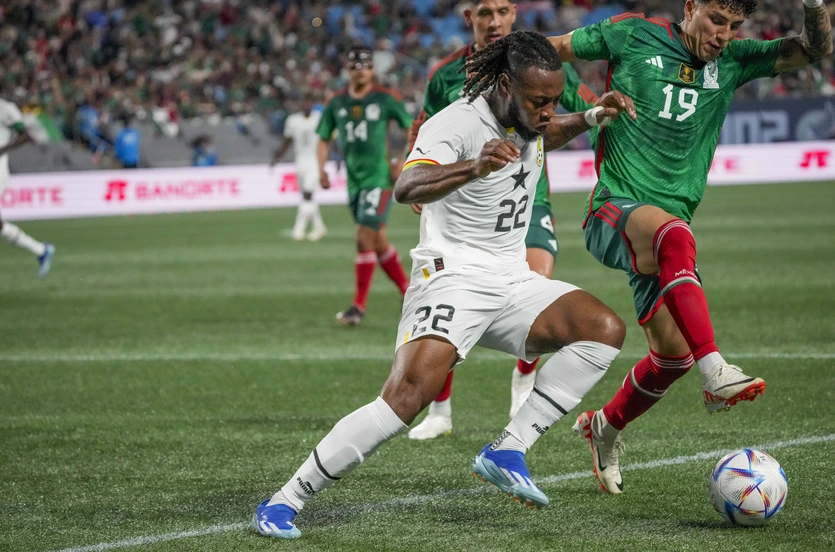
Antoine Semenyo has been one of the most talked-about players in the Premier League this season. At AFC Bournemouth, the 25-year-old Ghanaian winger has been in outstanding form, netting seven goals and providing three assists in his first 15 appearances this campaign.
His ability to influence games in both goals and assists has made him one of the most productive attacking players in the league. Statistically, he has become Bournemouth’s chief threat.
Recent data show that, over the past several months of Premier League action, he has been directly involved in 10 goal contributions in 16 games, often at rates comparable to the league’s very best.
His combination of directness, unpredictability, and ball carrying makes him a nightmare for defenders. What sets Semenyo apart is his two-footed threat. Rarely do players have such a comfortable balance and decision-making with both right and left.
This allows him to cut inside, go outside, or deliver decisive actions in tight spaces. This versatility has seen him deployed on both wings by Bournemouth boss Andoni Iraola, and it’s one of the reasons a host of Premier League clubs are circling.
Every major London and Manchester club, Arsenal, Liverpool, Tottenham, Manchester City, and United, have been linked with his signature for the coming window. Most eye-catching among those rumours is United’s interest, driven in part by an urgent need to address flaws at wing-back.
Why United’s Wingback Crisis Has Sparked This Rumour
Ruben Amorim arrived at Old Trafford with a clear tactical blueprint in mind. His preferred formation requires athletic wingbacks capable of pushing high, defending resolutely, and supplying width and penetration in attack.
On paper, Manchester United should have had the personnel to make this system work. In practice, that has proven more difficult. Patrick Dorgu arrived in January last season, and there was excitement about his potential. Still only 21, he has shown flashes of talent but has struggled to deliver at the standard expected at Old Trafford consistently.
Recent reports suggest that both the club and Amorim are harbouring doubts about his readiness to fill a starting role in such a demanding position. United have leaned on Diogo Dalot on the left side, but Dalot is traditionally a right-back by trade and has not always offered the attacking spark or defensive solidity required.
United’s other natural options on that flank are limited, leaving a clear tactical hole. That’s where Semenyo’s name has re-emerged with force. What has changed in the last few weeks is the timing.
Semenyo’s release clause becomes active at the start of January, and United are reported to be one of the clubs formally opening talks with the player and Bournemouth. They must wrap up a deal early in the window to take advantage of the clause structure.
Can Semenyo Really Fit As A Wingback At Old Trafford?
This is where the debate gets interesting. Critics argue that Semenyo is a forward first and foremost, a natural winger with attacking instincts tailored to Premier League counters and open spaces.
Deploying him as a left wingback would be unconventional, especially at a club as attack-oriented as United. Some pundits and fans on discussion forums have expressed skepticism, noting that his best performances come further forward, where he can directly influence goals.
Supporters of the move point out that Amorim’s system is flexible, and the ‘wingback’ in his setup often operates more like an advanced wide attacker than a traditional defensive fullback. Semenyo’s pace, work rate, and ability to drive at defenders could see him thrive in that hybrid role, especially since he is comfortable on either flank.
This might give United a tactical edge that few other signings could provide. There’s also a pragmatic argument. United’s midfield is still lacking a commanding presence, and defensive reinforcements are equally necessary. Semenyo offers a high-impact solution to a glaring problem.
Even if he doesn’t become a classic wingback, his flexibility could enable Amorim to tweak his formation mid-game, or deploy Semenyo on the left of a front three. A role in which United have sometimes lacked dynamism this season.
The Financial And Strategic Implications For United

Signing Semenyo would not be cheap. At around £65 million including add-ons, it’s a serious investment — particularly for a club that also needs to strengthen other areas. The release clause is voided if United fails to activate it within the specified window, making timing crucial.
There’s a real strategic question here. Should United spend big on an attacking wide player when the midfield and defence also have unresolved depth issues? Fans are divided.
Some believe that sealing a deal for Semenyo could instantly elevate United’s threat level and provide a genuine tactical weapon. Others feel United must prioritise a central midfielder or defensive midfielder before worrying about incremental improvements out wide.
However, it’s worth noting the market dynamics. From a long-term perspective, United would be adding one of the Premier League’s brightest wingers entering his prime years. At 25, Semenyo’s peak is imminent, and he brings both Premier League experience and physical versatility to a squad that has sometimes lacked aggression and unpredictability.
Final Verdict Should United Make The Move?
Ultimately, the decision hinges on United’s broader strategy and what they believe their season requires. Suppose they see Semenyo as a forward who can be adapted into a wingback or wide attacker in Amorim’s flexible system. This could be a premium signing that unlocks greater balance and threat in the squad.
Conversely, if United prioritise structural balance and a deep-lying midfield creator or enforcer first. Perhaps waiting until summer and investing in more foundational positions makes sense. For Manchester United, the call on Semenyo is more than a transfer decision. It’s a statement about ambition, tactical identity and how far they truly believe they are from challenging at the very top of English football.
