How Alphonso Davies And Jamal Musiala Could Make Bayern Even Stronger

When two of Bayern Munich’s most electric talents edge closer to full fitness, namely Alphonso Davies and Jamal Musiala, the ramifications are wide‑ranging. Bayern currently looks like a juggernaut; add two full‑fledged stars back into the fold, and the momentum could shift into another gear.
Here’s a deep dive into where things stand: the recovery journeys, the tactical implications, and what it could mean for the title race.
Recovery Closer To Reality For Davies
Alphonso Davies’ story over the past months has hovered between hope and caution. The Canadian left‑back suffered a serious anterior cruciate ligament injury earlier this year while representing his national team.
Since then, his rehabilitation has progressed at a pace that’s lifted eyebrows in Munich. Head coach Vincent Kompany acknowledged that Davies is ahead of schedule and that a return before the turn of the year is looking “very good.” Reports this week confirm that Bayern expect the 25‑year‑old to rejoin full group training after the international break and target a return to action in December.
From a tactical perspective, the timing could be perfect. Bayern’s left‑back slot has been a patchwork since Davies’ absence, and while replacements have stepped up, none quite bring his blend of speed, directness, and attacking threat. His return would restore balance and give Kompany another dimension — overlapping runs, the width to stretch defences, and the sort of recovery pace few left‑backs possess.
The mental side of his rehab has also been central. Davies himself admitted that the hardest part was not the physical rebuilding but the uncertainty of it all, not knowing when the return would come, how the body would respond.
For Bayern, the message is clear: he will be eased back in, no shortcuts. The upside is huge; a fully fit Davies is a game‑changer.
Musiala’s Return: Creativity On Its Way Back
For Jamal Musiala, the road has been rougher — and understandably so. The 22‑year‑old attacking midfielder suffered a fractured fibula and a dislocated ankle after a collision during the FIFA Club World Cup in July against Paris Saint-Germain.
Given the serious nature of the injury, Bayern have taken a cautious approach. Musiala returned to first running sessions in October and has slowly moved into coordination drills with the ball.
However, multiple sources emphasise that there is no rush. The internal timeframe suggests a 4‑8 week window until full fitness is realistic, meaning a potential return toward the end of the year, but not necessarily immediately.
The importance of Musiala for Bayern cannot be overstated. He brings that free‑roaming creative force between the lines, a dynamic who slides pockets of space, drifts wide, drives forward, sparks attacking transitions.
In his absence, Bayern’s attacking rhythm has been strong but arguably lacks that flavour of unpredictability. When Musiala is back at 100 per cent, he unlocks certain tactical possibilities: overloads on the left, combinations in tight spaces, the ability to pull midfielders out of position.
What stands out is that Bayern are not just looking for an appearance, they are looking for readiness. Musiala’s quotes reinforce that: he wants to come back “at 100 per cent.” That mindset aligns with the club’s long‑term vision for his role, not merely to tick a box but to reintegrate fully as a pivotal attacking cog.
The Bigger Picture: Why Their Return Matters Now
When you bring together the latest on Davies and Musiala, the narrative is clear: Bayern are assembling firepower. Right now the team is performing strongly, they have extended their unbeaten streak with 15 consecutive victories across all competitions.
The winning streak was ended by Union Berlin, where they held the German Champions to a 2-2 draw. This emphasised their dominant form this season. But this duo’s return would elevate them from strongly performing to potentially unstoppable.
First, on the defensive side, Davies’ return gives the squad solidity and a full complement of wings to attack and defend. He can press high, recover quickly, and offer width that forces opponents to stretch. That frees central midfield and forwards from compensating too much for defensive worry.
His overlapping runs will become a true outlet from left‑back: when Bayern transition from defence to attack, Davies can carry the ball forward, stretch the opponent, create space for runners inside, and deliver crosses or cutbacks. That alone adds a new dimension to their game.
Second, on the attacking side: Musiala’s return not only adds creativity but allows Bayern to change tempo. Against deep blocks, he can operate in the half‑spaces; when leading games he offers the dribble, the spark, the moment of magic.
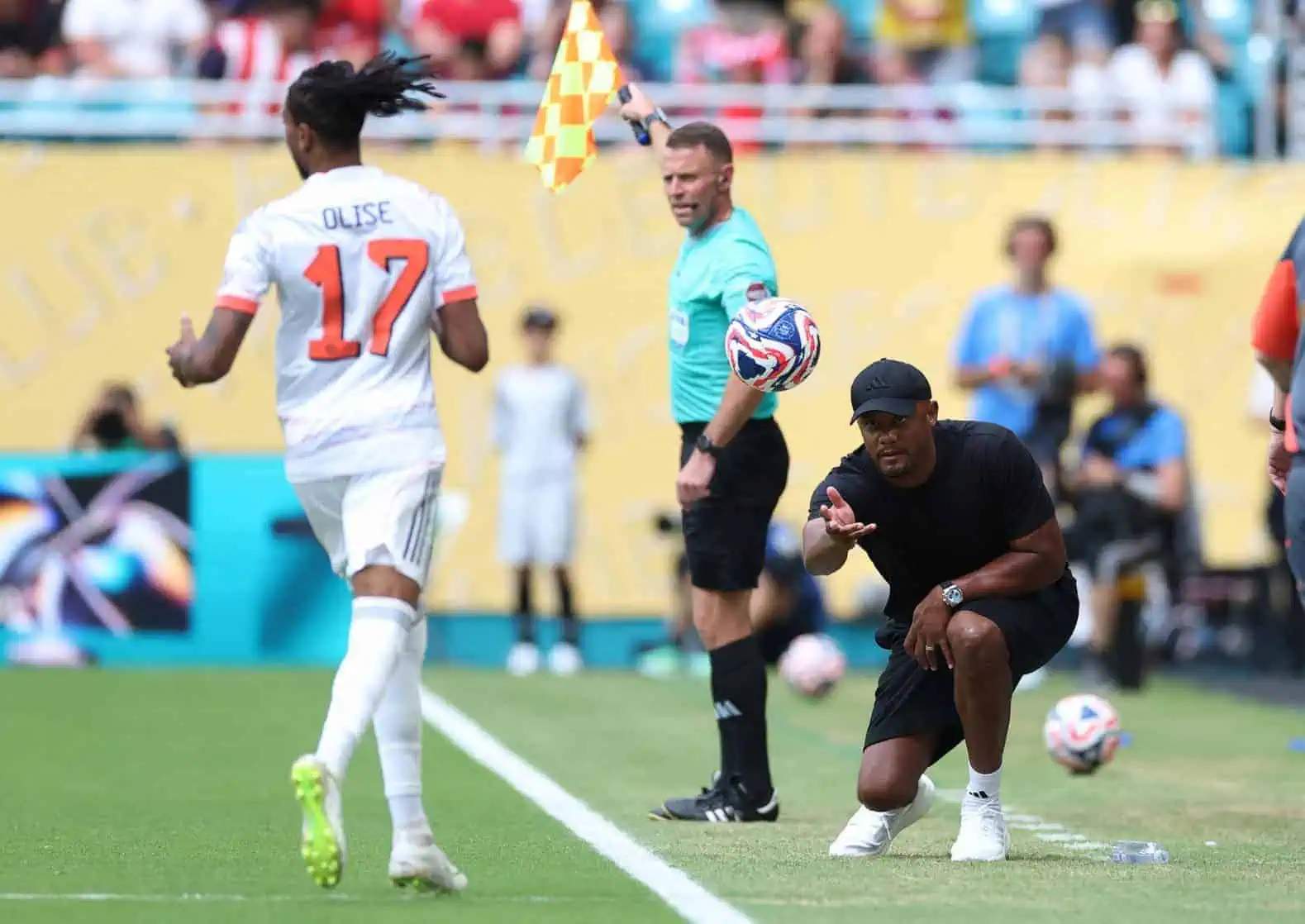
Moreover, with the likes of Michael Olise, Luis Diaz and Harry Kane all available and firing, Musiala now could link up seamlessly with these players, making combinations, quick interplay, and breaking lines.
Olise’s pace and movement, Diaz’s directness in the wide areas and Kane’s finishing in the box create an ideal ecosystem for Musiala to thrive in. His return means that Bayern’s attacking pieces slot together even more naturally.
Third, the psychological boost: A club hearing of both key players nearing returns lifts the squad morale. It also sends a signal to opponents, Bayern are getting reinforcements. As the season heads into its most decisive chapters (domestic league run‑in, knockout stages in Europe), having more of your top names available is often the difference.
Finally, the strategic implications: Opponents now must account for increased threats. When Musiala goes one‑on‑one, when Davies sprints down the flank, those moments create overloads which can tear open stubborn defences.
What Could Go Wrong And Why Patience Remains Key
Even the most optimistic timelines come with caveats. Both players are returning from serious injuries; one from an ACL tear (Davies) and one from a fibula/ankle break (Musiala). Risk of re‑injury never disappears. Overloading too soon, rushing minutes, match‑sharpness lagging behind physical fitness, all these are classic pitfalls. Bayern know this and seem to be resisting shortcuts. Match fitness and rhythm take time.
It is one thing to train and another to perform at elite‑level intensity. When Davies returns he may need phased minutes. The same goes for Musiala. Tactical readjustments are inevitable: players returning can disrupt temporary systems or partnerships that have formed in their absence.
Coaches must integrate them while preserving cohesion. Opponent focus is another factor: opponents will plan for their returns, marking them tightly, denying space, forcing transitional moments. Bayern must manage expectations and the spotlight. For the supporter or analyst, the key insight is: the fact these two are nearing full return is the headline. But rendering them game‑ready and impactful is the story going forward.