La Liga’s Miami Nightmare: Protests, Censorship, and Barcelona at the Center

In a move that screams “tone-deaf,” La Liga’s grand plan to export a little slice of Spanish football to Miami has backfired spectacularly. The league, in its infinite wisdom, decided that a match between Barcelona and Villarreal would be a fantastic American spectacle. The players, however, had other ideas, staging a league-wide protest that was promptly censored on live television. You can’t make this stuff up.
The whole fiasco is a masterclass in how not to run a football league. It’s got everything: a controversial decision made behind closed doors, a unified player revolt, and a broadcaster so committed to the bit that they literally cut away from the action to hide the dissent. Welcome to modern football, where the fans and players are merely inconvenient obstacles on the road to global market penetration.
What Exactly is All the Fuss About?

So, here’s the tea. La Liga, presumably after a brainstorming session fueled by too much caffeine and a burning desire for American dollars, decided to schedule a regular-season match between Barcelona and Villarreal at the Hard Rock Stadium in Miami. Because why should the people who actually support these clubs week in and week out get to see them play? Let’s just ship them 4,500 miles across the Atlantic.
This brilliant idea was met with, shall we say, less than enthusiastic applause. The Spanish Footballers’ Association (AFE) organized a protest for Gameweek 9. The plan was simple yet powerful: for the first 15 seconds of each match, players would just… stand there. A silent, united front against a decision they had absolutely no say in. Eighteen of the 20 La Liga clubs agreed to participate, a rare moment of solidarity in a league often defined by bitter rivalries.
Of course, in a classic case of corporate censorship, the television broadcast of the Real Oviedo vs. Espanyol match conveniently cut away during the protest. Viewers at home were left scratching their heads, while the players on the pitch made their silent stand to an empty camera. It’s almost as if La Liga didn’t want people to know that its main attractions—the players themselves—were furious. Shocking, I know.
Barcelona and the Unfair Advantage
Let’s not forget the elephant in the room: Barcelona. While the AFE made it clear the protest wasn’t against any specific club, the competitive imbalance this Miami game creates is impossible to ignore. AFE president David Aganzo didn’t mince words, pointing out that Villarreal would be robbed of their crucial home-field advantage.
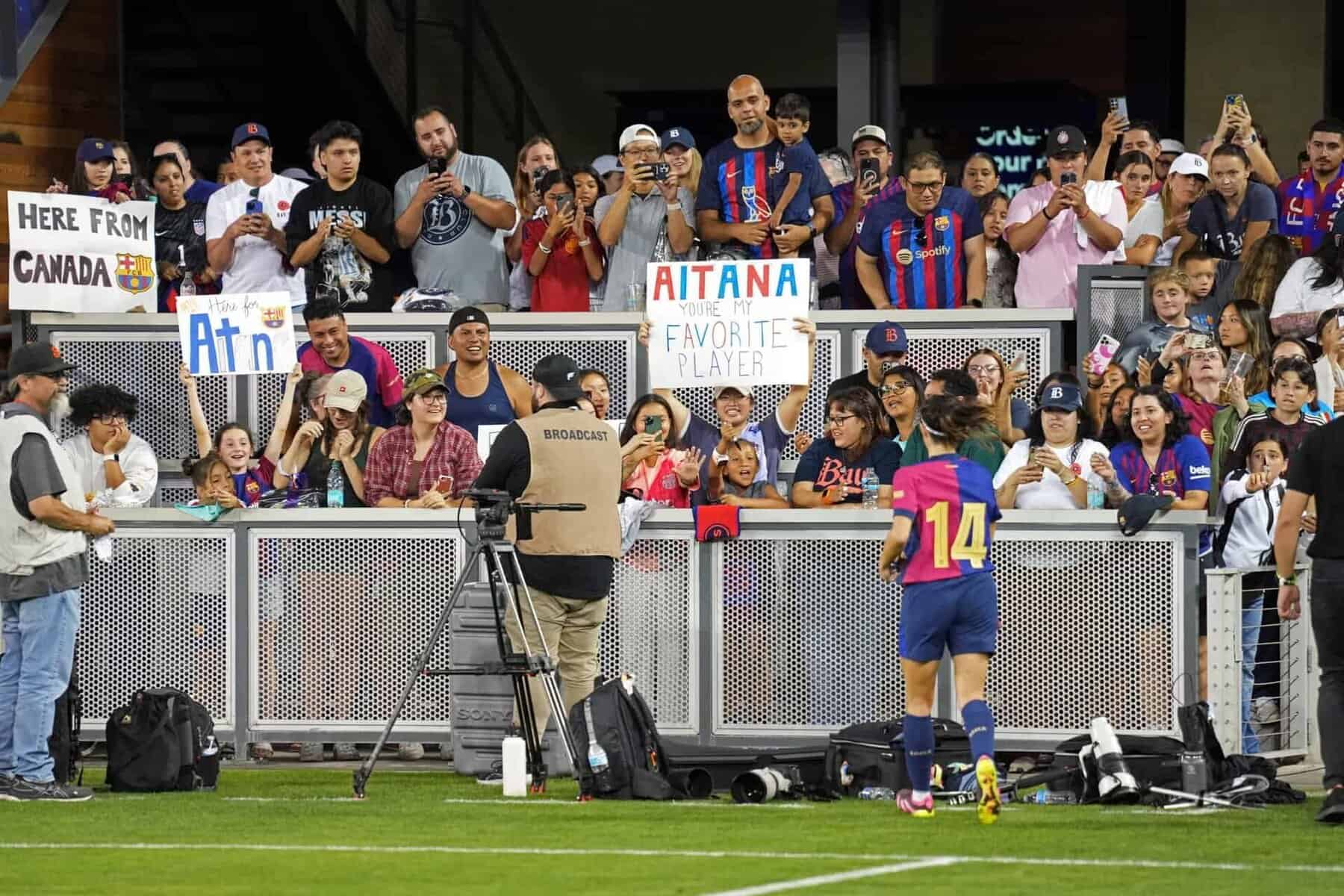
“It will be as if Barça are at home,” he stated, and he’s not wrong. Barcelona is a global brand with a massive following in the U.S. Playing in Miami is essentially a home game for them, turning a competitive league match into a glorified pre-season friendly where one team gets a massive, unfair leg up.
Even Barcelona’s own Frenkie de Jong, a man paid handsomely by the club, couldn’t hide his disgust. “I don’t like the fact that we’re going to play there and I don’t agree with this,” he said. “It’s not fair for the competition.” When your own players are calling you out, maybe, just maybe, you’ve made a bad decision.
Why This Whole Miami Thing is a Terrible Idea
This isn’t just about one game. It’s about a fundamental lack of respect for the players, the fans, and the integrity of the competition. The AFE’s statement hit the nail on the head, demanding “transparency, dialogue and coherence.” They’re not asking for the moon; they’re asking to be treated like human beings and key stakeholders, not just pawns in a global chess game.
The players are worried about their labor rights, the grueling travel, and the complete disregard for the competitive balance of their own league. And they should be. This move sets a dangerous precedent. What’s next? The Madrid derby in Dubai? El Clásico in Beijing? It’s a slippery slope, and La Liga seems determined to slide down it headfirst, chasing every last dollar.
Ultimately, this whole mess exposes the growing chasm between the suits in the boardroom and the people who make the sport what it is. While they see Barcelona as a product to be sold, the players and fans see a club, a community, and a competition that deserves to be respected. For now, the protest continues, but one has to wonder if anyone in a position of power is actually listening.