
Connor Zilisch Breaks Through at Bristol, Silencing Larson’s Nightlong Control

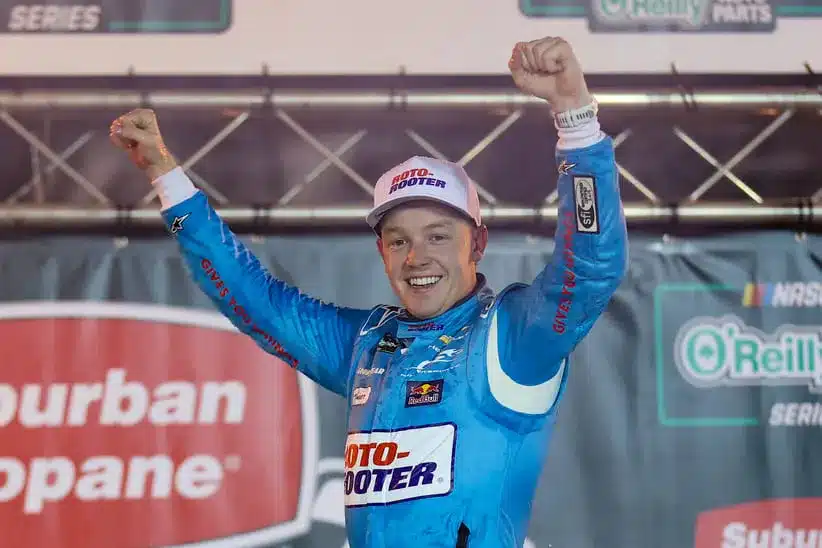
Connor Zilisch’s win at Bristol Motor Speedway wasn’t just an upset. It was a seismic jolt that rattled the entire short‑track universe. Bristol has been breaking hearts since 1961, but it rarely rewrites the script this violently. Under the lights, in front of more than 140,000 fans, Zilisch outdueled a driver who has won in nearly every discipline he’s ever touched.
The victory marked his 12th career NASCAR win, but it felt like the first time the garage collectively realized he’s not just talented. He’s dangerous. It was the kind of performance that shifts how a young driver is talked about on Monday mornings.
Larson’s Early Control
Kyle Larson didn’t just dominate the opening stages. He suffocated the field. He led 230 of 300 laps, swept both stages, and built leads of more than 3 seconds while running laps in the 15.4–15.7‑second range.
His high‑line precision looked like a cheat code, putting the right‑rear tire within inches of the wall without ever flinching. Larson entered the night with a top‑five rate above 60% at Bristol, and for 200 laps, he looked every bit like the sport’s most complete driver.
It felt inevitable, like the race was already carved into the trophy before the final caution ever flew. Larson had that look. The one where he starts stacking laps like bricks and dares anyone to knock them down. The entire rhythm of the race felt in sync with his throttle foot, as if the field was just along for the ride.
The Strategy Gamble That Changed Everything
Everything flipped with 31 laps to go when Gray Gaulding’s spin triggered a caution that detonated the running order. Larson and Justin Allgaier pitted for four fresh Goodyears, a move that typically gains 0.20–0.30 seconds per lap at Bristol.
Rodney Childers stared at the pylon, stared at the laps remaining, and made the kind of call that either makes you a genius or gets you roasted for a month. He told Zilisch to stay out on tires that had more than 70 laps of wear.
The gamble had maybe a 10% success rate historically at Bristol, but Childers trusted the moment, trusted his driver, and rolled the dice anyway. He knew that track position on a late restart can be worth more than four fresh Goodyears. He also understood that Bristol has a way of rewarding boldness when everyone else plays it safe.
Chaos, Pressure, And The Final Restart
The night had already been shaken by Mason Maggio’s terrifying engine explosion, a fireball that forced a 12‑minute red flag and rattled the entire field. Fatigue was setting in, nerves were frayed, and the final restart felt like a powder keg waiting for a spark.
Zilisch launched perfectly, clearing the field into Turn 1, but the chaos behind him erupted instantly. Rookie Brent Crews tried a hero move on the outside, got loose, and Larson shoved past him with 20 laps remaining to begin the hunt.
In just four laps, Larson erased a half‑second gap and glued himself to Zilisch’s bumper, turning the final stretch into a knife fight at 120 mph. He was taking two to three car‑lengths out of the lead every circuit, slicing into the deficit like it was nothing.
Zilisch’s Defensive Masterclass
Kyle Larson threw everything he had at the young driver, high arcs, low dives, late entries, early exits, the full Bristol playbook. Zilisch matched every move with the composure of a driver twice his age, despite being only 19.
He protected the bottom, blocked the top, and never once over‑drove the entry, even as Larson tried to force a mistake. With six laps to go, Larson finally slipped up the banking in Turn 4, losing just enough momentum for Zilisch to break free.
The margin of victory was 0.412 seconds, but the psychological margin was a mile wide. It was the kind of defensive stand that gets replayed in highlight packages for years. It told the entire garage that Zilisch won’t fold under pressure.
What This Win Means
Beating Kyle Larson, a driver with wins in NASCAR, IndyCar, sprint cars, late models, and midgets, is a career‑defining moment for anyone, let alone a teenager. Zilisch had finished outside the top 25 in three straight Cup starts, and the whispers about confidence were getting louder.
This win silences all of that. It proves he can handle pressure, strategy swings, and a generational talent breathing down his neck. For JR Motorsports, the 1–2 finish was their most dominant statistical night of the season and a reminder that their pipeline is as strong as any in the sport.
It also resets the way the garage talks about him. Drivers don’t earn respect with words — they earn it by beating the best under the heaviest spotlight, and Zilisch did exactly that. This wasn’t a fluke or a fuel‑mileage miracle; it was a straight‑up fight against the fastest car in the field, and he won it clean.
What’s Next
Saturday night at Bristol delivered everything short‑track racing promises: violence, chaos, brilliance, and a finish that leaves your heart pounding. Connor Zilisch didn’t just win a race. He beat the fastest car, the most dominant driver, and the steepest odds on one of NASCAR’s most unforgiving stages.
He walked into The Last Great Colosseum and walked out with a trophy that instantly changes how the garage views him. The sport has a long memory, and this one will stick. As the season grinds forward, teams will circle his name on the entry list with a little more caution because now they know he can slay giants.
For More Great Content
Looking for more content like this? Find Sarah on Facebook, LinkedIn, and X at Sarah Talker .
