
How Zane Smith’s 2026 Rise Signals A New Ceiling For Front Row Motorsports

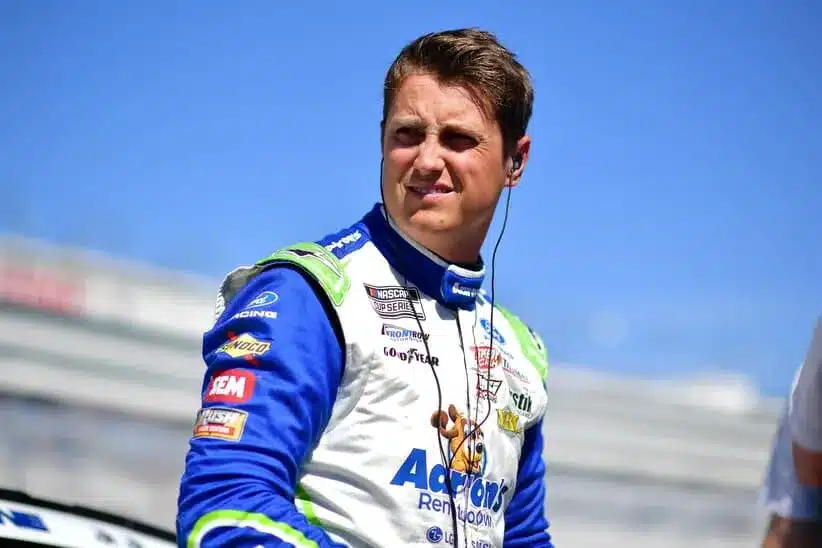
Zane Smith isn’t interested in excuses or sympathy laps. His season at Front Row Motorsports is being built on measurable gains, not narratives. The Cup Series is a results‑driven arena, and Smith is forcing the garage to acknowledge a team that has spent most of its existence operating outside the spotlight.
The No. 38 group isn’t running for participation trophies. They’re running for position, points, and proof. Front Row Motorsports has never been mistaken for a superteam. The organization entered the 2026 season with two career Cup wins: David Ragan’s upset at Talladega in 2013 and Michael McDowell’s Daytona 500 victory in 2021.
They’ve never finished higher than 16th in the final Cup standings as an organization. Their average budget is a fraction of what Hendrick Motorsports, Joe Gibbs Racing, or Team Penske spends annually. But numbers don’t always tell the full story. What matters is how efficiently a team uses what it has, and Front Row has become one of the sharpest operators in the garage.
Smith is the centerpiece of that shift. His arrival didn’t magically elevate the team, but it accelerated a climb that had already begun. He brought championship experience, a willingness to grind, and a mindset that fits the organization’s identity. The No. 38 Ford isn’t a placeholder anymore. It’s a weekly measuring stick for how far a mid‑tier team can push the sport’s hierarchy.
Front Row Motorsports’ Rise From Afterthought To Contender
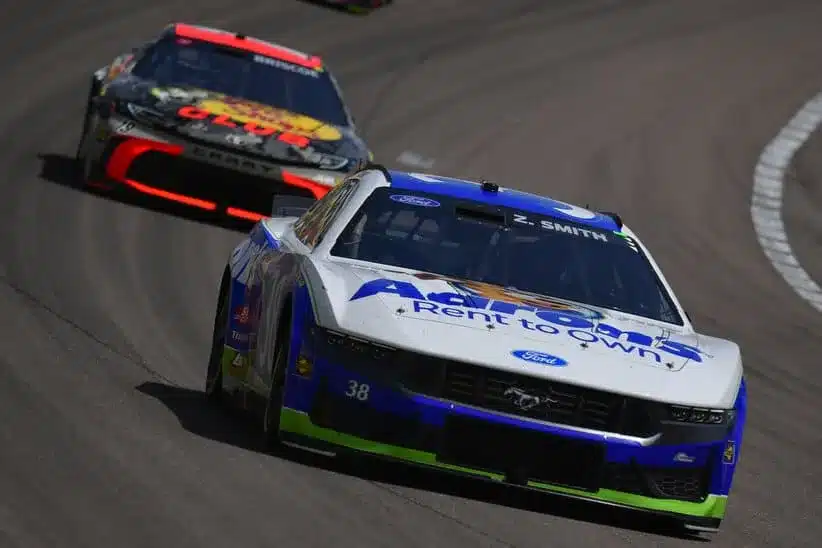
Front Row Motorsports’ evolution has been steady and deliberate. They’ve invested in pit crew development, expanded their engineering support, and improved their simulation program. Their average four‑tire pit stop time has dropped by nearly half a second compared to two seasons ago.
Their cars are unloading closer to race‑ready trim, reducing the need for wholesale adjustments during practice. Smith has embraced the team’s blue‑collar approach. During a recent media session, he referred to his group as a “Ford A‑team,” a comment that would have sounded unrealistic a few years ago. Now it lands with weight.
The results support it. They don’t have the engineering depth of the powerhouse organizations, but they’re showing up with cars capable of running inside the top ten on raw pace. That’s not a fluke. That’s preparation meeting execution.
Front Row’s technical alliance with Ford has strengthened, and Smith is maximizing the equipment he’s been given. The team’s internal metrics show gains in corner-entry stability, long‑run balance, and tire-fall-off management, areas that separate contenders from pretenders. Smith’s feedback has been a major factor in those improvements.
The 2026 Season: A Clear Step Forward
Smith opened the season with authority. He led 10 laps in the Daytona 500, a race where track position is notoriously volatile and where only five drivers led double‑digit laps. Through the first seven races, he climbed as high as fourth in the regular‑season standings, a position that forced the garage to reassess where Front Row Motorsports fits in the competitive landscape.
His average running position through those early races hovered around 13th, a significant improvement over Front Row’s historical average in the mid‑20s. He earned stage points in four of the first seven events, something the team struggled to do consistently in previous seasons.
Then Martinsville delivered a harsh reminder of how quickly momentum can evaporate. On lap 324, a multi‑car crash collected the No. 38 Ford and destroyed what had been a steady top‑15 run. Smith left with a 34th‑place finish and a drop to 22nd in points. Martinsville’s tight layout, 0.526 miles, 12 degrees of banking, and an average of 12 cautions per race over the last decade.
The numbers don’t lie, and it’s clear that the paper clip, as the track is notoriously nicknamed, leaves no margin for escape. Smith didn’t trigger the wreck, but he paid the price. The setback didn’t shake the team. They treated it as a data point, not a derailment. That’s the difference between a group hoping to compete and a group expecting to compete.
A Career Built On Adjusting To Reality
Smith’s path to this moment wasn’t linear. He won the 2022 Truck Series championship, finished second the year before, and still found himself without a seat when GMS Racing restructured. He bounced between Spire Motorsports and a development role at Trackhouse Racing before returning to Front Row Motorsports.
Those experiences hardened him. They taught him how to operate without guarantees. They taught him how to extract value from imperfect situations. They taught him how to stay sharp even when the results don’t match the effort. Smith has nine Truck Series wins, 41 top‑tens, and a reputation for closing races with precision.
However, the Cup Series forces a recalibration. Wins are scarce. Track position is earned, not gifted. Progress is measured in tenths, not seconds. Smith has adapted. He understands that stage points, clean cars, and late‑race positioning are the building blocks of a competitive season.
He’s also learned how to manage races instead of chasing every opening. His average green‑flag pass efficiency has improved, and his late‑run speed ranks inside the top 15 among full‑time drivers. Those numbers matter. They show a driver who is learning how to survive the middle portions of races and strike when the field tightens.
Bristol: A Track That Exposes Weaknesses Instantly
The next test is Bristol Motor Speedway, a place that punishes hesitation. The half‑mile concrete oval features 24 to 28 degrees of banking, 15‑second lap times, and a race distance of 500 laps. Traffic never clears. Mistakes multiply.
The pace is relentless. Temperatures are expected to be near 80 degrees, and Goodyear is introducing a new tire compound designed to reduce falloff.Bristol already strains equipment. A new tire only amplifies the challenge. Smith has history here.
The last time the Cup Series ran at Bristol, he turned a mid‑pack car into a podium threat. He lined up second on a late restart and held his ground against Christopher Bell and Carson Hocevar before finishing third. That run wasn’t the product of chaos. It was the product of execution.
Bristol rewards drivers who can manage tire wear, anticipate traffic patterns, and stay mentally locked in for hours. Smith has shown he can do all three. He also understands how quickly the race can flip. One missed corner can cost five positions. One aggressive move can gain them back. The track demands a balance of patience and assertiveness, and Smith has learned how to walk that line.
What This Season Represents
For Smith, this season is about establishing permanence. He’s not trying to prove he belongs in the Cup Series. He’s proving he belongs near the front of it. Every strong run reinforces that his Truck Series championship wasn’t circumstantial.
Every clean weekend strengthens his case as a long‑term asset for Front Row. For the team, this season is about changing perceptions. They’re no longer content to be viewed as a stepping‑stone organization. They expect to challenge the sport’s elite.
They expect to force the powerhouse teams to adjust their strategy when the No. 38 appears in their mirrors. Front Row has spent years fighting for relevance. Now they’re fighting for position. That shift in mentality is starting to show up in how rivals race them.
The No. 38 isn’t getting shuffled out of lines as easily, and teams that once treated Front Row as a non‑factor are now adjusting their calls when Smith is in the mix. The respect isn’t verbal. It’s in the way competitors defend, block, and react when he’s around. That’s the clearest sign a team is climbing the ladder.
What’s Next
Smith enters Bristol with a clear mission: keep the No. 38 in the conversation. The team has the speed, the preparation, and the mindset to make noise. They’re not chasing miracles. They’re chasing execution. If they continue trending upward, the breakthrough they’ve been working toward won’t stay out of reach for long.
Bristol also gives teams a chance to show whether their progress holds up under pressure. The race compresses every weakness and amplifies every strength, and groups that are only pretending to trend upward usually get exposed by the 200‑lap mark. If the No. 38 stays in the fight deep into the final stage, it’ll confirm that their early‑season gains aren’t temporary.
