
Wolff Maps Out Mercedes F1 Future Amid Massive $300m Sale

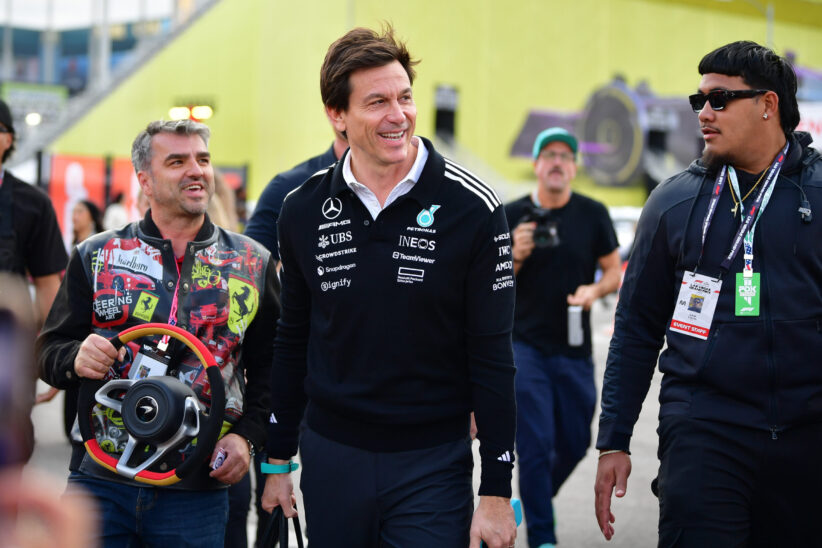
It seems like every time a big name in F1 sells a piece of their pie, the rumor mill kicks into overdrive. Is he leaving? Is the ship sinking? This time, it’s Toto Wolff, the man at the helm of Mercedes, who’s got the paddock talking.
He recently sold a small slice of his ownership stake, leading some to whisper that this might be the beginning of the end of his tenure. But if you ask Wolff himself, it’s all just business as usual. He’s not packing his bags or drafting a farewell speech. In fact, he’s as committed as ever.
So, What’s the Real Story Behind Wolff’s Share Sale?
Let’s break it down. Toto Wolff isn’t just your average team principal. He’s a triple threat: Team Principal, CEO, and a significant part-owner of the Mercedes-AMG PETRONAS F1 Team. He first bought into the team back in 2013 and later increased his stake to a solid 33.3%, matching INEOS’s share.
The recent headlines came after Wolff sold a portion of his holding company to George Kurtz, the CEO of CrowdStrike. This move, valued at a cool $300 million, gives Kurtz a 5% stake in the F1 team. Naturally, a sale like that raises eyebrows. Is Wolff cashing out?
Not a chance, he says. After the Las Vegas GP, Wolff made it crystal clear. “I have no plan to sell the team and no plan to leave my role,” he stated, putting the rumors to rest. “I’m actually in a good space, and I’m enjoying it, and as long as I feel I’m contributing, and others feel that I’m contributing, there’s no reason to think in that direction.”
He explained the move was a strategic one. Bringing Kurtz on board, a fellow “racer” and tech entrepreneur, is all about leveraging the booming US market. It’s not an exit strategy; it’s a growth strategy. “That was the reason behind it, and nothing else,” Wolff added.
What Does This Mean for the Value of Wolff and Mercedes?
This sale shines a light on something truly remarkable: the astronomical growth of Formula 1. Wolff’s transaction values the Mercedes team at around an eye-watering $6 billion. Just think about that for a second. It’s a testament to how far the sport and the Mercedes team have come in the last decade.
Wolff credits a considerable part of this financial success to the cost cap. It’s been a game-changer. “If someone had told us five years ago what valuations would be, we would have never believed it,” he admitted. The cost cap essentially “protected us from ourselves,” stopping the endless spending wars and allowing teams to become profitable. This shift has fundamentally changed the business model of an F1 team, making them attractive investments.
Can Formula 1 Keep Growing? Wolff Thinks So
Looking ahead, Wolff sounds genuinely excited about where Formula 1 is headed. In his mind, there’s no reason the sport can’t keep building on its momentum. He even compared F1’s potential to the NFL, noting how the Dallas Cowboys jumped from a $3 billion valuation to $12 billion in just five years, a reminder of how quickly a well-loved sport can soar.
For Wolff, the recipe is simple: keep the heart of the sport strong and put on a show worth watching. “If we continue to try to understand what makes the sport enjoyable and entertaining, and put up a great show, then there is no reason that the sport can continue to grow as it is,” he explained. In other words, stay curious, stay creative, and stay committed to what makes F1 special.
A Stronger, Brighter Future
So if anyone’s been worried that Toto Wolff is easing his foot off the gas, you can relax. He’s very much still in the driver’s seat at Mercedes—focused, invested, and pushing the team toward what’s next. This move wasn’t a step back; it was a step toward a stronger future. And with Wolff’s passion and strategic mind still guiding the way, the road ahead for Mercedes looks bright.
