
Williams Makes a Power Play: Mercedes Veteran Joins To Rebuild A Fallen Giant

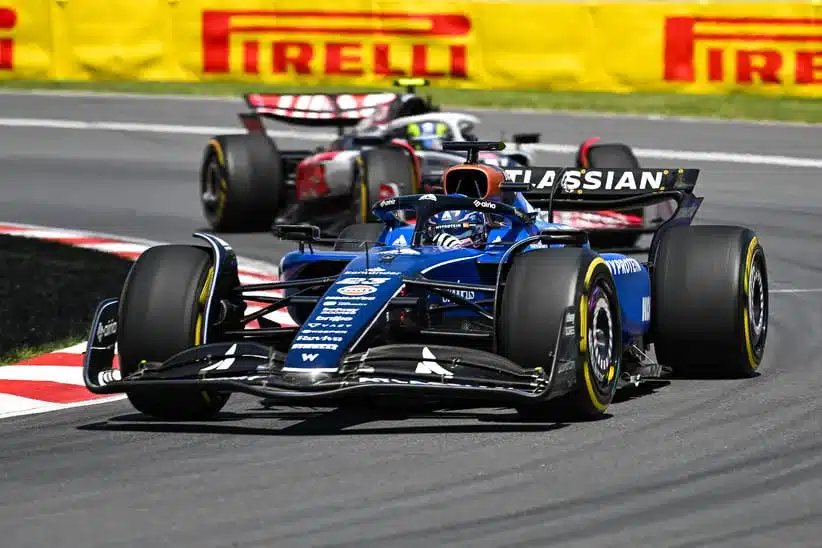
Williams has spent recent seasons fighting in the midfield, far from the nine Constructors’ Championships and 114 Grand Prix wins that built its reputation. The team has searched for consistent performance in an era defined by aero efficiency, power‑unit integration, and rapid development cycles.
The gap to the front has often been measured in tenths, but those tenths have kept Williams out of contention. That urgency explains the team’s latest move. Williams has hired Dan Milner as Chief Engineer of Vehicle Technology, pulling him from a rival that dominated the hybrid era. Milner arrives with more than two decades of engineering experience.
His experience includes 14 years at the Brackley operation, which was responsible for eight straight Constructors’ titles from 2014 to 2021. For Williams, this is not a routine personnel change. It is a strategic acquisition aimed at reshaping the organization’s technical backbone and accelerating its climb back toward competitiveness.
A Monumental Shift For Williams
Milner’s résumé reflects the kind of experience Williams has lacked. He joined the Brackley group during the Honda era, stayed through Brawn GP’s 2009 championship season, and became part of the engineering core that supported more than 100 Mercedes victories in the hybrid era. Few engineers have lived through a transition from midfield to dominance and then helped sustain it.
His work spanned powertrain integration, gearbox development, and long‑range R&D projects. He contributed to the systems that made the Mercedes PU106A and its successors the benchmark of the sport. Most recently, he oversaw research programs aimed at extracting performance gains across multiple seasons.
Milner also brings experience from America’s Cup design programs and defense‑sector engineering, both environments that demand precision and reliability. Williams is adding an engineer who has operated under championship pressure and delivered results across several high‑stakes industries.
Bringing Championship Pedigree To The Shop Floor
Williams has defined Milner’s role with clarity. He will lead Vehicle Technology, the department responsible for turning design concepts into race‑ready performance. His work will shape hardware development, simulation accuracy, and system integration, all areas where Williams has struggled with correlation and consistency
The team expects him to reinforce first‑principles engineering and tighten the link between design, aerodynamics, and trackside operations. In a cost‑cap era, efficiency and accuracy matter as much as innovation, and Milner’s background fits that demand.
Technical Director Matt Harman has emphasized Milner’s ability to convert complex engineering ideas into measurable lap‑time gains. Inside the factory, the expectation is that he will become a central figure in the team’s long‑term rebuild.
What The New Arrival Means
Milner’s arrival signals a cultural and technical reset. Williams is investing in leadership capable of reshaping development cycles, improving reliability, and strengthening the power‑unit–chassis relationship. The team has lacked that level of integrated direction in recent seasons.
This move also reflects a broader shift in how Williams intends to compete. They are building a structure capable of producing consistent upgrades, stronger mechanical grip, and better aerodynamic efficiency, the areas that have separated them from the front of the field.
With the 2026 regulation overhaul approaching, Milner’s hybrid‑era experience becomes even more valuable. For fans and partners, the message is clear: Williams is preparing for a long‑term climb, not a short‑term patch. Hiring a veteran who helped engineer eight Constructors’ titles is a direct investment in the future.
What’s Next
Williams has a legacy built on innovation and championship‑level engineering, but legacy alone does not produce lap time. The modern era demands precision, depth, and leadership from people who have lived inside winning organizations. By securing Dan Milner, Williams has added exactly that.
The road back to the front is steep, but the atmosphere inside the factory has shifted. The team now has a proven engineer, a clearer technical direction, and a renewed sense of purpose. The next phase of Williams’ rebuild begins now, and the foundation finally looks strong enough to support a return toward the sharp end of the grid.
For More Great Content
Stay plugged in with more race analyses, features, and behind‑the‑garage storytelling. Follow Sarah on Facebook, LinkedIn, and X at Sarah Talker, where the conversation keeps rolling long after the checkered flag drops.
