
Audi Power Struggle Erupts: Jonathan Wheatley Walks After One Turbulent Year

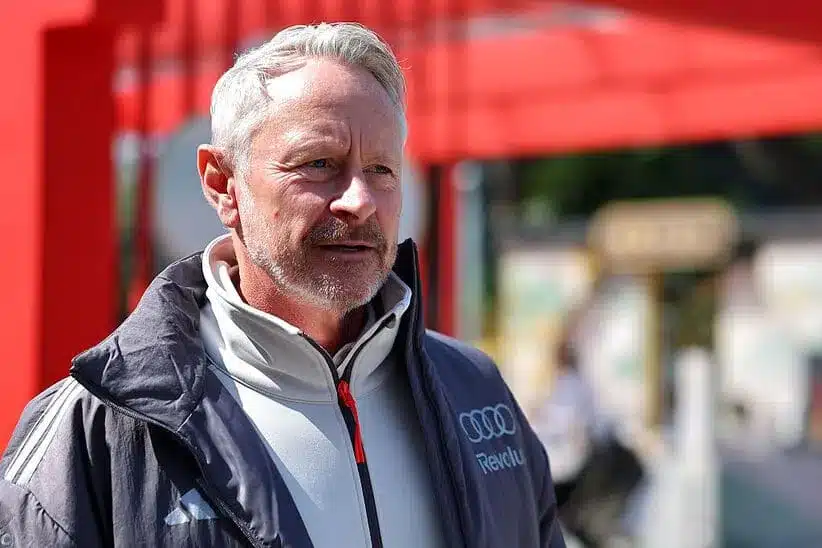
In top‑level motorsport, leadership stability is often the backbone of a championship campaign. When a major manufacturer commits to a factory program, expectations rise fast, which is why the latest development inside Audi has stunned the paddock. In a move that caught nearly everyone off guard, Jonathan Wheatley is leaving his position as Audi team boss after only a year in charge.
His exit comes at a time when Audi was finally beginning to show signs of real progress, making the timing even more puzzling. The suddenness of the announcement has left rival teams scrambling to understand what went wrong behind the scenes.
A Sudden End To The Audi Era For Wheatley
Wheatley arrived at Audi with a strong résumé. He spent years at Red Bull Racing as sporting director, playing a key role in multiple championship runs. But with Christian Horner firmly in control of the team, Wheatley had no path upward.
Audi offered him the chance to step out of the shadows and run a program of his own, something he had been waiting for throughout his Red Bull tenure. Looking for that opportunity, he joined the former Sauber outfit to oversee its evolution into the Audi factory team. His impact was immediate.
The team climbed from the back of the grid to regular points contention, and he oversaw Nico Hülkenberg’s breakthrough podium, a moment many saw as proof that Audi’s long‑term plan was working. Momentum was finally building, and many within Audi believed Wheatley would be the one to lead the company into its next era.
Then everything came to a halt. Audi announced the split, citing personal reasons for Wheatley’s exit. Mattia Binotto will now take over full team principal duties in addition to leading the overall Audi project. The abrupt handoff raises questions about how prepared Audi truly is for such a major leadership shift.
The Friction Behind Closed Garage Doors
Motorsports history is full of examples showing how difficult it is to keep two strong leaders under the same roof. That appears to be the case here. Even in the most successful teams, competing visions can quietly erode trust long before the public sees any cracks.
People close to the team describe a tense working relationship between Wheatley and Binotto. Both are experienced, ambitious, and used to steering major operations. When two powerful voices try to shape the direction of a manufacturer‑backed program, politics inevitably follow.
Binotto was brought in to overhaul the structure, and that shift in authority reportedly created friction that never eased. By the time the season began, it was clear to many inside the garage that the partnership wasn’t sustainable.
Aston Martin And The Adrian Newey Connection
The next chapter in Wheatley’s career is already drawing attention. Leaders of his caliber rarely stay available for long. Teams across the grid know exactly how valuable his experience is, and the phone calls have already started.
Strong reports suggest Adrian Newey has identified Wheatley as his preferred choice for a senior management role at Aston Martin. The two worked together at Red Bull and share a deep mutual respect. With Lawrence Stroll investing heavily in the Silverstone team, pairing Newey’s technical leadership with Wheatley’s operational experience would be a major statement.
It would also signal that Aston Martin is preparing for a long‑term push toward the front of the field. No deal has been finalized, but Wheatley’s return to the United Kingdom would align with the personal reasons cited for his departure.
Before joining any rival team, he will likely serve a period of gardening leave, standard practice to protect sensitive information. Once that period ends, expect a swift announcement from whichever team secures his signature.
What This Means
Wheatley’s exit sends ripples through the sport. Any time a major manufacturer loses a key leader, the competitive landscape shifts. First, it puts Audi in a difficult position at a critical stage of its transition. Turning a privateer team into a full factory operation requires stability and a unified long‑term plan.
With Wheatley gone, Binotto now carries the full responsibility of delivering results by 2030. Audi has lost a proven leader who knows how to build a competitive culture from the ground up. The pressure on Binotto will be immense, and the margin for error is now razor‑thin. Second, it signals that Aston Martin is aggressively positioning itself for a run at the front.
If Stroll manages to pair Newey with Wheatley, the team instantly becomes one of the most formidable combinations on the grid. Such a move would send a clear message to rivals: Aston Martin is no longer content with incremental progress.
Finally, this situation highlights the political reality of modern racing. You can deliver results, secure podiums, and move a team up the standings, but if the internal dynamics shift, your future can change overnight. The sport rewards performance, but it punishes instability just as quickly.
What’s Next
Jonathan Wheatley’s departure from Audi is a reminder that motorsport can be just as ruthless behind the scenes as it is on the track. Audi is now placing its future in the hands of Mattia Binotto, while the rest of the paddock watches to see whether
Aston Martin will seize the opportunity to add a major asset to its growing operation. Wheatley has a championship‑proven track record, and wherever he lands next, that team will instantly become stronger. For now, the paddock waits, and the next move could reshape the competitive order for years to come.
