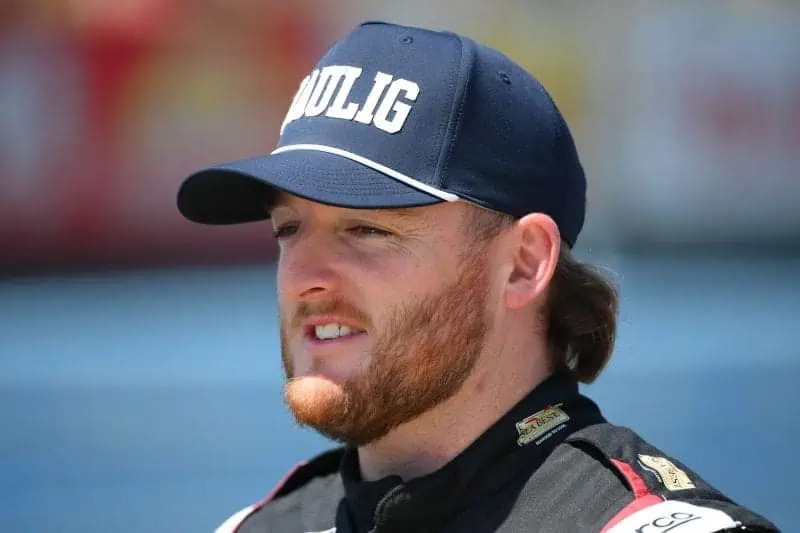
Ty Dillon Draws Fire from Steve Letarte Over Hazardous Pit Road Action at Talladega

The tension was thick at Talladega Superspeedway last Sunday when Ty Dillon made what veteran NASCAR analyst Steve Letarte called a completely unnecessary and dangerous move on pit road. What happened next had everyone in the garage talking, and frankly, it left a lot of folks shaking their heads.
During Lap 114 of the YellaWood 500, Dillon drove his No. 10 Kaulig Racing Chevrolet deep into Josh Berry’s Wood Brothers Racing pit box. Too deep. Way too deep. He clipped a tire that was sitting near the front of the No. 21 pit stall, sending it rolling straight into Berry’s crew members who were working underneath the car.
One crew member was struck in the right-rear area while doing his job. These guys put their lives on the line every single race weekend, and seeing something like this happen because of what appeared to be careless driving? It hits different when you’ve spent years around these pits.
Letarte Doesn’t Hold Back His Frustration
Steve Letarte, who knows pit road protocol better than most after his years as a crew chief and now as an analyst, didn’t mince words on the latest episode of the Inside the Race podcast. You could hear the genuine concern in his voice as he explained what went wrong.”If I’m the crew chief of the 21, Ty and I are ready to have a chat.
And he’s not going to do a lot of talking. He’s going to do a lot of listening,” Letarte said with that no-nonsense tone that anyone who’s worked in NASCAR knows means business. The former crew chief made it crystal clear that this wasn’t just a racing incident or a simple mistake. Dillon had options. Better options.
“The 10 is deep in his box, way deep in his box. He could have backed up very very easily. The pit crew member is even there, putting his hand out.”What really got under Letarte’s skin was the unnecessary nature of it all. “We could talk about all we want but there’s a crew member underneath there working on the 21 car. Man, that’s not cool. Like this stuff’s dangerous enough. That is uncool.”
The Reality of Pit Road Danger
Anyone who’s spent time around NASCAR knows that pit road is one of the most dangerous places in motorsports. Crews are working with heavy equipment, hot metal, and fuel while cars are moving at speeds that can turn a small mistake into a life-changing moment. The fact that someone was working underneath Berry’s car makes this situation even more serious.NASCAR officials saw exactly what everyone else did and immediately threw the flag at Dillon.
The penalty was swift, but the damage to relationships and trust? That takes longer to repair. Dillon, who started the race in 29th position, managed to recover somewhat and finished 20th. He even led two laps during the race and picked up 17 points. But those numbers probably don’t mean much to the crew members who had to dodge a rolling tire because of his decision-making.
Recent History Shows a Pattern of Problems
This Talladega incident wasn’t Dillon’s first controversial moment recently. Just weeks earlier at Las Vegas Motor Speedway during the Round of 8 opener, he was involved in a massive crash with William Byron that ended the Hendrick Motorsports driver’s race with just 31 laps remaining.
That Vegas crash was particularly painful for Byron’s championship hopes. Byron had been running well when he crashed into Dillon at full speed. Dillon was slowing for a pit stop, but the communication between spotters broke down completely. The aftermath was messy, with finger-pointing and explanations flying in all directions.
The Fallout from Vegas Still Stings
The Vegas incident had serious consequences that extended far beyond the crash itself. Joe White, Dillon’s spotter at Kaulig Racing, was fired on October 15 after the communication failure that led to Byron’s crash. White later claimed he had tried to warn Byron’s spotter about Dillon’s pit stop, but something got lost in translation. Byron was adamant that he never received any warning signal and had zero indication that Dillon was slowing down.
When you’re running 180+ mph and suddenly come up on a car that’s dropping speed, there’s no time to react. The crash left Byron 15 points below the Championship 4 cutline, essentially ending his title hopes. These kinds of incidents stick with drivers and teams. In a sport where reputation and trust matter as much as speed, having your name attached to avoidable accidents doesn’t do anyone any favors.
Why Letarte’s Words Carry Weight
When Steve Letarte speaks up about safety issues, people listen. His background as a successful crew chief gives him credibility that resonates throughout the garage. He’s been in those high-pressure situations, made split-second decisions, and knows what it’s like to have your driver’s safety and your team’s livelihood on the line every weekend. His frustration with Dillon’s actions at Talladega reflects a broader concern about maintaining safety standards in an already dangerous sport.
Pit road incidents can be prevented with better awareness and decision-making, which makes unnecessary contact even more frustrating for veterans like Letarte. The emotion in his voice when discussing the incident showed just how seriously he takes these safety matters. It’s not just about following rules. It’s about protecting the people who make this sport possible every single weekend.