TPC Tests Are Taking Place in F1: Here’s What It Means & There Importance To New Technology

TPC tests are extremely important in F1 racing. No, it’s not another convoluted part of the power unit. It stands for Testing of Previous Cars, and it’s the loophole teams are gleefully exploiting to get more track time. But F1 teams are like water; they’ll always find the cracks. The biggest crack in the testing ban is the TPC program. It’s a clever workaround that lets teams dust off their old cars for a spin, and it’s become a critical, if somewhat understated, part of a team’s strategy.
So, What’s the Big Deal with TPC?
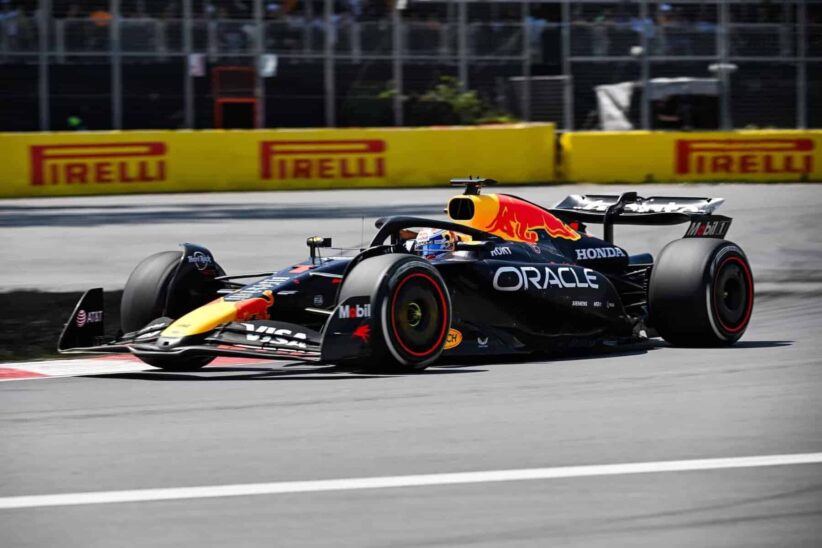
At its core, the program for TPC tests allows teams to run a car that is at least two years old. So, in the 2024 season, you’d see them wheeling out their 2022 challengers. For 2025, it’s the 2023 cars getting another moment in the sun. It’s F1’s version of a “throwback,” but with a lot more at stake than just social media likes.
Why bother with old machinery? Because any time on a real track, in a real F1 car, is pure gold. It’s a chance for drivers to shake off the rust, for young academy prospects to get a taste of the big leagues without the crushing pressure of a Grand Prix weekend, and for the crew to practice their choreography. Think of it as a full-dress rehearsal. It’s an opportunity for a new driver to get comfortable with the team’s procedures or for a reserve driver to prove they’re more than just a glorified sim racer.
For example, when a hotshot rookie like Oscar Piastri joins a team like McLaren, TPC tests are invaluable. It gives him the chance to get acquainted with the engineers and mechanics, learn the steering wheel’s billion buttons, and feel the neck-snapping G-forces before being thrown into the piranha club of a race weekend. It’s a mixture of both developing the car and more about developing the humans.
Are There Any Rules, or Is It a Free-for-All?
This is Formula 1; of course, there are rules. The FIA handbook for TPC tests is, as you’d expect, detailed and a bit pedantic.
First, the car has to be at least two years old and must run in the specification it used during its competition year. That means no sneaking on a fancy new front wing you’ve designed for the current car. This isn’t for aerodynamic R&D, folks.
Teams are capped at 20 days of testing per year, with a total mileage limit of 1000km across those days. And here’s the kicker: the full-time race drivers, the superstars like Max Verstappen or Lewis Hamilton, are only allowed four of those days. The rest are for the rookies, reserve drivers, and anyone else the team wants to evaluate.
The FIA also dictates where these tests can happen. It has to be on a Grade 1 circuit, but teams are forbidden from using a track that’s scheduled to host a Grand Prix within the next 60 days. So, no cheeky practice runs at Monza a month before the Italian Grand Prix. Nice try.
Why TPC Tests Are More Important Than You Think
While these tests might seem like a sideshow, their impact is significant to both the ew technology and the racer driving them. These tests help provide a crucial platform for driver development, to help to breed the next generation of F1 talent. They allow engineers and mechanics to hone their skills and get some much needed practice. The best part is these tests take place in a lower-stress environment. It’s a testing ground for everything, and it’s clear it’s more important than what many F1 fans think.