
Speculation Swirls: Why The Clash May Be Daytona‑Bound In 2027

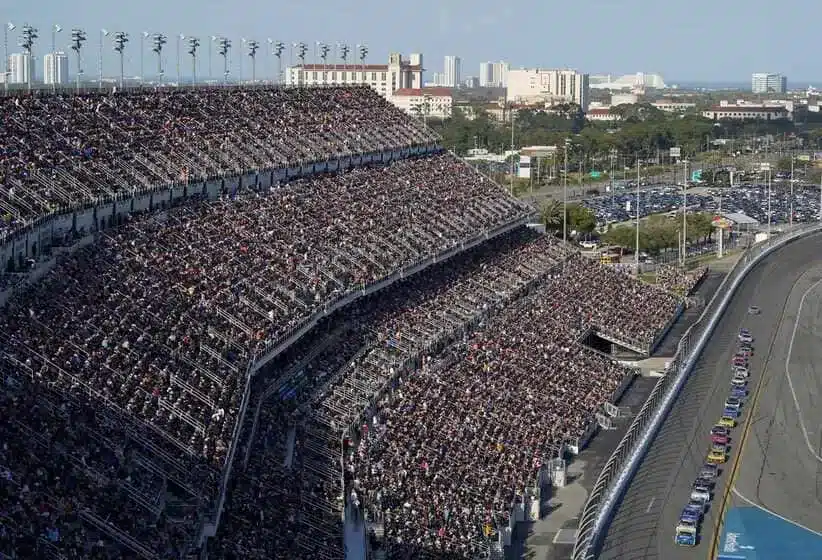
Daytona International Speedway has always been the center of stock car racing. The 2.5‑mile tri‑oval opened in 1959 and has hosted the Daytona 500 every year since, becoming the sport’s most recognizable venue. Fans know the feeling: forty cars running close to 200 mph, engines echoing off the grandstands, and the ground shaking as the pack roars past.
But in recent seasons, that experience has changed. The introduction of the NextGen car in 2022 created unprecedented parity. Twenty different drivers won races in the first two seasons of the car, and the field became tighter than ever. But on superspeedways, Daytona and Talladega, the car also produced an unintended problem.
Instead of the three‑wide, 30‑lap battles that defined the sport for decades, races have turned into long stretches of fuel saving. Drivers routinely run at 70–80% throttle to avoid pulling out of line, because the aerodynamic drag on the NextGen car makes passing extremely difficult.
Track position gained on pit road, often by taking one can of fuel instead of two, has become the primary way to advance. For many fans, this goes against the core of superspeedway racing. The sport was built on speed, drafting, and momentum, not fuel‑mileage calculations. NASCAR has acknowledged the issue, and for the first time in years, a major shift is coming.
The Return of Preseason Thunder
Beginning in 2027, NASCAR will bring back Preseason Thunder, the multi‑day January test session at Daytona that last ran in 2014. Historically, these tests allowed teams to evaluate new bodies, engines, and aerodynamic packages before the season began. The revived version will serve a similar purpose.
Teams will use the test to evaluate aerodynamic changes aimed at improving the superspeedway product. Engineers will study how the cars behave in the draft, how large the runs are, and how quickly a trailing car can close on the leader.
The goal is simple: create a package that allows drivers to make full-throttle passes rather than wait for pit cycles. Wind‑tunnel data and simulation can only go so far. Daytona’s 31‑degree banking and 2.5‑mile layout create conditions that cannot be replicated in a shop.
The test will give teams real‑world data on pack behavior, closing rates, and stability at speeds approaching 195 mph. But testing alone won’t answer every question. NASCAR needs to see how the package performs in race conditions, something far more chaotic than controlled drafting runs.
A Historic Return: The Clash At Daytona
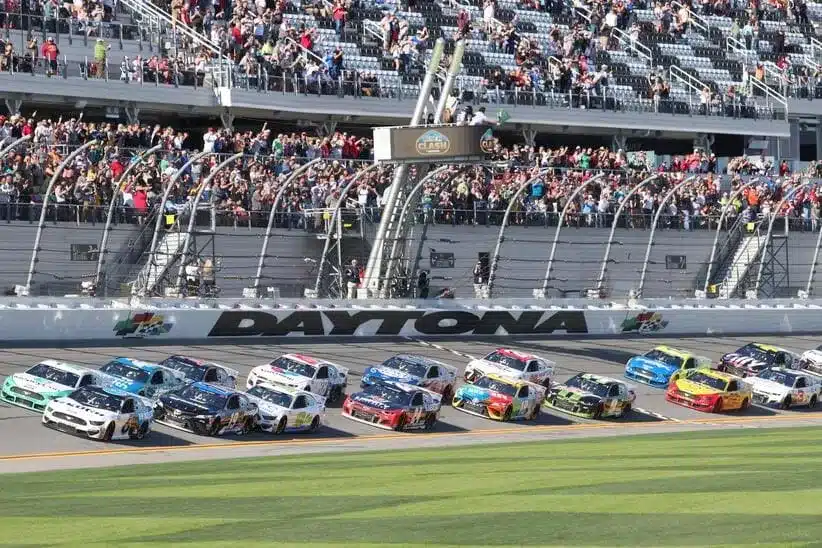
Industry reports, including those from veteran analyst Bozi Tatarevic, indicate that NASCAR is strongly considering moving The Clash back to Daytona for 2027. The exhibition race was held at Daytona from 1979 through 2021 before moving to the Los Angeles Memorial Coliseum and later Bowman Gray Stadium.
The Coliseum experiment drew attention, but the racing was slow and tight, with average speeds under 40 mph. Bowman Gray produced similar limitations. Neither venue offered the 190‑mph spectacle the Clash was originally designed for.
Returning The Clash To Daytona Accomplishes Two Major Goals
Restores Tradition
The Clash was created as a high‑speed sprint for pole winners. Daytona is the only track that fits that identity. It’s the only venue capable of delivering the sustained 190‑mph speeds the event was built around. The draft behaves differently there than anywhere else in the sport. No other track can replicate the intensity or the history tied to that race.
Provides A Real‑Race Test For The New Aero Package
As Denny Hamlin has noted, drivers cannot save fuel in a 25‑lap shootout. They must race. That environment will reveal whether the new package allows passing, side‑drafting, and momentum swings that the current superspeedway package lacks. A full field running wide open at 190–200 mph will expose weaknesses instantly. If the package works in the Clash, it will work in the Daytona 500.
What This Means For The Future Of Superspeedway Racing
1. A Real Fix for Fuel‑Saving Races
The Clash will serve as a live test of the aerodynamic changes. If the new package increases closing rates and reduces the drag penalty for pulling out of line, the fuel‑saving era could end. Drivers would be forced to race for position rather than ride in formation.
2. A Month‑Long Speed Festival
With Preseason Thunder, the Clash, the Duels, and the Daytona 500 all happening within roughly five weeks, Florida becomes the center of the motorsports world. Fans get nearly a month of on‑track activity instead of a single race week.
3. Cost and Logistics
Teams will spend more time in Florida, potentially three separate weeks, but the data gained could reduce costs later. Understanding the superspeedway package before the season starts prevents wasted development and avoids midseason rule changes.
4. Competitive Clarity
If the new package works, superspeedway racing could return to the style that defined the sport from the 1980s through the mid‑2010s: long green‑flag runs, big momentum shifts, and drivers making aggressive moves rather than waiting for pit strategy.
What’s Next
The NextGen car has improved racing at many tracks, but superspeedways have suffered. NASCAR’s decision to revive Preseason Thunder and potentially return the Clash to Daytona shows a clear commitment to fixing the problem.
Daytona has always been the heart of stock car racing, and using it as the proving ground for a new aerodynamic direction is the right move. If the 2027 package delivers, fans could see the return of the fast, unpredictable, full‑throttle superspeedway racing that made the sport what it is.
For More Great Content
Stay plugged in with more race analyses, features, and behind‑the‑garage storytelling. Follow Sarah on Facebook, LinkedIn, and X at Sarah Talker, where the conversation keeps rolling long after the checkered flag drops.
