
The 98‑Lap Shockwave: How NASCAR’s New Talladega Blueprint Changes Everything

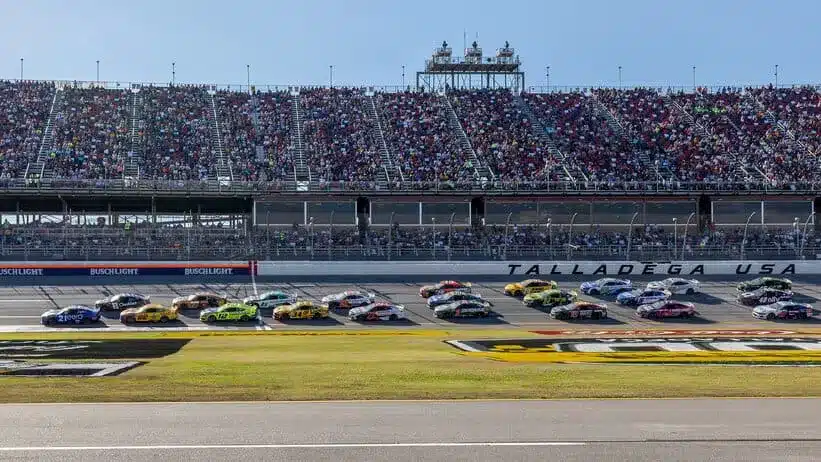
Talladega Superspeedway is sacred ground for stock-car racing purists. It is a massive, daunting beast of an asphalt oval that demands absolute perfection, nerves of steel, and a willingness to push a 3,400-pound stock car to its absolute limits.
Fans pack the grandstands to witness the raw, visceral thrill of pack racing at 200 miles per hour. But lately, that thrill has been muted by a frustrating trend: fuel saving. Drivers riding around at half-throttle just to stretch their gas mileage does not make for good television.
It certainly does not honor the legacy of this historic Alabama track.NASCAR has heard the fans loud and clear. Officials announced a massive shakeup for the 2026 Cup Series spring race at Talladega. The sanctioning body is implementing radically adjusted Stage Lengths for the upcoming Jack Link’s 500 on April 26.
This is not just a minor tweak to the rule book. This is a deliberate, aggressive move by NASCAR to force drivers back onto the throttle and give fans the high-octane superspeedway racing they deserve.
The Problem With Fuel Saving At Talladega
If you have watched superspeedway racing at Talladega over the last couple of seasons, you have seen the problem firsthand. The Next Gen car produces incredible parity, but it also creates an environment where track position is king and pit stops are terrifyingly chaotic.
To minimize time spent on pit road, crew chiefs have been forcing their drivers to feather the throttle. Instead of a 200-mph chess match, we were getting a 170-mph parade of cars terrified of running out of Sunoco fuel.
John Probst, NASCAR’s executive vice president and chief racing development officer, acknowledged this glaring issue. During a recent episode of the “Hauler Talk” podcast, Probst laid out the blueprint for how the sport plans to fix it.
The answer lies entirely in how the Stage Lengths are structured. By changing the distances between racing segments, NASCAR is essentially blowing up the current playbook and forcing crew chiefs to completely rethink their approach to superspeedway strategy.
Breaking Down The New Stage Lengths
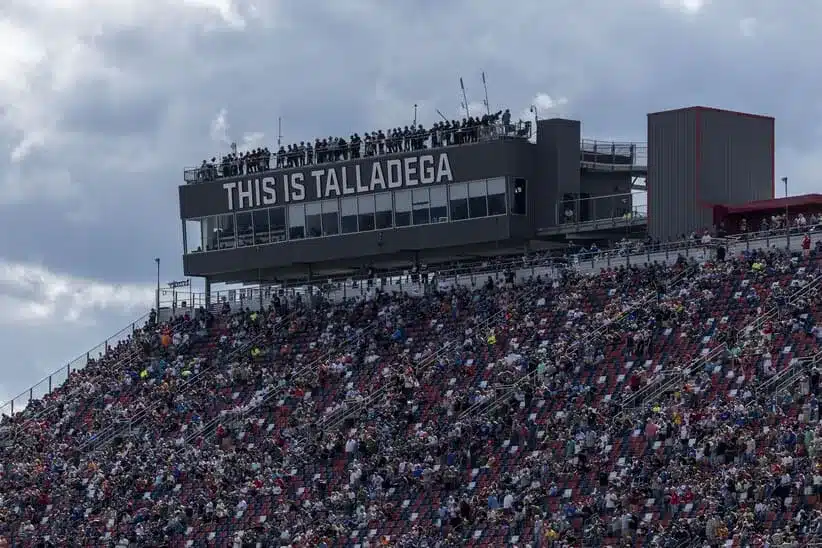
Historically, superspeedway races followed a predictable rhythm. You have a short opening stage, another short middle stage, and a marathon final run to the checkered flag. The original blueprint for the Jack Link’s 500 was set at 60 laps for Stage 1, 120 laps for Stage 2, and 188 laps to the finish.
That old math allowed teams to coast. The new math demands absolute aggression. NASCAR has completely flipped the script. Stage 1 will now be a grueling 98-lap marathon. Stage 2 will be a 45-lap sprint, ending on Lap 143. The final stage will be another 45-lap dash to the finish line on Lap 188.
Because of these new Stage Lengths, the official halfway point of the race shifts to Lap 94. This completely changes the dynamic of the race. A 98-lap opening stage means nobody can make it on a single tank of fuel. Teams will be forced to pit under green. Will a brave crew chief try to split that massive first stage in half with a single pit stop?
Will others play it safe and stop twice? Probst noted that if a handful of teams opt for a two-stop strategy, the sheer speed of their draft could force the one-stop teams to burn too much fuel just trying to keep up. It is a brilliant psychological trap laid by NASCAR officials.
What This Means For The Race
What this means for the sport is a dramatic return to traditional racing. By shortening the final two stages to exactly 45 laps, NASCAR has mathematically eliminated the need for a late-race fuel stop. A modern Cup Series car can easily make it 45 laps around the 2.66-mile tri-oval on a single tank.
For the drivers, this means the handcuffs are officially off. Once the green flag drops on Stage 2, and again in the final segment, there is absolutely zero incentive to save fuel. Drivers will be flat on the accelerator, pushing each other to the aerodynamic edge.
For defending spring race winner Austin Cindric and the rest of the Cup Series garage, the final 90 laps of this race will be an all-out, white-knuckle war. For the fans sitting in the grandstands and watching at home on FOX or HBO Max, this means the end of the dreaded fuel-saving parade.
You are going to see three-wide, bumper-to-bumper racing at Talladega. You are going to see drivers making aggressive moves because they no longer have a voice in their ear telling them to back off and save a drop of gas. The racing product will be significantly better, faster, and infinitely more dangerous.
What’s Next
Talladega Superspeedway is meant to be wild, unpredictable, and fast. The recent era of fuel conservation threatened to dull the blade of NASCAR’s most dangerous track. By implementing these heavily revised Stage Lengths, NASCAR is restoring the teeth to the Alabama beast.
The Jack Link’s 500 is shaping up to be a tactical nightmare for crew chiefs and a high-speed dream for race fans. When those final two 45-lap stages begin, you can expect nothing but pure, unadulterated speed.
For More Great Content
Stay plugged in with more race analyses, features, and behind‑the‑garage storytelling. Follow Sarah on Facebook, LinkedIn, and X at Sarah Talker, where the conversation keeps rolling long after the checkered flag drops.
