
The 2026 F1 Revolution Is Here, And Apple TV Has Every Second Of It

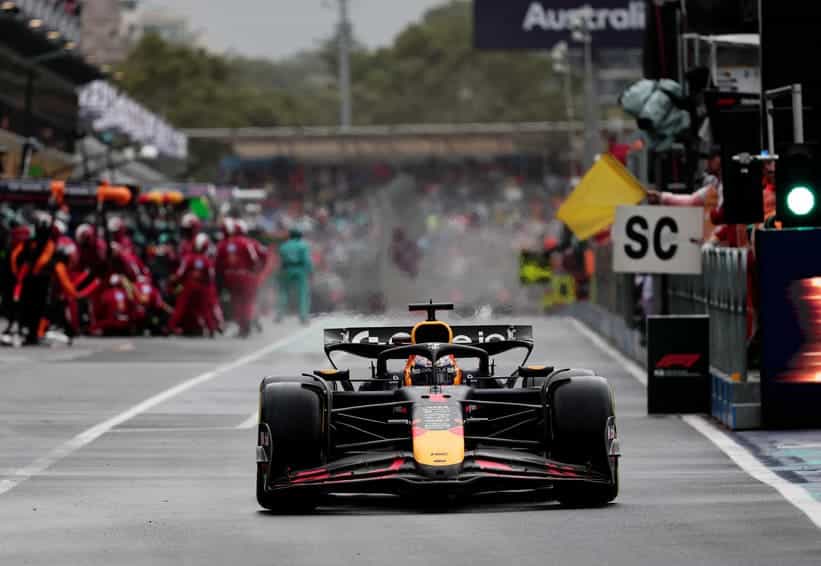
The 2026 Formula 1 season has finally arrived, and the sport looks nothing like it did a year ago. The cars are new. The engines are new. And depending on which driver you talk to, this rulebook reset is either the smartest thing F1 has done in a decade or a mistake the sport will be dealing with for years.
For NASCAR fans used to watching drivers trade paint for hours, the tension brewing in F1 right now feels oddly familiar. A series changes its rules, the racing changes with it, and suddenly everyone has an opinion.
What Happened At The Australian Grand Prix
George Russell opened the season with a statement win in Melbourne on March 7, guiding his Mercedes to the top step. Kimi Antonelli followed him home in second, and Charles Leclerc rounded out the podium for Ferrari. On paper, it looks straightforward. In reality, the race was anything but calm.
The 2026 Australian Grand Prix produced 120 overtakes. Last year’s race had 45. That isn’t a small bump. That’s a completely different sport. Positions changed constantly. Strategy mattered every lap.
Drivers had to decide when to deploy the electrical boost, when to save battery, and when to defend as their lives depended on it. For fans who love unpredictability, this was the kind of race that keeps you glued to the screen.
The New Hybrid Rules Are Splitting The Paddock
The heart of the debate is F1’s new 50‑50 power split between combustion and electric energy. Every car now carries a hybrid system that drivers can activate with a boost button. It sounds simple. It isn’t.
Leclerc described the feeling mid‑race in a way that made every fan smile: hitting the boost felt like grabbing a mushroom in Mario Kart. One second you’re cruising, the next you’re slingshotting past someone who didn’t see it coming. It creates opportunities. It also creates risk.
Lando Norris didn’t sugarcoat his feelings. He said the 2026 cars are “probably the worst” compared to what he called the best cars F1 ever produced. His concern wasn’t about nostalgia. it was about safety. When one car suddenly gains a burst of speed, and the other doesn’t, the closing rate can catch both drivers off guard.
Esteban Ocon agreed. Pierre Gasly went even further, saying the new rules strip away the purity of driving that made F1 special. Max Verstappen didn’t hide his frustration either, criticizing the hybrid system and making it clear he isn’t a fan of the sport’s direction.
Then there’s Lewis Hamilton, who saw the whole thing differently. He called the new rules “awesome,” and his enthusiasm didn’t sound forced. After two decades in the sport, Hamilton has driven every type of F1 car imaginable. If he says the new era has potential, people listen.
Where You Can Watch F1 In The United States
Apple TV holds exclusive U.S. broadcast rights through 2032. Every practice, qualifying session, and race streams directly on the platform. New subscribers get a seven‑day free trial, and that’s not all.
Plans start at $12.99 per month or $99 per year. F1 TV is bundled into the subscription at no extra cost. For NASCAR fans curious about dipping into F1, it has never been easier to follow the season from start to finish.
What This Means
The 2026 season is a turning point. The new rules were designed to create closer racing, and the numbers from Australia show that part is working. One hundred and twenty overtakes don’t happen by accident. The cars are harder to drive, the strategies are more complex, and the races are more unpredictable.
But the concerns from drivers like Norris and Gasly aren’t noise. When experienced racers warn about sudden speed differences and unpredictable boost usage, the sport has to take that seriously. F1 has always walked a tightrope between innovation and safety. This year, that balance feels especially delicate.
The FIA has the authority to intervene if the racing becomes too chaotic or if the safety concerns grow louder. Whether they act quickly enough or at all will shape how the rest of the season unfolds. From a competitive standpoint, Mercedes looks strong.
Russell’s win wasn’t a fluke. The team spent the last two years preparing for this rule change, and their early advantage feels real. Ferrari and Red Bull aren’t far behind, but they have work to do if they want to stop Mercedes from building momentum.
What’s Next
F1 finds itself in a strange but fascinating moment. The racing on track looks better than it has in years. The drivers are split down the middle on whether these new cars are brilliant or broken. And fans, especially those used to the unpredictability of NASCAR, are watching a sport trying to reinvent itself in real time. Sometimes a rule change transforms a series for the better. Sometimes it creates problems nobody saw coming.
Right now, F1’s new era is somewhere in between. The next few races will reveal whether this bold experiment becomes a breakthrough or a cautionary tale. Either way, the 2026 season is already delivering something F1 hasn’t had in a while: genuine uncertainty. And that alone makes it worth watching.
