Barcelona: The 2026 F1 Grid Hits The Pavement

The first laps of a new Formula 1 era rarely arrive with fanfare. They happen behind closed gates, early in the morning, with only the sound of tools clattering in the garages and the occasional burst of radio chatter breaking the quiet.
Barcelona had that atmosphere this week as teams rolled out their 2026 cars for the first time. No grandstands full of spectators, no broadcasters narrating every installation lap, just engineers, drivers, and a long list of unknowns waiting to be sorted.
The new regulations have forced every team to rethink how a modern Formula 1 car should behave. Watching them take shape on track, even in a private session, made it clear how much has changed.
For someone used to the rhythm of stock car racing, where cars evolve slowly, and battles are fought with bodywork, seeing this level of reinvention in open‑wheel machinery is striking. The shakedown wasn’t about lap times. It was about understanding what the sport has become.
The Heavy Hitters And The American Entrants
Red Bull Racing drew attention immediately, not because of the drivers Max Verstappen and Isack Hadjar were expected, but because of the engine badge. Red Bull‑Ford. The Blue Oval hasn’t been involved at this level in years, and its return carries weight. The RB22’s early runs suggested a power unit with a different character than the outgoing Honda‑based design.
Engineers spent long stretches comparing deployment maps, and Verstappen’s feedback sessions lasted well into the afternoon. Cadillac’s arrival brought a different kind of curiosity. General Motors has flirted with Formula 1 before, but seeing a Cadillac‑branded car circulating the track settled any doubts about its commitment.
Valtteri Bottas and Sergio Perez give the team a stable foundation, and the car’s behavior through Barcelona’s long corners hinted at a chassis still in the early stages of refinement. The paddock hasn’t seen this level of American manufacturer involvement in decades, and the contrast between Ford’s and Cadillac’s technical approaches was already noticeable.
A Shift In Familiar Roles
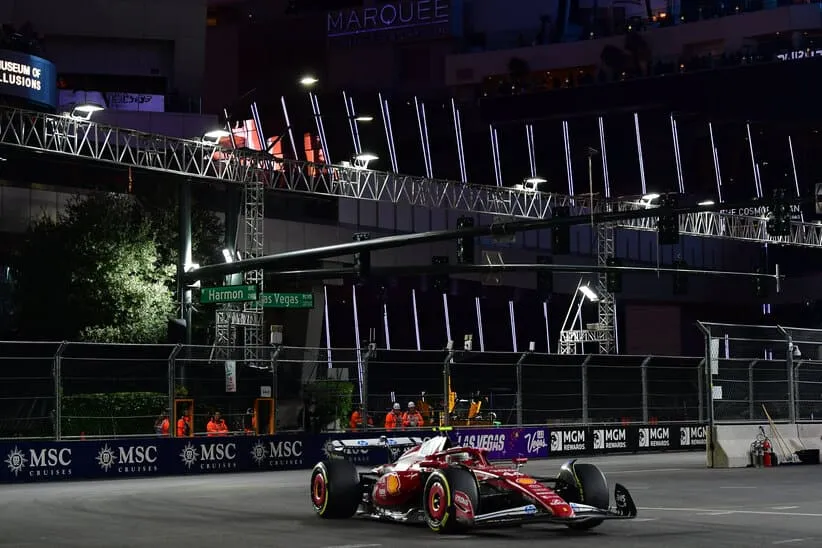
The moment the Ferrari SF‑26 rolled out in Barcelona with Lewis Hamilton behind the wheel, the paddock paused. After nearly twenty years associated with Mercedes, seeing him in Ferrari red required a second look. Even in a quiet test, the significance of the move was obvious.
Ferrari’s early program focused on consistency rather than speed, with Hamilton and Charles Leclerc alternating long runs to gather baseline data. Mercedes, meanwhile, has entered a new chapter. George Russell now leads the team, and Andrea Kimi Antonelli stepped into the second seat with considerable attention on him.
His first laps at Barcelona in the W17 were steady and controlled, and the team appeared encouraged by how quickly he adapted. The car itself looked more predictable than last year’s model, suggesting Mercedes has taken a more measured approach to the new regulations after several seasons of instability.
New Entrants And Updated Lineups
Audi’s R26 made its first appearance as the manufacturer completed its transition from Sauber. Nico Hülkenberg handled the bulk of the early running, offering the kind of detailed feedback Audi needs at this stage. Gabriel Bortoleto, new to the team and the series, approached the day with a clear focus on learning the car’s behavior rather than chasing pace.
Audi’s power unit sounded distinct from the others, with a sharper tone under acceleration that drew attention from engineers up and down the pit lane.McLaren continued with Lando Norris and Oscar Piastri, a pairing that has developed strong internal chemistry. Their MCL40 looked composed through the medium‑speed sections, and the team’s long‑run consistency stood out more than its outright speed.
McLaren’s recent progress suggests they are aiming for a car that performs reliably across a variety of circuits rather than one built solely for qualifying performance. The Racing Bulls ran the VCARB 03 with Arvid Lindblad and Liam Lawson, both of whom spent much of the day working through system checks.
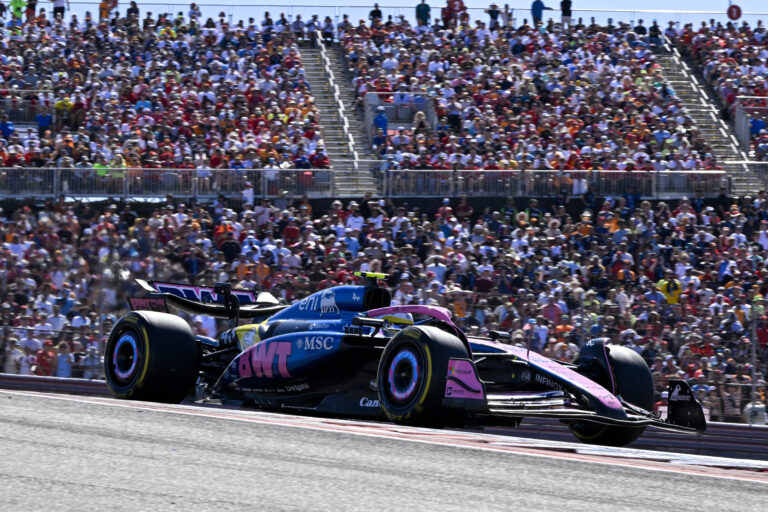
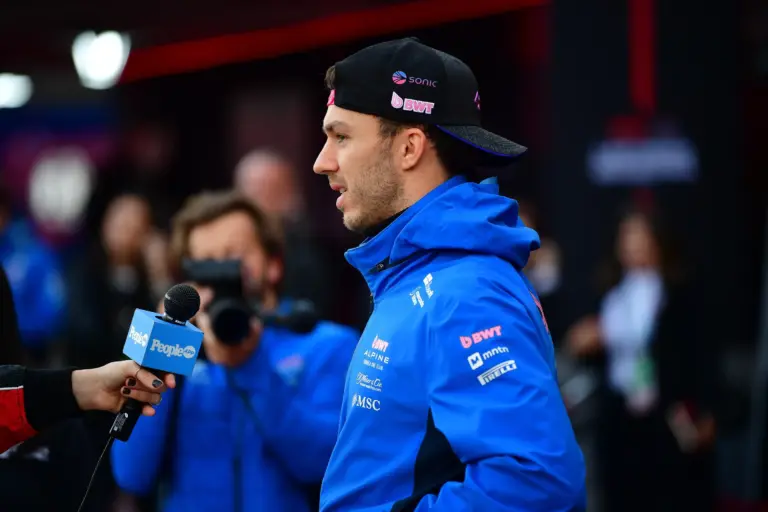
Aston Martin brought the AMR26 with Lance Stroll and Fernando Alonso, whose debriefs with engineers were among the longest of the day. Alpine introduced the A526 with Pierre Gasly and Franco Colapinto, and Haas arrived with Oliver Bearman and Esteban Ocon, signaling a clear investment in younger talent.
The Technical Landscape Behind The Scenes
The 2026 regulations have reshaped the sport more dramatically than any recent rule change. The new power units place a greater emphasis on electrical deployment, and the revised aerodynamic rules have altered how teams generate downforce.
Barcelona’s layout is a mix of long corners, short straights, and varying speeds, making it a useful venue for evaluating these changes. Teams spent much of their time studying tire behavior under the new aerodynamic loads.
Several drivers reported that the cars required a smoother driving style, particularly in medium‑speed sections where the aero platform is more sensitive. Engineers were seen comparing data traces from previous seasons to understand how the new regulations have shifted the balance between mechanical and aerodynamic grip.
The hybrid systems also drew attention. With greater reliance on electricity, teams experimented with different harvesting strategies. Some cars appeared to run conservative deployment maps, while others tested aggressive energy release patterns on the main straight. The differences were noticeable even from trackside.
What This Means For The 2026 Season
This shakedown at Barcelona marked the beginning of a new competitive cycle. With major regulation changes, the established order is more fluid than it has been in years. Teams also left Barcelona with a clearer sense of how uneven the development curve may be this year.
Some cars showed strong stability in high‑speed sections but struggled with energy recovery, while others looked efficient on the straights yet unpredictable in slower corners. The differences weren’t dramatic enough to draw conclusions, but they were noticeable enough to suggest that the early races may produce wide performance swings from circuit to circuit.
Several engineers noted that the new hybrid systems require calibration that will take weeks, not days, to refine. That alone could shape the opening phase of the championship more than outright pace.
Manufacturer Developments
The addition of Audi, Ford, and Cadillac has reshaped the technical landscape. Their approaches differ, and the engineering competition will be as important as the driver matchups. The early signs suggest that each manufacturer has interpreted the hybrid rules differently, which could lead to significant performance swings early in the season.
Driver Adjustments
Several teams are navigating significant lineup changes. Rookies with substantial expectations are entering the field at the same time as veterans are adjusting to new environments. How quickly each group settles in will influence the early rounds of the season. The psychological adjustment for drivers switching teams, particularly Hamilton, will be a storyline throughout the opening races.
Early Reliability Indicators
New power units and revised chassis designs often bring early‑season challenges. Teams that completed clean running in Barcelona have already gathered useful data, while others will work to resolve issues before official testing begins. Reliability could play a larger role than usual in the opening rounds.
What’s Next
Barcelona didn’t reveal the full competitive picture, but it provided a clear sense of how much has changed. The cars are new, the lineups have shifted, and the arrival of additional manufacturers has altered the tone of the paddock.
The 2026 season begins with more uncertainty than usual, and the first laps in Spain underscored how much work remains for every team.The next phase of testing will offer a clearer view, but for now, the grid has taken its first steps into a very different era.