
Ag-Pro 300 At Talladega Superspeedway: O’Reilly Auto Parts Series, Starting Lineup

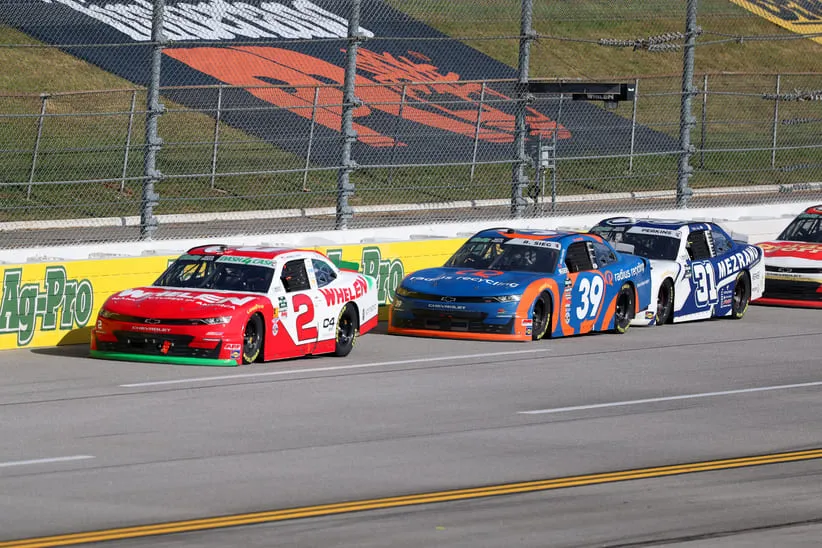
Talladega Superspeedway carries a tension unlike any other track on the schedule. At 2.66 miles, it is a massive, high‑banked oval that turns the draft into a weapon and transforms the field into a single, volatile pack. The place feeds off uncertainty, turning even the calmest opening laps into a tightrope walk where one bad push can flip the entire field.
Every driver feels that pressure the moment they roll off pit road, because Talladega doesn’t wait long to show its teeth. The aerodynamic pull is so strong that one wrong move can trigger a chain reaction that wipes out a dozen cars in seconds. As the NASCAR O’Reilly Auto Parts Series rolls into Alabama for the Ag‑Pro 300, the nervous energy is unmistakable.
Every inch of track position at Talladega matters when the field is running three‑wide at nearly 200 mph. The draft compresses the field, equalizes horsepower, and forces drivers to make split‑second decisions with no margin for error. Fans wait anxiously for the official Starting Lineup because it sets the opening blueprint for survival.
This weekend, Richard Childress Racing once again proved why their superspeedway program remains one of the most respected in the garage. With qualifying complete and the grid locked in, the chessboard is set for a race where momentum, drafting partners, and lane control will dictate everything.
How The Starting Lineup Was Set
Talladega qualifying is a pure test of aerodynamic efficiency. Drivers hold the wheel steady, but the real speed comes from the engine shop, the wind tunnel, and the precision of the superspeedway package. Richard Childress Racing unloaded with undeniable pace, and the stopwatch confirmed it.
When the final times were posted, Jesse Love secured the pole for the Ag‑Pro 300 at Talladega. This is Love’s first of the 2026 season. His lap was a statement from both driver and team, signaling that RCR’s superspeedway strength remains intact.
Sam Mayer locked down the outside of the front row, giving the opening laps a guaranteed clash of aggression and raw speed. The second row features Corey Day and Josh Williams, two drivers with very different styles but the same opportunity: clean air and control. These four drivers hold the prime real estate. They just need to keep it.
Driver Notes And Key Facts
Jesse Love: Starting From the Pole
Love’s pole run capped weeks of steady gains, finally converting the No. 2 Chevrolet’s flashes of elite speed into a top starting spot. Clean air gives him control of the opening tempo, but Talladega won’t let a leader escape for long, and he’ll need flawless communication with his spotter to manage the pack’s energy and stay ahead of the chaos.
He knows the real test comes once the lanes start shifting and the pushes get more violent, because Talladega has a way of turning control into vulnerability in a heartbeat. The pole gives him the best possible starting point, but the race will demand constant awareness and split‑second decisions the moment the pack tightens around him.
Sam Mayer: Starting 2nd
Mayer is one of the most aggressive superspeedway racers in the field. His blocking, lane changes, and willingness to take risks make him a constant threat at the front. Starting on the outside gives him immediate leverage if the top lane forms quickly.
He’ll test Love’s nerve into Turn 1 at Talladega, and if the outside lane gains momentum, Mayer could seize control before the field completes a lap. His style guarantees early fireworks. He won’t hesitate to force the issue if he senses even a hint of weakness, because momentum disappears as quickly as it forms here.
Corey Day: Starting 3rd
Day continues to impress on drafting tracks, showing a natural feel for air movement and momentum. Starting third puts him in a perfect position to latch onto the leader’s bumper and stay in clean air. If he can maintain track position through the opening stage, he has the raw speed to contend for the win.
His superspeedway instincts are improving with every race. He’s reading the air with more confidence each week, trusting his instincts instead of reacting a split second too late. He’s starting to anticipate runs before they form, putting himself in the right lane a beat earlier than he used to
Josh Williams: Starting 4th
Williams is a blue‑collar racer who thrives in the draft. He understands how to manipulate the air, when to push, and when to lift, skills that matter more at Talladega than raw horsepower. Starting fourth gives him a rare opportunity to shape the early laps rather than react to them.
If he finds the right drafting partner, he could be a factor deep into the race. He’s patient enough to wait for the right lane to form, but aggressive enough to take it the moment it opens. And if the energy stacks up behind him at the right time, he can ride that surge straight into the lead pack.
Veterans Buried In The Field
Several experienced drivers will have to claw their way forward from dangerous mid‑pack positions at the beast that is Talladega. Brandon Jones, Jeb Burton, Taylor Gray, Harrison Burton, and Tyler Ankrum all start 20th or worse, a brutal place to begin at a track known for multi‑car wrecks.
They face an immediate strategic dilemma: charge forward and risk early trouble, or drop back and wait for the race to thin out. Jeb Burton, a proven superspeedway racer, is particularly intriguing from 24th. If anyone can slice through the turbulence, it’s him. The good news for the entire field: all 38 entries made the race. No one was sent home.
O’Reilly Auto Parts Series At Talladega Superspeedway
Ag‑Pro 300: Starting Lineup
- 1. Jesse Love — No. 2 — Richard Childress Racing
- 2. Sam Mayer — No. 41 — Haas Factory Team
- 3. Corey Day — No. 17 — Hendrick Motorsports
- 4. Josh Williams — No. 92 — DGM Racing X JIM
- 5. Sheldon Creed — No. 00 — Haas Factory Team
- 6. Austin Hill — No. 21 — Richard Childress Racing
- 7. Rajah Caruth — No. 88 — JR Motorsports
- 8. Carson Kvapil — No. 1 — JR Motorsports
- 9. Anthony Alfredo — No. 96 — Viking Motorsports
- 10. Mason Maggio — No. 91 — DGM Racing X JIM
- 11. Justin Allgaier — No. 7 — JR Motorsports
- 12. Ryan Sieg — No. 39 — RSS Racing
- 13. Sammy Smith — No. 8 — JR Motorsports
- 14. Patrick Staropoli — No. 48 — Big Machine Racing
- 15. Jeremy Clements — No. 51 — Jeremy Clements Racing
- 16. William Sawalich — No. 18 — Joe Gibbs Racing
- 17. Dean Thompson — No. 26 — Sam Hunt Racing
- 18. Brent Crews — No. 19 — Joe Gibbs Racing
- 19. Parker Retzlaff — No. 99 — Viking Motorsports
- 20. David Star — No. 42 — Young’s Motorsports
- 21. Ryan Ellis — No. 02 — Young’s Motorsports
- 22. Brandon Jones — No. 20 — Joe Gibbs Racing
- 23. Blaine Perkins — No. 31 — Jordan Anderson Racing
- 24. Jeb Burton — No. 27 — Jordan Anderson Racing
- 25. J.J. Yeley — No. 5 — Hettinger Racing
- 26. Taylor Gray — No. 54 — Joe Gibbs Racing
- 27. Patrick Emerling — No. 38 — RSS Racing
- 28. Kyle Sieg — No. 28 — RSS Racing
- 29. Joey Gase — No. 55 — Joey Gase Motorsports
- 30. Harrison Burton — No. 24 — Sam Hunt Racing
- 31. Austin Green — No.87 — Peterson Racing Group
- 32. Lavar Scott — No. 45 — Alpha Prime Racing
- 33. Tyler Ankrum — No. 32 — Jordan Anderson Racing
- 34. Brennan Poole — No. 44 — Alpha Prime Racing
- 35. Josh Bilicki — No. 07 — SS GreenLight Racing
- 36. Natalie Decker — No. 35 — Joey Gase Motorsports
- 37. Garrett Smithley — No. 0 — SS GreenLight Racing
- 38. Dawson Cram — No. 74 — Mike Harmon Racing
What The Track Layout Means For Race Day
Talladega is a momentum racetrack where the draft dictates everything. The 33‑degree banking allows the field to run three‑wide for miles at a time, and the energy transfer from one lane to another can flip the running order in seconds.
Drivers must stay locked onto their drafting partners because losing the lead pack often means losing the race. The first run will be a live‑fire test of balance, handling, and stability. Cars will dance through the air, and the slightest bobble can send a driver from fifth to fifteenth in half a lap.
As the race progresses, the lanes will tighten, the pushes will get harder, and the risk will escalate. When the sun drops and the track cools, speeds will climb, and so will the danger. The margin for error shrinks to nothing once the pack tightens and every push starts transferring straight through the line.
Championship Implications
The Ag‑Pro 300 at Talladega is more than a superspeedway wildcard. It’s a major opportunity for teams with strong drafting programs to bank stage points and reshape their season trajectory. Jesse Love’s pole gives RCR a chance to control the early laps, while Mayer, Day, and Williams all have the speed to disrupt that plan.
For drivers buried in the field, the stakes are even higher. A single long green‑flag run can flip the standings, especially if a contender gets trapped in the middle lane with no drafting help. Talladega has a history of exposing weaknesses and rewarding teams that stay organized under pressure.
With playoff positioning and momentum on the line, Saturday’s race could redefine several championship paths. A strong finish here can erase weeks of inconsistency, while a single mistake can bury a contender before the summer stretch even begins.
What’s Next
Saturday afternoon at Talladega now carries all the tension of a superspeedway powder keg. A young polesitter, an aggressive challenger on the outside, and a field of desperate veterans will take the green with no guarantees and no safety net.
When the engines fire, there will be no easing into it, just 300 miles of drafting, blocking, pushing, and survival at nearly 200 mph. The Starting Lineup is set. The stage is ready. Now the sport waits for Talladega to do what only Talladega can.
For More Great Content
Stay plugged in with more race analyses, features, and behind‑the‑garage storytelling. Follow Sarah on Facebook, LinkedIn, and X at Sarah Talker, where the conversation keeps rolling long after the checkered flag drops.
