
Outrun By The Draft: The Surge That Denied Chase Elliott The Daytona 500

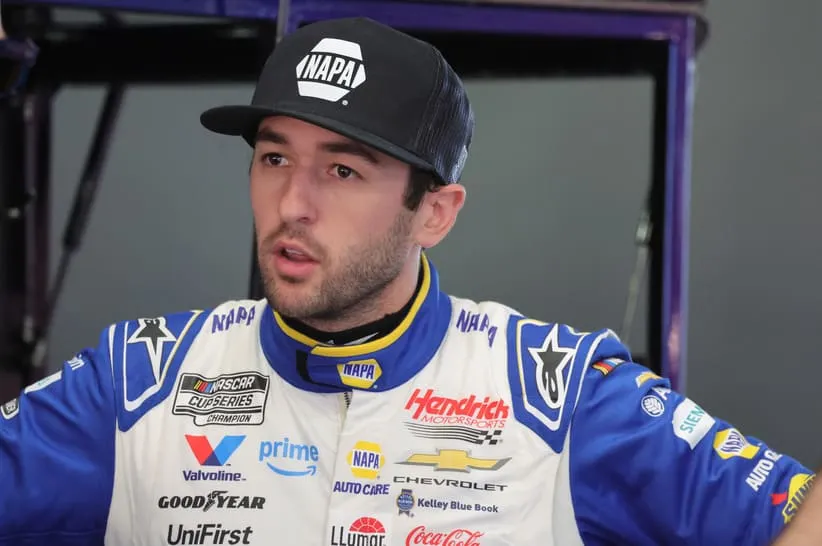
Chase Elliott didn’t need to explain anything after the Daytona 500. Sitting against the outside wall, helmet off and shoulders heavy, he looked like a driver replaying the same ten seconds on a loop. He had taken the white flag with the lead, the Daytona 500 practically in his hands. The Dawsonville siren was ready. A win that would have tied him to his father’s legacy was seconds away.
The scene around him made the moment even more striking. Crew members walked past quietly, unsure whether to approach or give him space. Fans in the stands were still buzzing, but Elliott seemed locked in his own world, trying to understand how something so close had slipped away. It wasn’t anger on his face. It was disbelief. The kind that only Daytona can deliver.
The Exact Moment Everything Unraveled
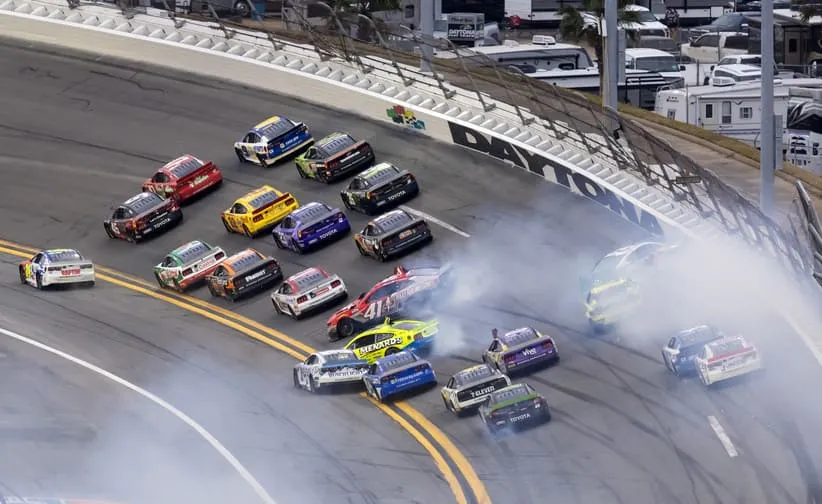
The loss didn’t come from a mistake earlier in the race. It didn’t come from strategy, pit calls, or positioning. It came from one moment, the moment Elliott became a sitting duck with no drafting help, and Tyler Reddick arrived with a run that physics simply wouldn’t allow him to block. When Carson Hocevar and Erik Jones spun behind the leaders, NASCAR kept the race green. That decision froze Elliott at the front with no protection.
As the field charged down the backstretch, Reddick, shoved by Riley Herbst, built a run that was significantly faster than Elliott’s single car could defend. Elliott moved up to block the first surge, but Reddick immediately darted low. Elliott reacted, but the momentum difference was too large. By the time he moved, the 23 car was already there. The contact was unavoidable, and the No. 9 was hooked and sent spinning across the line.
This was the moment that cost Elliott the Daytona 500. It wasn’t a miscalculation or a poor decision. It was the brutal math of superspeedway racing. Elliott had no push, and Reddick had a massive one. The leader was exposed, and the trailing car had all the leverage. In that split second, the entire race flipped upside down.
A Familiar Daytona Story for Elliott
This finish adds another painful chapter to Elliott’s long list of Daytona near‑misses. Eleven attempts. A runner‑up in 2021. Multiple close calls. But this one stands apart because he had the car, the track position, and the moment perfectly aligned. The weight of family history only sharpens the sting.
Bill Elliott’s two Daytona 500 wins have always hovered over Chase’s attempts at this race. It’s not pressure he talks about often, but it’s there every February. This year felt like the one where everything finally aligned. The No. 9 team had speed all week, and Elliott put himself in the exact position he needed to be in. That’s what makes the ending so hard to swallow.
Jeff Gordon watched the ending unfold from the Hendrick pit box. His reaction, hands on his head, leaning back, staring at the monitor, mirrored the disbelief of everyone who had watched Elliott control the final laps. Gordon has lived through his own Daytona heartbreaks, and he recognized the look on Elliott’s face immediately. It was the look of a driver who did everything right and still came up empty. That’s the kind of loss that lingers.
The Reality of the Next Gen Package
The finish also highlighted the aggressive nature of the current NASCAR package. Track position dictates everything, and the only way to pass the leader on the final lap is with a move that borders on physical. Reddick did what he needed to do. Elliott did what he needed to do. The result was predictable: one driver celebrating, the other sitting against the wall, trying to understand how it slipped away.
The Next Gen car has created an environment where runs form quickly and unpredictably. Drivers often have only a fraction of a second to react, and even the right move can become the wrong one if the momentum shifts behind them. Elliott’s block wasn’t late. It was simply outmatched. Reddick’s push was too strong, and the air moved in a way Elliott couldn’t counter. That’s the reality of this era of superspeedway racing.
Elliott managed a dry laugh afterward, acknowledging the situation for what it was. He hated being that close. He hated being turned around in the fence. But he also understood that this is Daytona. The difference between a career‑defining moment and a long, quiet flight home is measured in inches and milliseconds.
What It Means for the Season Ahead
Despite the heartbreak, the broader outlook for Elliott’s season isn’t bleak. The Hendrick Chevrolets showed real speed throughout Speedweeks. The Hendrick driver’s Duel win, and his performance in the 500, prove the No. 9 team has unloaded with genuine strength. The fourth‑place finish, combined with the Duel victory, gives him a solid points foundation to start the year. And Elliott himself has grown in how he handles setbacks.
There’s also a sense that this team has rediscovered something it lacked last season. The communication seemed sharper. The car responded to adjustments. Elliott looked confident behind the wheel in a way he hasn’t consistently shown in a while. If this is the baseline for the No. 9 team, they’re positioned to be a factor deep into the year.
Elliott’s maturity also showed in how he handled the aftermath. Earlier in his career, a loss like this might have derailed him for weeks. Now he seems more capable of absorbing the blow and moving forward. He knows the season is long and that he has a car capable of winning. That perspective will matter in the weeks ahead.
The Larger Implications for Elliott’s Legacy
This finish will follow Elliott for a while, not because he made a mistake, but because he did everything right and still lost. Drivers remember those moments more than the ones where they simply got beaten. This was a race he controlled, a race he positioned himself to win, and a race that slipped away because the circumstances around him shifted in a way he couldn’t counter. That kind of loss becomes fuel.
It also reinforces the razor‑thin margins of modern superspeedway racing. Elliott didn’t lose because he chose the wrong line or misjudged a block. He lost because the runner behind him was too strong, and the wind was too strong. That’s the kind of ending that keeps a driver hungry. And Elliott, more than most, knows how to turn frustration into motivation.
This moment will also shape how fans and analysts talk about his Daytona résumé. He has been close enough, often enough, that the expectation of a win grows heavier each year. Sunday’s finish adds another layer to that conversation. It wasn’t just another near‑miss it was the closest he has ever come to sealing the deal.
What’s Next
The 2026 Daytona 500 becomes another near‑miss in Elliott’s career. He drove well enough to win the Harley J. Earl trophy, but Daytona had other plans. Tyler Reddick gets the celebration. Michael Jordan gets another major win for his organization. Elliott gets a battered race car and a long ride home.
The sting of this one will last longer than most. Elliott had the race in his hands, and the moment slipped away through no fault of his own. That’s the kind of loss that sticks with a driver, especially at a place like Daytona. But it also fuels the next attempt. Elliott will be back, and he’ll remember exactly how close he came.
