
Bristol: Why Hamlin And Larson Stand As The Cup Series Favorites This Weekend

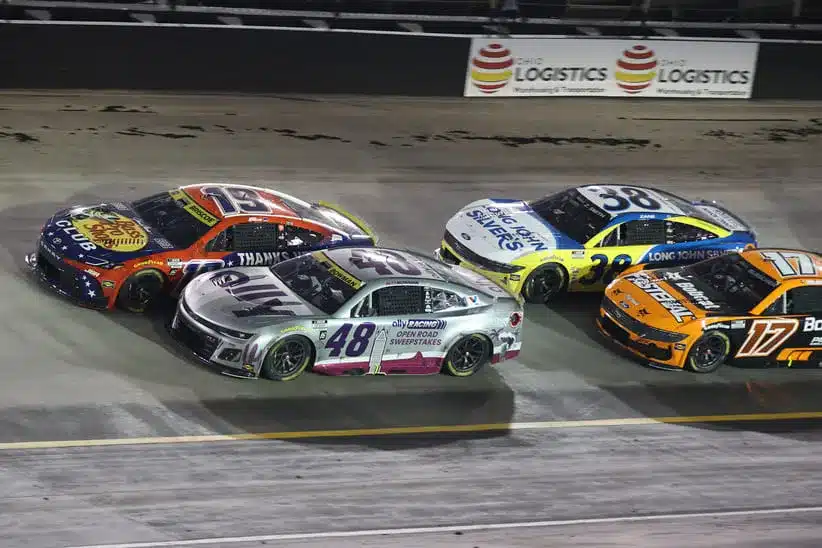
The electricity that rolls through the Appalachian Mountains when the NASCAR Cup Series arrives at Bristol Motor Speedway is unlike anything else in American motorsports. More than 160,000 seats wrap around a half‑mile concrete bowl with 28 to 30 degrees of banking, creating the loudest sustained environment on the schedule.
The Last Great Colosseum compresses 500 laps of contact, strategy, and survival into a space barely larger than a football stadium. Perfection is mandatory. The smallest mistake becomes a one‑way trip to the infield care center.
As teams prepare for this weekend’s concrete clash, the garage chatter has narrowed to a select group of drivers. Oddsmakers and engineers have drawn a clear line between the contenders and the rest of the field, and the numbers support that separation.
The Favorites: Hamlin And Larson Control The Metrics
Why They Sit Alone At The Top
Across the last six Bristol concrete races, only two drivers have maintained an average finish inside the top eight: Denny Hamlin and Kyle Larson. They have combined to lead more than 1,900 laps at this track, and both rank inside the top three in short‑track driver rating over the last three seasons.
Their approaches could not be more different, yet both have mastered the rhythm of this unforgiving surface. Each finds speed in places the rest of the field can’t touch. That contrast is exactly what makes them so difficult to beat over a full run.
Kyle Larson: Momentum And Rim‑Riding Precision
Kyle Larson treats Bristol like a dirt track paved in concrete. Larson runs the outside lane longer and harder than almost anyone in the field, carrying corner speed that punishes even the slightest hesitation.
He has led more than 1,300 laps here and has posted a top‑five average running position in four of his last five concrete starts. His ability to maintain momentum off the banking gives him an edge that few can match over a full green‑flag cycle.
Denny Hamlin: Efficiency, Patience, And Late‑Run Control
Denny Hamlin approaches Bristol with surgical precision. Hamlin does not need the wall to find speed. Instead, he builds pace from the bottom groove, rotates the center cleanly, and manages his tires with veteran discipline.
He owns three Bristol Cup wins and has finished inside the top five in half of his last ten concrete starts. His long‑run falloff curve consistently beats the field by more than three‑hundredths of a second per lap over a 40‑lap stretch, which is why he is almost always a factor when the race reaches its final 100 laps.
Tire Strategy And The Battle Of Attrition
Why Tire Wear Decides The Race
Bristol’s concrete surface and steep banking generate an enormous load on the right‑side tires. Mid‑corner forces exceed 3,000 pounds, and falloff averages between 1.2 and 1.4 seconds over a 40‑lap run.
The longest green‑flag stretch in the last three spring races was 92 laps, which means tire management becomes a survival exercise. Drivers who push too hard early in a stint pay for it immediately. Those who save too much risk losing track of the position they may never recover.
Pit Road As The Equalizer
Pit road becomes a second racetrack. The top pit crews average between 10.5 and 10.9 seconds on four‑tire stops, and caution‑cycle swings of eight to twelve positions are common. Two‑tire calls have succeeded only twice in the last ten Bristol spring races, underscoring how critical grip is over long runs.
Crew chiefs must decide when to pit for tires, when to protect track position, and when to gamble. One miscalculation can bury a contender in traffic that they cannot escape. The margin for error shrinks even further when cautions stack up. Every decision becomes a pivot point that can swing a driver’s night in either direction.
What It Means For The Field
Short tracks eliminate aerodynamic advantages. Bristol magnifies that effect. Passing difficulty ranks second‑highest on the schedule, and green‑flag passes per lap drop by nearly 40 percent after the first 100 circuits. Only one driver in the last twenty years has won the Bristol spring race after running outside the top ten at Lap 400.
For playoff hopefuls and teams searching for momentum, this race becomes a pressure test. They must disrupt the rhythm of the favorites through setup swings, aggressive pit strategy, or controlled chaos in traffic.
Expectations Ahead Of Race Weekend
Racing at Bristol Motor Speedway is a visceral, exhausting experience. The noise is overwhelming, the contact is constant, and the tension builds with every lap. Hamlin and Larson enter as the clear statistical favorites, backed by elite teams and unmatched mastery of the concrete.
But Bristol has a long history of tearing up predictions. A late caution, a tire gamble, or a lapped‑traffic bottleneck can flip the race in seconds. Inside the Last Great Colosseum, dominance is never guaranteed, and survival is never simple.
