Andrew Shovlin Explains Why Mercedes’ Barcelona F1 Test Hit the Mark

With the 2026 season approaching, the sport enters a full reset. New chassis rules. New power unit regulations. New aerodynamic philosophy. For the engineers back at the factory, it’s the kind of reset that can either revive a program or bury it. Judging by the early noise coming out of Spain, Mercedes-AMG Petronas F1 appears to have landed on the right side of that equation according to trackside engineering director Andrew Shovlin.
The asphalt at the Circuit de Barcelona‑Catalunya was cold enough to make a tire engineer wince, but inside the Mercedes garage, the atmosphere was anything but subdued. For a team that spent the last regulation cycle wrestling with a car that bounced, dragged, and generally refused to behave, this week’s private shakedown felt like a long‑overdue release of tension.
A Team That Finally Looks Comfortable Again
Andrew Shovlin is not someone who deals in exaggeration. His job revolves around data traces, correlation studies, and lap‑by‑lap analysis. So when he says a test “couldn’t have gone any better,” it carries weight. This is the same group that misread the 2022 ground‑effect regulations and spent four seasons clawing their way back to competitiveness while Red Bull collected trophies.
That kind of frustration builds a particular edge inside a race shop.The headline number from Barcelona wasn’t George Russell topping the timesheets, though he did. It was the absence of the usual early‑season headaches. New cars often experience leaks, overheating, electrical faults, or software issues. Mercedes avoided all of it.
Lap Count Tells the Real Story
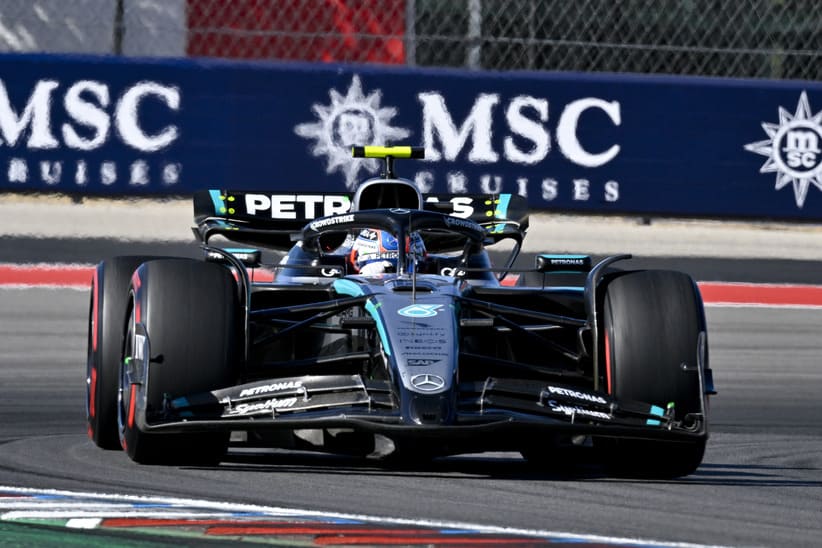
On Wednesday alone, the W17 completed 183 laps. That’s an enormous haul for a car that had never turned a wheel in anger. It also allowed Andrea Kimi Antonelli to run a full race simulation, a rare luxury for a rookie in January. The fact that the car handled the mileage without a single major interruption says more about Mercedes’ preparation than any lap time ever could.
Shovlin emphasized how much effort the staff had poured into this project. Some engineers have been working on this concept for years, long before the first carbon fiber panel was laid. Seeing the car run cleanly from the moment it left the garage was a validation of that work.
Quiet Confidence Around the New Power Unit
Rumors have been circulating for months that Mercedes may have hit the mark with the new engine regulations. The last time Formula 1 introduced a major power unit overhaul, in 2014, Mercedes arrived with an advantage so large it reshaped the competitive order for years.Shovlin didn’t reveal much, but he didn’t hide his optimism either.
He said the team was still learning to manage the new systems, yet admitted they were seeing gains every day without encountering major mechanical issues. When an engineer speaks that openly about progress, it usually means the underlying architecture is strong.
Barcelona’s Limitations and the Road Ahead
Despite the encouraging signs, Shovlin was careful not to draw conclusions from winter conditions. Barcelona in January is nothing like Melbourne in March. The track surface is cold, the air is dense, and the tires struggle to reach their intended temperature range.
“Bahrain is going to be a much better place to check that the car runs well at temperature,” he said. The desert test will be the first time the W17 is pushed in conditions that resemble a race weekend. Barcelona was about confirming the fundamentals. Bahrain will reveal how far they can push the setup.
What This Means for the 2026 Season
Mercedes’ smooth shakedown sends a clear signal: they are not entering this regulation cycle on the back foot. The team’s ability to run uninterrupted laps gives them a head start in an area that matters more than raw pace and understanding how the car behaves across different conditions and fuel loads.
Teams that spent the week chasing electrical faults or hydraulic leaks will now be playing catch‑up. Mercedes, meanwhile, can shift its focus to refining balance, optimizing energy deployment, and exploring setup variations instead of troubleshooting. For George Russell, this may be the first car that truly allows him to lead the team without compromise.
For Antonelli, the reliability provides invaluable seat time, the kind that can erase the rough edges of a rookie season before it even begins.The struggles of 2022 through 2025 forced Mercedes to rethink everything. This week in Spain suggests they may have finally found a direction that makes sense again.
What’s Next
Testing times can mislead. Plenty of teams have looked unbeatable in February only to falter when the season begins. But the tone coming from Mercedes feels different. The combination of clean running, consistent feedback, and visible confidence from the engineering staff suggests a team that has laid the groundwork.
Other teams will be studying those lap totals closely. If the new power unit is as competitive as the whispers suggest, and the chassis is as stable as it appeared in Spain, Mercedes may not just be recovering, but they may be preparing to reassert themselves. The paddock has reason to pay attention.