
Severe Weather Shuts Down O’Reilly At Kansas Track Time: Kvapil Vaults To Pole For O’Reilly Race

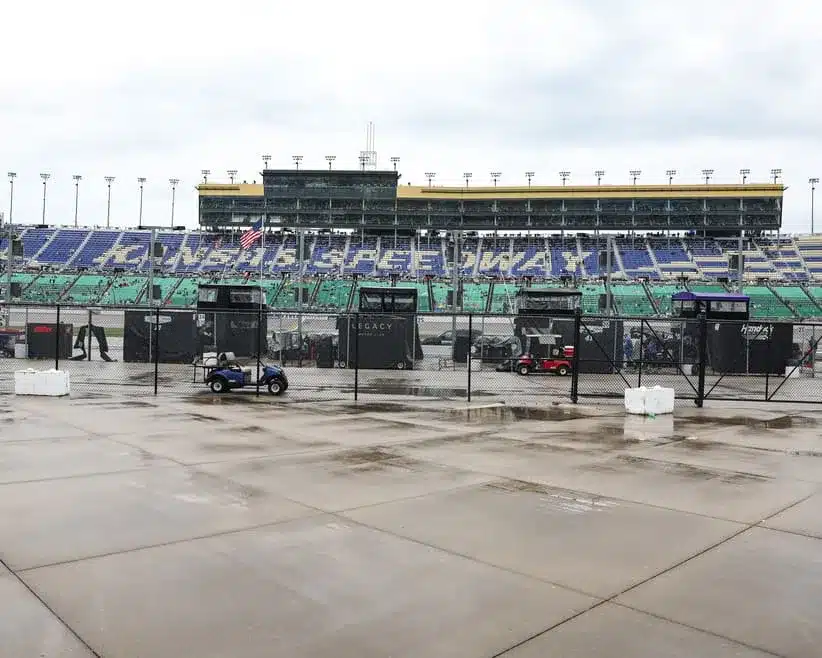
Kansas Speedway has dealt with spring weather before, but Friday’s system was the kind that shuts a racetrack down long before anyone even thinks about rolling to pit road. By mid‑afternoon, a tornado watch covered multiple counties, lightning strikes hit within eight miles of the facility, and heavy rain hammered the 1.5‑mile tri‑oval with no break in sight.
NASCAR ultimately pulled the plug on all O’Reilly Auto Parts Series activity, wiping out practice and qualifying for the Kansas Lottery 300. Track time at Kansas is never optional, and losing both sessions left teams staring at a Saturday loaded with uncertainty and far fewer answers than they expected to have heading into race day.
Aging Asphalt, Progressive Banking, and a Green Track Set Up a Tricky Weekend
The surface at Kansas Speedway has aged steadily since its 2012 repave, and the groove widens every year as the asphalt wears. Drivers rely on practice to understand how progressive banking will take rubber and how Goodyear tires will respond over longer runs.
Kansas is a place where a tenth of a second can move a driver from 18th to 10th on the board, and losing that window to tune the car forces teams to lean entirely on simulation work and historical notes. Even with all the data available in 2026, nothing replaces the feel a driver gets when they roll into Turn 1 at 180 mph and sense how the car loads up.
The rain didn’t just dampen the track. It stripped it clean. Every bit of rubber laid down from previous events was washed away, leaving a slick, green surface that will take several runs to build grip. When the field takes the green flag on Saturday, the opening laps will double as a live test session.
Drivers will be searching for balance, fighting tight conditions on corner entry and snap‑loose moments off Turn 2 as the tires struggle to bite. Crew chiefs will be watching lap times and fall‑off rates with more urgency than usual, trying to understand what the track is giving them without the benefit of a single practice lap.
Kvapil Lands the Pole as NASCAR Turns to the Metric Formula
With qualifying canceled, NASCAR turned to the standard metric formula to set the starting lineup. The system weighs four categories: 25 percent based on the driver’s finishing position in the previous race, 25 percent on the team’s finishing position, 35 percent on owner points, and 15 percent on fastest lap ranking.
When the numbers were calculated, Carson Kvapil landed on the pole for JR Motorsports. It’s a significant spot for a driver still building his résumé in the series. Starting first at Kansas means clean air, and clean air at a mile‑and‑a‑half track can be worth several tenths per lap, especially early in a run.
Kvapil will also be the first to discover how much grip the track actually has when he barrels into Turn 1. With no reference laps, he’ll be relying on instinct and spotter feedback. The advantage is real, but so is the pressure. One misjudged corner could send him up the track and into the clutches of the row behind him.
Kansas has produced long green‑flag stretches in recent years, including a 64‑lap run in last season’s spring race, and track position tends to stabilize once the field spreads out. If Kvapil can settle in early, he’ll control the pace. If not, he could be swallowed quickly.
ARCA Menards Series Also Forced to Reset After Washout
The ARCA Menards Series felt the sting of the weather as well. Their qualifying session for the Tide 150 was also washed out, placing Jack Wood on the pole based on the same metric system. ARCA drivers face an even steeper challenge without practice, as the series features a wider range of experience levels.
Kansas is one of the faster tracks on their schedule, with average speeds topping 165 mph in race trim, and going into a 100‑lap event with zero track time will test the field’s discipline. The margin for error shrinks when no one has a feel for the surface or the tire fall‑off.
One early mistake can snowball quickly at those speeds, especially for drivers still learning how Kansas evolves over a run. The track can change lap by lap, and rookies often need time to read those shifts. Kansas rewards patience, but it punishes anyone who chases speed before the car is settled.
Kansas has a way of exposing anyone who isn’t fully settled in the car, especially when the track is still taking rubber and the balance shifts every few laps. Veterans usually adjust on instinct, but younger drivers have to learn those cues in real time. That gap in experience becomes obvious on nights when the surface is unpredictable, and every corner demands total commitment.
No Practice Shifts Advantage Toward Veteran Drivers And Crews

The loss of practice and qualifying shifts the competitive balance toward teams with veteran crew chiefs who have deep notebooks for Kansas. The first stage of the Kansas Lottery 300 will likely be filled with radio chatter as drivers diagnose handling issues corner by corner.
Air pressure adjustments, wedge changes, and track bar tweaks will be critical on the first pit stop. A team that nails the initial adjustment can gain eight to ten positions in a single cycle. A team that misses will spend the rest of the night clawing back time.
A crew chief’s read on those first ten laps often determines whether the night trends upward or spirals out of reach. When the balance is close, even a small air‑pressure tweak can unlock the stability a driver needs to attack the center of the corner and carry speed off the exit.
But when the setup is off, the driver feels it immediately, and every lap becomes a fight to keep the car underneath them. That kind of deficit forces teams into aggressive strategy calls just to stay in touch with the lead pack, and Kansas rarely gives anyone an easy path back to the front.
Strategy, Tire Wear, and Long Green‑Flag Runs Now Loom Large
Pit strategy becomes even more important when practice is lost. Kansas often produces long green‑flag runs, which means green‑flag pit stops can dramatically shuffle the field. Fuel windows typically fall around 55 to 60 laps, depending on caution frequency.
Without practice data, crew chiefs will estimate tire fall‑off based on previous races, in which lap times have dropped by nearly 2 seconds over a full run. If Saturday’s conditions produce a similar fall‑off, two‑tire calls will be risky, but not impossible, especially for teams trying to steal track position.
Weather delays also affect how rubber builds on the track. With temperatures expected to drop slightly on Saturday evening, the surface could tighten up as the night goes on. Teams that anticipate that shift will have an edge. Those who guess wrong may find themselves chasing the setup for 200 miles.
Kansas Speedway has always been a place where the unexpected can swing a race. In 2023, the margin of victory in the Cup race was just 0.001 seconds, the closest finish in series history. The O’Reilly Series has produced its own share of late‑race drama, including restarts that reshuffled the top ten in the final laps. It seems history is repeating itself.
What’s Next
The storms may have silenced the track on Friday, but they also set the stage for a chaotic, high‑pressure Saturday. Kvapil will lead the field to green, but holding that spot will require precision, patience, and a car that responds quickly to adjustments.
When the lights come on and the field charges into Turn 1, the weekend’s lost track time will fade, and the race will hinge on who adapts fastest. In Kansas, that’s often the difference between a quiet night and a breakthrough run.
For More Great Content
Stay plugged in with more race analyses, features, and behind‑the‑garage storytelling. Follow Sarah on Facebook, LinkedIn, and X at Sarah Talker, where the conversation keeps rolling long after the checkered flag drops.
