
Carson Hocevar: Post‑Race Press Conference Turns Revealing As Sarah Talker Draws Out His Edge

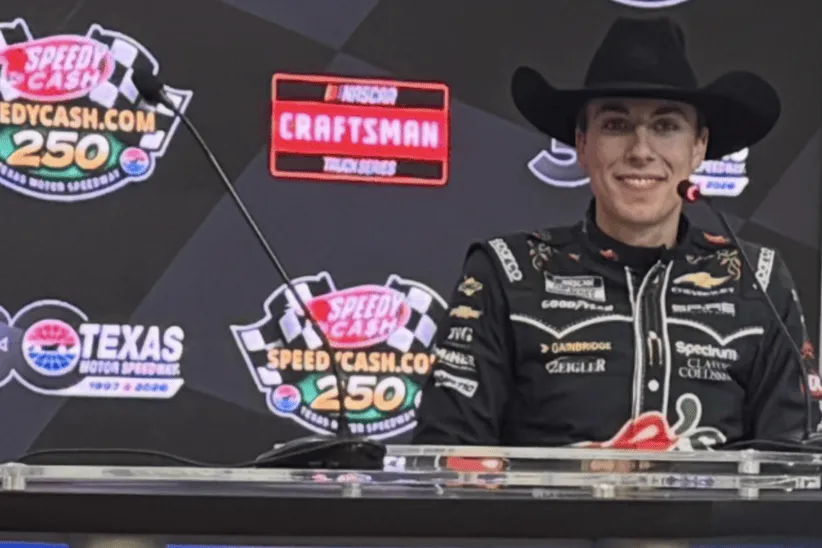
Carson Hocevar didn’t show up in Texas carrying anything extra. He rolled through the opening laps with a calm, settled rhythm, never forcing the truck or chasing it through the corners. The balance stayed underneath him, letting him attack entries with confidence, and he looked like a driver who trusted every part of his equipment.
Coming off a Cup Series win, he could have pressed, but he didn’t. He let the Craftsman Truck Series race unfold, drove like he belonged at the front, and built a steady pace instead of peaking early. His approach showed a maturity that hasn’t always been visible, choosing to let the race come to him rather than chase it.
He stayed aggressive when it mattered and composed when things got uneasy, even working through a loose‑wheel concern without losing focus. He reset quickly, protected track position, and kept the night from slipping away. By the final stage, he had full control, earned the clean air, and dictated the tempo with every lap.
Racing With Instinct Instead Of Pressure
Hocevar didn’t complicate this truck win. He trusted his instincts and drove off feel, showing the same aggression but with better timing and control. He picked his moments instead of forcing them, carrying himself like a driver who understood exactly what the race needed. He looked like someone fully locked into the rhythm of the night.
He looked relaxed behind the wheel, confident in traffic and on restarts, committing to lanes without hesitation. That calm kept him from getting boxed in and let him stay on offense. Nothing about his approach felt rushed. His choices carried a quiet certainty that never wavered.
Under caution, he took in the moment and even interacted with the crowd, a sign of how settled he was. He wasn’t carrying tension, and that mindset kept the race from speeding up on him. He looked like a driver fully enjoying the night. His comfort showed in every small gesture he made inside the truck.
“I was just having so much fun out there… I was laughing, pointing at fans, waving at them. If there’s ever been an embodiment of what it looks like for me on iRacing, it felt like this race,” Hocevar explained.
That mindset carried into the closing laps. He didn’t tighten up when the race came to him. He stayed on the attack and trusted what he was doing. That’s not always been the case. It’s a sign of where he is right now. He raced like someone who had nothing to hide from. The confidence was steady, not forced.
Managing Chaos Late And Holding Off Pressure
The final laps at Texas rarely settle down, and this race was no different. Trucks were stacked up behind him, and the restarts were tense. Track position meant everything at that point. One mistake would have opened the door. He didn’t give anyone that chance. He handled the moment with the kind of poise that wins races. Every restart felt like a test he was ready for.
Hocevar never changed his approach. He didn’t start throwing late blocks or overdriving the entry. He stayed committed to his lines and kept the pace where he needed it. That consistency made it hard for anyone to get a run. He protected the preferred lane without overworking the truck. That matters late in a run.
His discipline forced the field to react to him, and he controlled the space around him with precision. Experienced drivers were closing in, but he never looked rushed, handling each restart cleanly and leaving nothing open.
Sarah Talker Pinpoints Where The Advantage Showed
Over the final 20 laps, Hocevar was consistently quicker than the trucks behind him. It wasn’t a massive gap, but it held steady. That kind of consistency is what closes races. It keeps pressure from building behind you. It also forces the field to take bigger risks.
That’s where separation happens. During the post‑race availability, Sarah Talker of Tota Apex Sports pressed him on what adjustment made the difference late in the run, framing it as the key moment that allowed him to control the pace when the field tightened behind him.
Her question cut straight to the part of the race where Hocevar’s execution mattered most, and it set up the clearest look at how he managed the closing stretch. Her question cut straight to the part of the race where his execution mattered most, and it set up the clearest look at how he managed the closing stretch
“If I give that away, everybody else is going to do it… I was just trying to run as wide open as I could. It didn’t matter if I was fast. I just wanted to make sure the guys behind me were slower,” Hocevar responded.
Hocevar wasn’t chasing a perfect setup in that moment; he was managing the race, using the leverage he had and understanding how to close. He moved around, changed lines, and never gave the trucks behind him a consistent look, keeping them guessing and breaking up any rhythm they tried to build.
Accountability And Growth Behind The Scenes
The race had its rough spots. A pit road issue created some frustration, and Hocevar let it come across on the radio. It was a heated moment in the middle of the race. Pit stops can swing everything. He knew that in the moment. His reaction showed how much he expects from himself. It also showed how quickly he resets.
Afterward, he didn’t avoid it. He addressed it directly and made it clear he expects more, but also knows when he pushes too far. That balance is still coming together. It’s part of the process at this level. Hocevar is learning how to channel that intensity without letting it spill over. That’s growth drivers have to earn.
“There’s no excuse. If you’re a hero, you should take whatever they give you and win with it,” Hocevar said.
That mindset explains how Hocevar races. It also explains the expectations he carries for himself and his team. He’s not lowering the bar. He’s learning how to manage it better. Accountability is becoming part of his identity. That’s a trait teams value.
A Changing Relationship With Fans
Hocevar hasn’t always been easy for fans to read. His driving style has brought attention, and not all of it has been positive. He’s been in the middle of moments that people remember. Those moments tend to stick. But time has a way of reshaping perception. Winning helps rewrite the story.
That reaction is starting to change. There’s more support now when he runs up front. More fans are starting to connect with how he goes about it. Winning helps, but so does personality. He’s showing more of who he is. Fans respond to authenticity.
He isn’t trying to reshape his image. He’s staying the same driver, both on and off the track. That consistency matters over time. Fans pick up on what’s real. They can tell when someone is forcing it. He’s not.
He handles his own social media and keeps it straightforward. It’s not polished, but it reflects who he is. Fans tend to pick up on that. It feels more direct than scripted content. That kind of honesty builds loyalty. It gives people something to connect with.
What This Means
Hocevar is starting to bring everything together. The speed has been there. Now the race management is catching up. That’s what turns strong runs into wins. It’s the evolution teams’ hope to see. It’s the shift that changes ceilings.
This win shows he can close. It shows he can handle pressure without changing his approach. That’s a step forward. It’s something teams look for. It’s also something competitors notice. They’ll race him differently now.
He’s becoming someone the field has to account for. Not just because of speed, but because of how he controls a race once he gets out front. That changes how others race around him. It forces them to adjust. That’s when a driver becomes a problem for the field.
What’s Next
This wasn’t just another win. It showed progress in how Hocevar handles a race from start to finish. It showed growth in key moments. He didn’t luck into anything. He earned every part of it. He stayed in control, handled the pressure late, and finished it off. That’s what separates drivers who run up front from those who finish there.
It’s the difference between potential and results. It’s the kind of night that sticks.If this continues, he won’t be an occasional factor. He’ll be there consistently. And he’ll expect to be there. That’s how a career turns a corner. That’s how a driver becomes a threat.
For More Great Content
Stay plugged in with more race analyses, features, and behind‑the‑garage storytelling. Follow Sarah on Facebook, LinkedIn, and X at Sarah Talker, where the conversation keeps rolling long after the checkered flag drops.
