
Ryan Blaney Dominates 94% of Bristol Race, Loses Win By 0.055 Seconds After Pit Road Setback

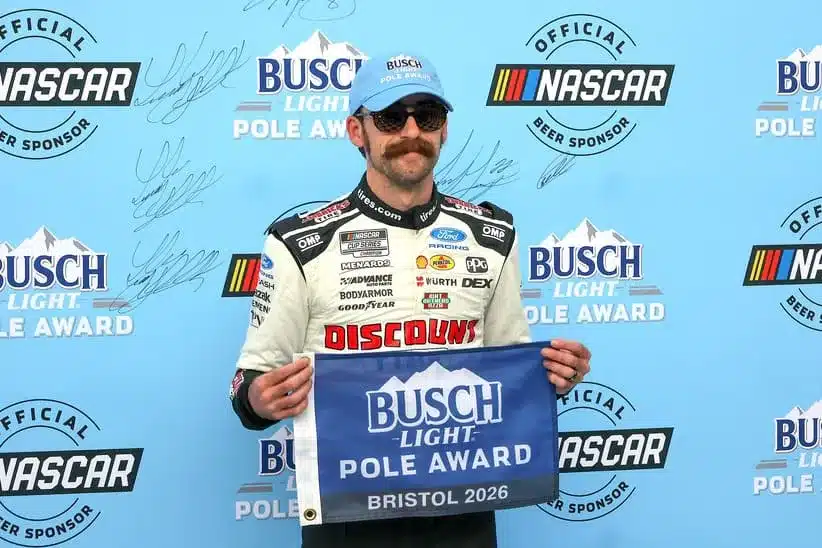
Ryan Blaney came within 0.055 seconds of winning at Bristol Motor Speedway. At a place where laps take roughly 15 seconds on a 0.533-mile track, that gap is barely half a car length. After 505 laps and more than 260 miles, it was the only number that separated first from second.
Bristol has a long history of finishes like this. No matter how long the race runs, it often comes down to inches. This time, Blaney ended up on the wrong side of it. It’s the kind of place where one restart, one lane choice, or one small mistake can decide everything. He did enough to win, just not enough to close it out.
Total Control: Blaney and Larson Dominate the Field
For most of the day, the race ran through Blaney and Kyle Larson. They combined to lead 474 of 505 laps, which comes out to 93.9% of the race. They swapped the lead nine times, and no one else led more than a handful of laps.
Blaney’s car was especially strong on the corner exit, which matters at Bristol, where the banking ranges from 24 to 28 degrees. He could carry speed through the center and get off the corner clean, which kept him out front during long green-flag runs. Those stretches can go past 100 laps, and the physical strain builds quickly. Even so, he kept the pace.
That kind of consistency is what usually separates the front-runners from the rest of the field at a place like Bristol. When a driver can repeat the same line lap after lap without falling off, it forces everyone else to play catch-up. Blaney did that for most of the race, which is why he stayed in control for so long.
Pit Road Performance Tells The Real Story
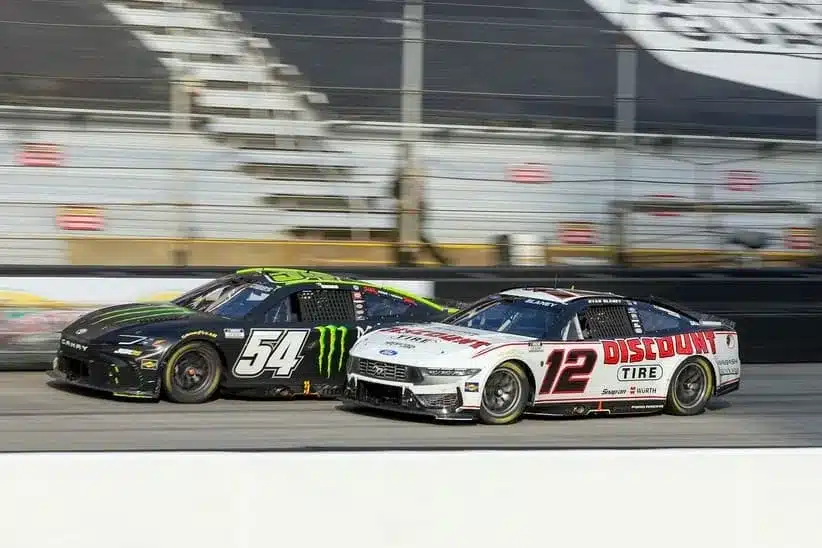
The problem wasn’t speed. It was pit road. Blaney’s team ranked 32nd out of 37 cars in pit performance and lost 11 spots over the course of the race. At Bristol, that kind of drop is hard to recover from because passing gets tougher the deeper you are in traffic.
The biggest moment came inside the final 20 laps. A caution brought everyone to pit road, and another slow stop cost Blaney track position again. He restarted farther back, had to push harder to move forward, and used up more of his tires than the cars ahead of him.
By the time he got back to the front, there wasn’t enough time left. He had already used up a good portion of his tires getting there, which made it harder to mount a final charge. The gap he needed to close was small, but at that point in the run, it might as well have been a straightaway. Track position ended up deciding the outcome more than outright speed.
Tire Wear And Track Changes Matter
Goodyear brought a different tire for this race, paired with the 750-horsepower package, and it changed how the track behaved. Tires wore more, lap times fell off, and multiple lanes came into play as rubber built up.
Drivers weren’t stuck on the bottom. They could move around, searching for a grip from the inside to the outside wall. That improved the racing, but it also made track position more important. Clean air helped manage tire wear, and losing spots on pit road made that harder for Blaney to control.
As the race went on, the groove continued to widen, and drivers had to adjust on the fly to stay competitive. What worked early in a run didn’t always hold up 40 or 50 laps later, especially as rubber built up in patches. That forced drivers to balance aggression with patience, because pushing too hard in the wrong lane could cost more time than it gained.
Ty Gibbs Finishes It Off
While Blaney was working back through the field, Ty Gibbs took advantage. In his 131st Cup Series start, he picked up his first win by holding off both Blaney and Larson in overtime.It’s not unusual for drivers to need 100 or more starts before winning at this level. Gibbs got there by staying in position late and not making mistakes when it counted.
He didn’t luck into it, either. Ty Gibbs executed cleanly when the pressure was highest, managing restarts and keeping his line against two drivers who had controlled most of the race. On a track where one slip usually means losing multiple positions, he stayed composed, hit his marks, and forced both Ryan Blaney and Kyle Larson to try to beat him rather than the other way around.
That’s typically how these first wins happen. The speed has to be there, but so does timing. Gibbs put himself in the right spot after the final round of pit stops and didn’t give it back. Clean air, track position, and a mistake-free final run were enough to close it out, even against faster cars behind him.
What Blaney’s Overall Run Means
For Ryan Blaney, this run shows two things at the same time. The speed is there. Leading nearly 94% of the race laps alongside Kyle Larson on a track like Bristol says plenty about the car and the driver. The problem is that kind of effort doesn’t mean much if it doesn’t end with a win. Until the execution matches the speed, days like this will keep slipping away.
But the pit road numbers don’t match that level. Losing 11 positions and ranking near the bottom in stop times puts him behind, no matter how fast the car is. In this series, the gap between the top teams is too small to give that away.
If the pit crew improves even into the middle of the field, races like this likely turn into wins. If not, the same issue will keep showing up, especially in the playoffs, where track position matters even more. At that point, it becomes the difference between advancing and going home.
What’s Next
Bristol came down to 0.055 seconds after 505 laps, which says everything about how tight the competition is. Ryan Blaney had the pace, led laps, and put himself in position to win. Kyle Larson was right there with him most of the day.
In the end, Ty Gibbs got it done by being in the right spot late and closing it out. Blaney leaves with a fast car and a result that could have been more. The difference wasn’t on the track. It showed up on pit road, and at this level, that’s enough to decide the race.
For More Great Content
Stay plugged in with more race analyses, features, and behind‑the‑garage storytelling. Follow Sarah on Facebook, LinkedIn, and X at Sarah Talker, where the conversation keeps rolling long after the checkered flag drops.
