
We Still Remember Dale Earnhardt Sr., Twenty‑Five Years After Turn Four


Daytona International Speedway has a way of holding on to its history. The moment you step through the tunnel, you feel the weight of everything that has happened there, the triumphs, the heartbreaks, and the legends who left their mark on the place. For many fans, crew members, and drivers, it is impossible to stand along the catchfence or look out across the high banks without sensing the presence of Dale Earnhardt Sr.
Twenty‑five years after the sport’s darkest day, his influence still lingers in every corner of the speedway. A quarter century has passed since that final lap in 2001, yet the sport has never fully outrun the moment that changed everything.
NASCAR has crowned new champions, welcomed new manufacturers, and introduced cars that barely resemble the machines of the 1990s. But no amount of progress has erased the imprint left by the man in black. Dale Earnhardt Sr. remains the heartbeat of the sport, even in absence.
The Day the Cheering Stopped
© Nigel Cook/News-Journal / USA TODAY NETWORK via Imagn Images
February 18, 2001, was supposed to be a celebration for Dale Earnhardt Inc. Michael Waltrip was leading. Dale Earnhardt Jr. was right behind him. And Dale Earnhardt Sr. was doing what only he could do, blocking the field with surgical precision to protect the two cars ahead of him. For a driver known for his ruthless competitiveness, it was a rare moment of selflessness.
The crash didn’t look catastrophic. Earnhardt had survived far worse. Fans had watched him tumble down Talladega’s backstretch and walk away. They had seen him climb out of fires and return the next week with a smirk. This hit looked routine.
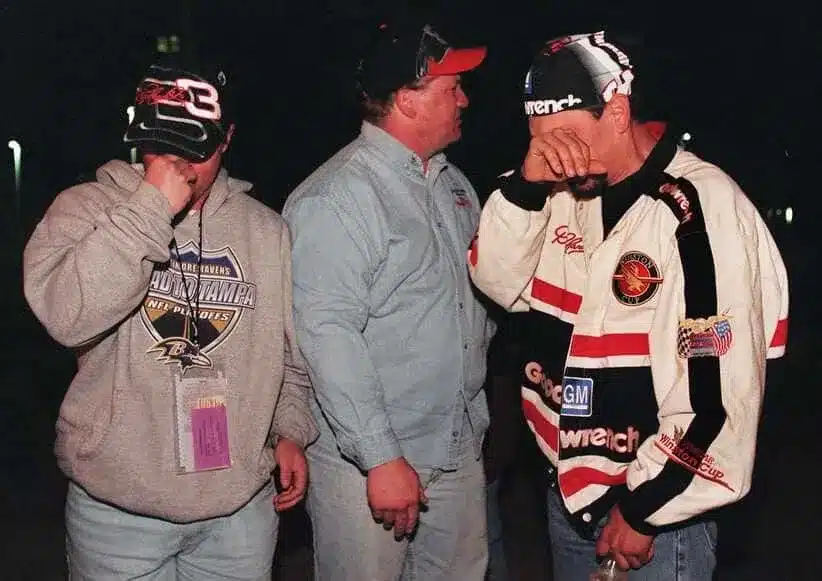
But when Ken Schrader looked into the window of the No. 3 and frantically signaled for help, the tone inside the speedway shifted instantly. The cheers faded. The crowd grew still. When the announcement came, it felt like the sport had aged decades in a single evening. Dale Earnhardt Sr. was gone, and NASCAR would never be the same.
How Dale Earnhardt Sr. Sparked a Safety Revolution
If there is any comfort to be found in the tragedy, it lies in what followed. Before 2001, safety was often treated as an inconvenience. Drivers resisted new equipment. Teams improvised with whatever padding they could find. The culture valued toughness over caution. Dale Earnhardt Sr.’s death forced the sport to confront its vulnerabilities. The HANS device became mandatory.
Cockpits were redesigned. Seats evolved into full containment systems. Tracks installed SAFER barriers, replacing the unforgiving concrete that had claimed so many lives. NASCAR’s research and development center shifted its focus from incremental improvements to a full‑scale reimagining of driver protection.
The results have been undeniable. When Austin Dillon’s car launched into the Daytona catchfence in 2015, he walked away. When Ryan Newman’s car flipped and was struck at full speed in 2020, he survived. These are crashes that would have been fatal in Earnhardt’s era. Every time a driver climbs out of a destroyed race car and waves to the crowd, it is a reminder of the price the sport paid to learn those lessons.
The Earnhardt Legacy Lives On
The Earnhardt name still carries a weight that few in motorsports can match. For the 25th anniversary, that responsibility fell to Bobby Dale Earnhardt, the grandson of the Intimidator. While he doesn’t carry the fame of his uncle Dale Jr., Bobby represents the family’s blue‑collar roots.
He works construction jobs. He hunts for sponsorships from local businesses. He races because he loves it, not because he is guaranteed a seat. Seeing the black No. 89 on the high banks of Daytona served as a reminder that the Earnhardt spirit is still alive. It is gritty, determined, and stubborn in all the right ways. The dynasty that began in Kannapolis continues to echo through the garage.
The Defining Moments and Lasting Accomplishments of Dale Earnhardt Sr.
The legacy of Dale Earnhardt Sr. is built not only on how he raced but also on the moments that defined him. His most emotional triumph came in 1998, when he finally won the Daytona 500 after twenty attempts. When he crossed the finish line, pit crews from every team lined up to shake his hand. It remains one of the most powerful scenes in NASCAR history.
Another defining moment came in 1987 during the All‑Star Race at Charlotte. In what became known as the “Pass in the Grass,” Earnhardt held onto the lead despite being shoved into the infield turf by Bill Elliott. It became a symbol of his refusal to lift or surrender.
His 1999 Bristol Night Race victory is another memory etched into the sport’s DNA. With two laps to go, he nudged Terry Labonte out of the way and later said he was “just trying to rattle his cage.” It was pure Earnhardt, unapologetic and honest.
Perhaps the most impressive display of his talent came in October 2000 at Talladega, when he went from 18th to first in the final five laps. It was a masterclass in drafting and instinct. Even today, drivers study those who run as an example of how to control the air.
Seven championships. Seventy‑six wins. Victories on every type of track. Rookie of the Year and a championship in back‑to‑back seasons. His résumé is unmatched not just in numbers but in how he achieved them.
A Bridge Between Generations
The legacy of Dale Earnhardt Sr. has become a dividing line between generations of NASCAR fans, yet it is also the thread that ties them together. Younger fans know him through highlight reels. Older fans remember the electricity that swept through the grandstands when the black No. 3 moved into second place.
For younger fans, these moments are folklore. For older fans, they are memories etched into their bones. NASCAR’s challenge is to honor that history without becoming trapped by it. The sport must evolve, but it cannot lose the grit and authenticity that defined Earnhardt’s era.
A Reminder of the Safety Standard
The death of Dale Earnhardt Sr. remains the most pivotal moment in NASCAR’s modern history. It forced the sport to confront the reality that bravery alone could not protect its drivers. Today’s cars are faster, and the packs are tighter. Every engineering decision must carry the weight of 2001. The legacy of Dale Earnhardt Sr. demands vigilance and innovation.
A Search for the Next Icon
NASCAR has produced champions and stars since Dale Earnhardt Sr.’s passing, but it has never found another figure who commanded the room the way he did. He could be the villain one week and the hero the next. He was intimidating without trying to be. He was charismatic without forcing it. Icons cannot be manufactured. They emerge naturally. Dale Earnhardt Sr. was one of one, and the sport still feels the void he left behind.
Honoring Dale Earnhardt Sr. Through Tradition and Tribute
The 25th anniversary of Dale Earnhardt Sr.’s passing is more than a moment of remembrance. It forces NASCAR to reflect on where it has been and where it is going. It highlights the importance of honoring its roots while embracing innovation. It reminds us that safety must always come first. And it underscores the need for personalities who can connect more deeply with fans.
The Enduring Spirit of the Intimidator Lives On
Every year, on the third lap of the Daytona 500, the crowd rises and holds three fingers in the air. It is grief, respect, and gratitude woven into one silent moment. Dale Earnhardt Sr. was more than a driver. He was the working man’s champion.
Twenty‑five years later, the pain of losing him has softened, but the reverence remains sharp. As long as engines fire in Daytona, the legacy of the Intimidator will never fade. Dale Earnhardt Sr. may be gone, but he will always be the soul of the sport.
